Explore high-performance electric floor sweepers, heavy-duty industrial vacuums, and autonomous scrubbers manufactured directly at our Zhejiang manufacturing facility.
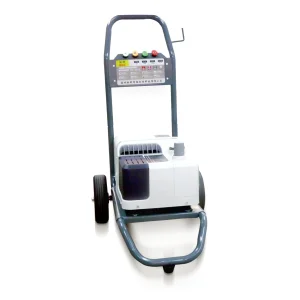
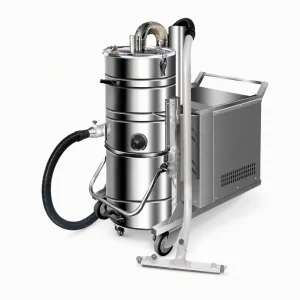
A comprehensive strategic review of operational shifts, environmental regulations, and automation technologies shaping the modern industrial sanitation sector.
The global industrial sweeping machine market is undergoing a structural paradigm shift. Driven by escalating urban expansion, strict occupational safety mandates, and acute labor shortages across Western and Asian logistics hubs, facility operators are rapidly retiring manual labor in favor of high-efficiency, zero-emission mechanized floor sweeping equipment. According to recent B2B market intelligence reports, the global market for industrial cleaning equipment is projected to grow at a Compound Annual Growth Rate (CAGR) exceeding 6.8% over the next decade, with pure electric road sweepers and autonomous scrubbing machinery leading this expansion.
Industrial facility managers, municipal sanitation departments, and commercial property contractors no longer view sweeping machinery as mere custodial assets. Instead, modern ride-on sweepers, semi-enclosed street sweepers, and heavy-duty dust collection units are integrated directly into enterprise risk management and Total Cost of Ownership (TCO) optimization frameworks. By capturing fine particulate matter (PM2.5 and PM10), suppressing airborne toxic dusts in cement or metallurgical plants, and keeping logistics aisles clear of tire debris, industrial sweepers mitigate worker compensation liabilities and safeguard sensitive automated warehouse machinery.
Strategic Insight for Procurement Officers: Transitioning from diesel-powered or manual sweeping routines to battery-powered electric sweeping fleets yields an average 42% reduction in per-shift operating expenses within 18 months, primarily driven by lowered fuel costs, reduced mechanical wear, and minimized operator downtime.
Founded in 2017 in Wenzhou, Zhejiang, Wenzhou Dike Intelligent Environmental Protection Technology Co., Ltd. brings unified R&D, structural engineering, and direct factory export capabilities to global buyers.
Unlike trading intermediaries, our Wenzhou facility handles chassis fabrication, rotational mold design, electrical harness assembly, and rigorous dynamic load testing under a unified ISO9001-certified quality control umbrella.
We configure system voltage (24V/36V/48V/72V), battery chemistry (LiFePO4 vs. Deep-Cycle AGM), chassis ground clearance, and brush filament density to match specific regional climate conditions and heavy industrial debris profile.
All exported machinery models comply strictly with international CE standards, RoHS directives, and regional grid power input tolerances, with dedicated technical representation serving key global markets including Europe, Latin America, and South Asia.
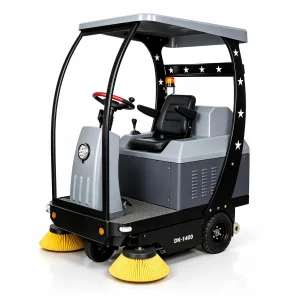
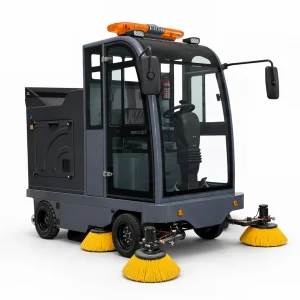
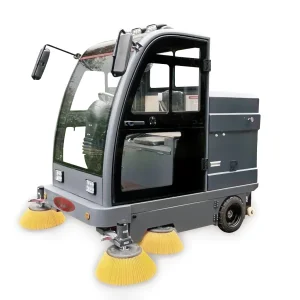
Manufacturing a reliable sweeping machine requires deep material engineering and electrical safety isolation. The sweeping process subjects key structural components—such as side-brush gearboxes, main roller brush drives, and dust suction turbofans—to severe vibration, moisture, and abrasive grit. At DIKE, our engineering team utilizes reinforced tubular steel chassis treated with anti-corrosion electrophoretic coating, paired with IP65-rated brushless DC motors. This structural rigor ensures our semi-enclosed sweepers (like the DK-1400 and DK-1800) and full-enclosed municipal models (such as the DK-2000) maintain structural integrity under continuous 8-hour shift operation in mining compounds or high-humidity coastal ports.
Exploring the technological breakthroughs shaping the next generation of industrial floor care, from Lithium Iron Phosphate (LiFePO4) powertrains to AI-guided SLAM navigation.
The industry is rapidly phasing out heavy lead-acid batteries. Advanced Lithium Iron Phosphate (LiFePO4) chemistry offers 3,500+ charge cycles, opportunity fast-charging capability (1.5-hour quick charge), and intelligent Battery Management Systems (BMS) that protect against thermal runaway, cell voltage imbalance, and extreme ambient temperature operation.
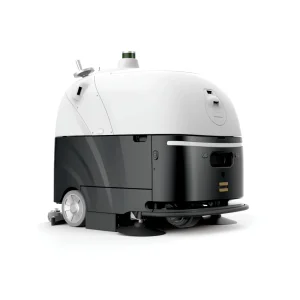
Driverless sweeping and scrubbing units (exemplified by the SC80 Autonomous Floor Scrubber) combine multi-line LiDAR, ultrasonic obstacle sensors, and visual AI perception. These systems map facilities dynamically, auto-navigate complex aisle networks, and execute precise wall-following algorithms without human supervision.
Dry sweeping without effective dust control causes dangerous particulate redistribution. Next-generation sweepers integrate high-frequency electric filter shakers combined with washable polyester-coated cartridge filters or HEPA filtration, trapping dust down to 0.3 microns and maintaining compliance with OSHA silica dust regulations.
Modern B2B sweepers are equipped with 4G IoT telematics units that transmit real-time telemetry: operating hours, brush wear indices, battery status, spatial heatmaps, and diagnostic fault codes directly to facility managers' mobile apps or central ERP systems.
Match the ideal sweeping mechanism, dust suppression type, and vehicle footprint to your specific site environment and operational constraints.
| Application Scenario | Primary Debris & Soil Type | Critical Engineering Challenge | Recommended Machine Solution | Operational Benefit |
|---|---|---|---|---|
| Heavy Manufacturing & Foundries | Metal shavings, sand, slag, oil grease | Extreme abrasive dust, heavy floor load | DK-2200 / DK-1800 Heavy Enclosed Sweeper | Heavy steel chassis, high-power vacuum suction & dual filter shaking. |
| Logistics Hubs & Warehouses | Pallet wood dust, shrink wrap pieces, tire marks | High-speed aisle sweeping without blocking forklift traffic | DK-1400 Semi-Enclosed / SC80 Autonomous | Compact turning radius, high area productivity (up to 12,000 m²/h). |
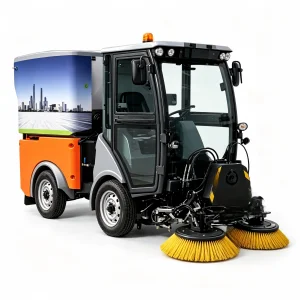
| Municipal Roads & Urban Parks | Fallen leaves, beverage cans, road grit, fine silt | Variable weather, operator safety, steep inclines | DK-2000 3-Wheel Fully Enclosed Sweeper | Weatherproof AC cab, hydraulic high-dumping waste hopper (1.5m release). |
| Pharmaceutical & Electronics Cleanroom Perimeter | Micro-fine dust, powder residue | Strict airborne particulate compliance (HEPA standards) | DK-1535Y / DK-221FB Stainless Industrial Vacuums | Dual-barrel stainless steel construction, 99.97% 0.3μm filtration efficiency. |
| Commercial Malls & Airport Terminals | Footwear dirt, coffee spills, fine surface dust | Daytime operation, low noise threshold (<65 dB) | Warrior 510B / KNIAHT 1020BT Ride-On Scrubber | Quiet battery drive, wash-scrub-dry single pass operation leaves floors walk-ready. |
Evaluating the true cost of industrial floor sweeping over a 5-year equipment lifecycle.
When procurement managers evaluate sweeping equipment suppliers, initial purchase price represents only 20% to 30% of the total lifecycle cost. The remaining 70% to 80% is comprised of operator labor wages, battery replacements, routine wear parts (main roller brushes, side brooms, rubber squeegee blades, intake hoses), and unplanned downtime maintenance.
Labor Savings ($/year) = [ (Area in m² / Manual Speed) - (Area in m² / Machine Sweeping Rate) ] × Hourly Wage
For example, sweeping a 20,000 m² warehouse manually requires approximately 40 labor hours per day (5 workers for 8 hours). Operating an electric ride-on sweeper like the DK-1800 (with an effective practical capacity of 10,000 m²/h) accomplishes the same job in under 2.5 hours with a single driver—saving over 37 labor hours per day. At a conservative labor rate of $15/hour, annual direct labor savings exceed $190,000 USD.
Our application engineers analyze floor incline, expansion joint depth, dust composition, and door clearance dimensions to match exact machine specifications.
Equipment is built to order in Wenzhou with specified battery packs, custom branding colors, voltage chargers (110V/220V/380V), and regional plug configurations.
We provide long-term spare parts supply kits (brushes, filters, squeegees), remote technician support within 24 hours, and comprehensive digital manuals.
Complete product fleet featuring walk-behind scrubbers, twin-tank vacuums, ride-on floor dry scrubbers, and industrial lithium battery cleaning units.
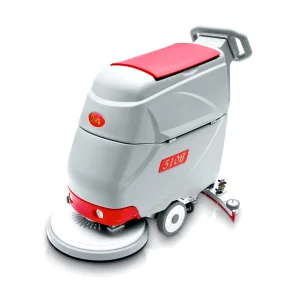
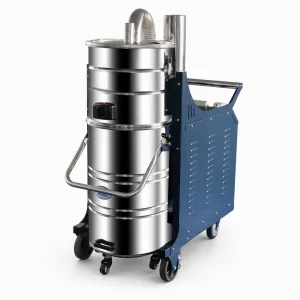
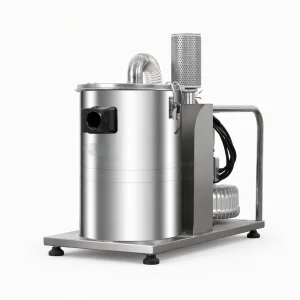
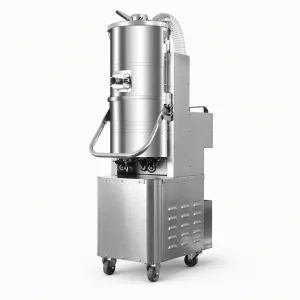
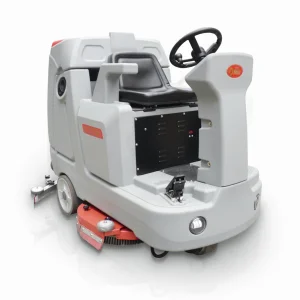
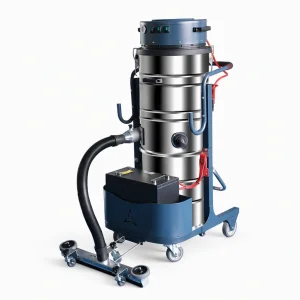
Comprehensive technical guidance compiled by DIKE senior application engineers for global equipment importers, facility managers, and distributors.
Wenzhou Dike Intelligent Environmental Protection Technology Co., Ltd. is committed to engineering excellence, competitive factory-direct pricing, and comprehensive after-sales technical support for global B2B partners.
Whether you are expanding your commercial equipment rental fleet, procuring municipal sanitation vehicles, or looking for custom OEM manufacturing for high-pressure washers and industrial vacuums, our engineering team is ready to assist. Contact our international sales department today for detailed technical datasheets, full product catalogs, and competitive container wholesale quotes.