
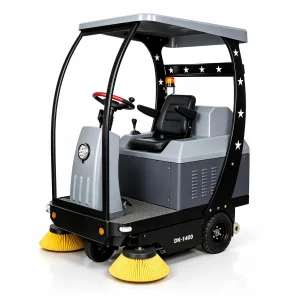
Deploying robust dust encapsulation, regenerative lithium drive power, and high-efficiency filtration tailored for Aichi manufacturing plants, port warehouses, and municipal facilities.
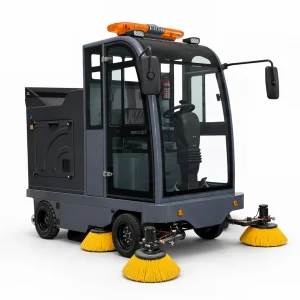
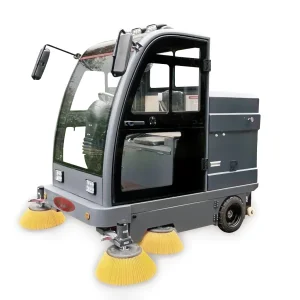
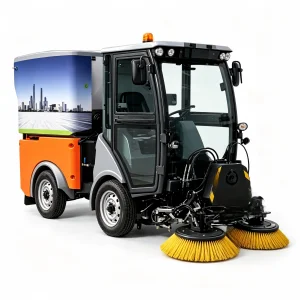
Nagoya stands as the pulsating core of the Chukyo Industrial Zone—Japan’s premier manufacturing capital, contributing over 40% of the nation's automotive output, heavy aerospace assemblies, precision machine tools, and advanced ceramics. For international sweeping machine manufacturers, serving Nagoya requires an uncompromising alignment with the rigorous principles of 5S, Total Productive Maintenance (TPM), and Green Transformation (GX) benchmarks.
Plants across Toyota City, Kariya, and Minato Ward generate volatile particulate loads: iron shavings, abrasive slag, metallic powder, and residual stamping lubricant films. Standard sweeping equipment fails due to rapid filter blinding and tire abrasion from metal slivers. Specialized high-pressure brush decks with magnetic pre-sweepers are critical for protecting precision robotic transit paths.
As Japan's highest cargo throughput maritime gate, Nagoya Port hosts multi-tier freight terminals exposed to sea spray, salt crusts, gravel, and high tire wear residue. Machines operating in these apron areas require marine-grade electrostatic chassis coating, IP65-sealed harness connectors, and heavy-duty debris chutes capable of handling foreign wood and strapping debris.
Facilities in Komaki and Oeda producing aerostructures and semiconductors mandate ISO Class 6 and 7 floor conditions. Microscopic composite carbon dust and silica must be vacuum-captured without exhaust turbulence. Sweeping equipment must integrate multi-stage PTFE membrane filtration capable of capturing particles down to 0.3 microns at 99.97% efficiency.
Driven by demographic shifts, strict Japanese occupational safety codes, and international carbon neutrality mandates, modern sweeping machinery has evolved from basic mechanical brooms into IoT-connected, automated surface treatment robots.
Traditional lead-acid batteries fail to meet round-the-clock shift demands in modern JIT (Just-In-Time) factories. Our LiFePO4 battery architectures deliver 3,500+ charge cycles, opportunity rapid charging in 90 minutes, and complete zero-gas emissions compliant with closed-door food and pharma standards.
Addressing Japan’s acute operational labor shortage, driverless sweeping platforms utilize multi-line solid-state LiDAR, ultrasonic obstacle avoidance, and dynamic SLAM navigation to conduct autonomous nighttime passes across warehouse layouts with millimeter repeatability.
Integrating pressurized air knives alongside counter-rotating synthetic-steel blended brushes allows sweeping machines to break boundary layer surface static, lifting embedded metal swarf and abrasive sand directly into vacuum recovery chambers without kicking up airborne plumes.
Onboard CAN-bus modules continuously track brush wear, battery health, motor thermal curves, and square-meter cleaning productivity. Cloud analytics instantly notify plant management of planned brush replacements, mitigating unplanned downtime in synchronized lean manufacturing.
Corporate buyers and facility engineering directors in Nagoya evaluate industrial sweeping hardware through a rigorous Total Cost of Ownership (TCO) methodology, focusing on operational lifespan, MTBF (Mean Time Between Failures), and regional compliance.
Procuring sweepers for Nagoya operations requires verification of single-phase (100V 60Hz Western Japan grid) and three-phase (200V 60Hz) compatibility. Chargers must carry PSE (Product Safety of Electrical Appliance & Material) certification, with fire-retardant enclosures conforming to JIS standards. Furthermore, hydraulic lifting systems must feature mechanical lock valves to comply with Japanese Industrial Safety and Health Law provisions.
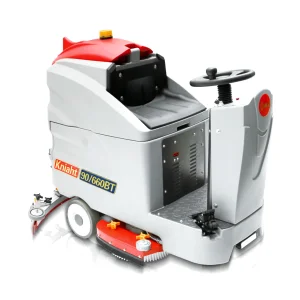
Acquisition purchase cost accounts for merely 22% of a machine’s 7-year life cycle expense. In Japanese industrial environments where labor costs exceed ¥2,200/hr, sweeping productivity directly dictates capital ROI. A ride-on sweeper clearing 12,000 m²/hr replaces 8 manual sweepers, reducing operational cost by over 74% within the first 14 months of commission while preventing expensive slips and forklift tire punctures caused by discarded screws and scrap.
Abrasive epoxy floors, polished concrete, and exterior porous asphalt degrade generic nylon brushes within 120 operational hours. Global procurement managers demand specialized polypropylene blended with carbon-steel wires for exterior sweeping, alongside wear-resistant polybutadiene natural rubber squeegees capable of withstanding acidic metalworking coolants and oil-soaked swarf.
Our application engineering protocols pair machine geometry, power ratings, and filtration stages to the micro-environments of specific industries throughout Greater Nagoya.
| Target Industry / Zone | Predominant Surface Hazard | Recommended Machine Configuration | Key Operational Advantages |
|---|---|---|---|
| Automotive Stamping Hubs (Toyota City, Nishio) |
Sharp steel clippings, oil-dusted chips, tire rubber soot | Heavy-Duty Ride-On DK-2000 Enclosed Sweeper | Full cab isolation, steel-reinforced debris hopper, magnetic front bar prevents tire damage. |
| Multi-Tenant Distribution (Komaki, Kasugai, Port) |
Cardboard fibers, wooden pallet chips, dry transit dust | Compact Ride-On DK-1400 Semi-Enclosed | Zero-emission electric motor, tight turning radius (1.5m), quiet operation near picking bays. |
| Aerospace Clean Assemblies (Oeda, Nagoya Airport) |
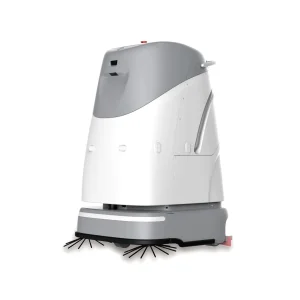
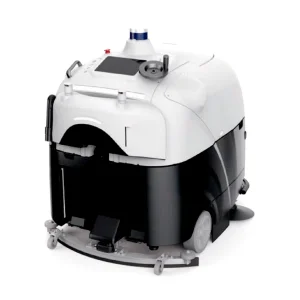
Micro-fine aluminum dust, carbon fibers, static particulate | Autonomous Scrubber SC50 & SC80S Driverless | SLAM LiDAR autonomous run, HEPA filtration down to 0.3μm, uniform cleaning pressure records. |
| Heavy Foundry & Casting (Chita Peninsula, Tokai) |
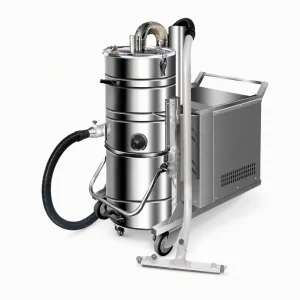
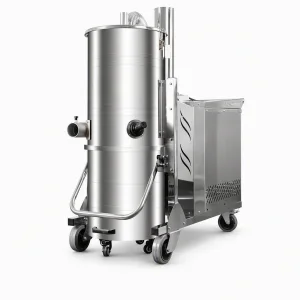
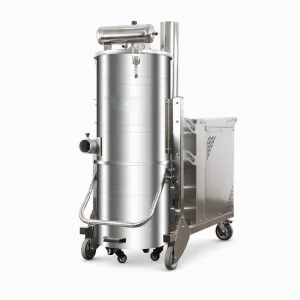
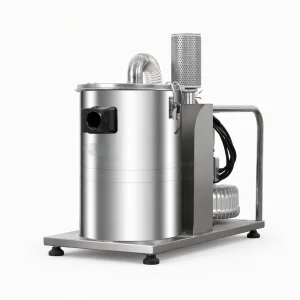
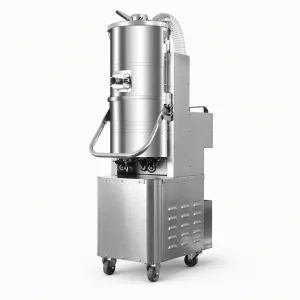
Sand casting grain, abrasive iron scale, bulk silica | Explosion-Proof / 380-400V DK-EX & DIKE-221FC | Continuous three-phase vacuum suction, ATEX/anti-static rated barrels, high negative pressure. |
| Municipal Thoroughfares (Sakae, Meieki Commercial) |
Foliage, drink cans, road silt, pedestrian litter | Multi-Functional Electric E-800 Urban Series | Sub-65dBA whisper operation, pedestrian safety flashers, auxiliary pressure lance for curbs. |
We support factory clients, cleaning contractors, and import distributors across Aichi, Gifu, and Mie prefectures through institutionalized lifecycle support designed to prevent facility downtime.
Our application team analyzes floor hardness (Schmidt hammer test), floor slope angles, chemical exposure levels, and door clearance profiles to verify exact machine sizing.
Every industrial unit is equipped with Japanese PSE-marked high-frequency smart chargers compatible with 100V single-phase or 200V three-phase 60Hz grid standards.
Critical spare parts (main cylindrical brooms, side brushes, drive motors, controller boards, HEPA filters) are maintained in regional hubs for 48-hour dispatch.
Bilingual (Japanese/English) operational manuals, safety interlock protocols, and operator pre-shift inspection check-sheets ensuring compliance with Japanese labor standards.
Anticipating the evolving requirements of Japan’s Society 5.0 initiative and smart factory automation, our engineering laboratory is developing autonomous surface treatment capabilities that merge machine vision with clean facility digital twins.
By integrating neural visual processing units (NPUs) into forward-facing stereo cameras, sweeping machines can distinguish between harmless liquid drips and high-hazard metallic objects or fallen pallet nails. The system dynamically increases brush downward force and vacuum velocity exclusively when encountering dense debris clusters.
Phasing in high-density non-flammable solid-state energy storage by 2027 will decrease machine battery chassis weight by 38% while doubling run times to 12 hours on a single rapid charge. This enables continuous double-shift operation across sprawling Nagoya Port transshipment facilities without battery swaps.
Multiple robotic scrubbers and sweepers communicate over private industrial 5G / Wi-Fi 6 networks, autonomously returning to centralized purge stations where hoppers are automatically emptied, vacuum filters reversed-blown, and fresh battery charge initiated without human intervention.
Complementing our sweeping platforms, explore our certified driverless floor scrubbers and heavy-duty three-phase industrial vacuum extractors engineered for high-consequence Aichi manufacturing plants.
Clear technical, logistical, and warranty answers for facility procurement managers, maintenance directors, and equipment distributors operating in the Greater Nagoya sphere.