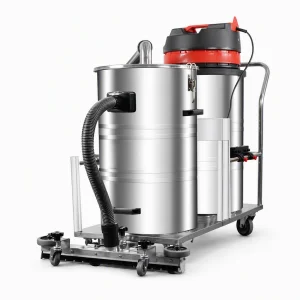
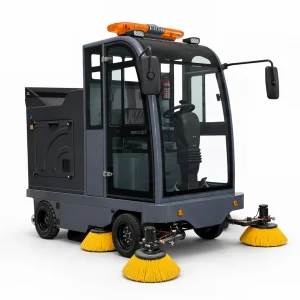
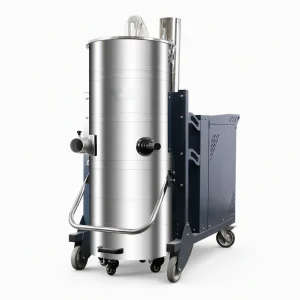
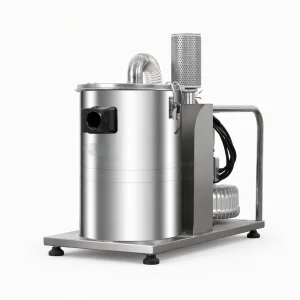
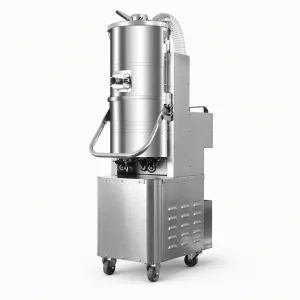
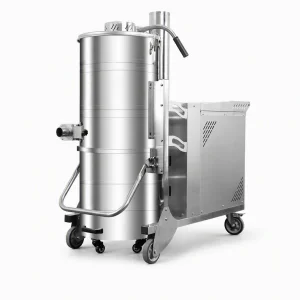
Engineered for high thermal tolerance, fluctuating single-phase utility grids, and continuous high-efficiency extraction in processing plants from Bole Lemi to Hawassa.
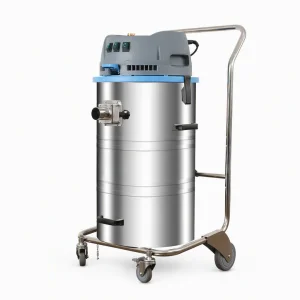
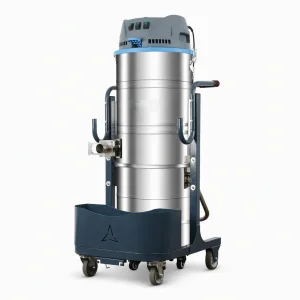
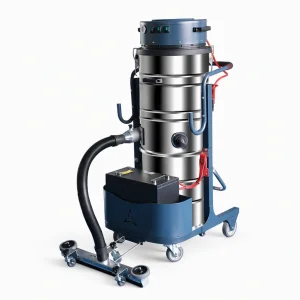
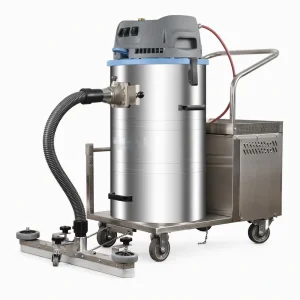
Ethiopia represents one of the most vibrant manufacturing frontiers in Sub-Saharan Africa. Propelled by governmental initiatives under the Industrial Parks Development Corporation (IPDC), modern industrial parks such as Hawassa, Bole Lemi, Kilinto, and Dire Dawa have transformed into regional hubs for export-oriented manufacturing, apparel, food and beverage processing, pharmaceuticals, and construction materials. However, operational efficiency within these parks demands industrial cleaning solutions that match the realities of the local commercial ecosystem.
In many production zones, secondary workshops, packaging terminals, and storage bays, three-phase power drops are either capital-intensive or physically limited to heavy stationary production line machinery. This infrastructural reality creates substantial demand for high-performance single-phase industrial vacuum cleaners. Facility managers frequently face severe particulate challenges: abrasive teff and grain dust in food processing facilities, lint and micro-fibers in textile looms, fine volcanic silica dust, and cement particulates across infrastructure worksites. Inadequate dust mitigation results in motor burnouts, compromised quality audits, respiratory hazards, and heightened risk of combustible dust ignition. Our single-phase industrial vacuum machinery is calibrated specifically to tackle these conditions with heavy-gauge construction and bypass-cooled suction units.
Global procurement teams operating in East Africa have shifted away from fragile commercial-grade vacuums toward certified industrial-grade equipment. Recent trends demonstrate several key requirements driving supplier selection:
Ethiopian power distribution can exhibit voltage swings between 180V and 240V. Industrial vacuums must incorporate thermal overload protectors, heavy-duty soft starters, and isolated copper-wound windings to withstand surges without coil degradation.
Fine dusts from grain mills and textile processing rapidly blind standard paper filters. Modern procurement prioritizes PTFE-coated polyester star filters with integrated manual or reverse-pulse jet blowback mechanisms to maintain static pressure.
Drop-down release barrels and AISI 304 stainless steel tanks resist corrosive agricultural residues and physical collisions with material-handling pallet trucks in fast-paced factory environments.
A rigorous industrial cleaning setup requires matching vacuum specs with medium density, airborne particulate sizing, and extraction frequency. Below is our engineering application matrix for major Ethiopian economic verticals:
| Sector & Region | Predominant Dust / Debris | Operational Risk | Optimal Vacuum Specification | Standard Filtration System |
|---|---|---|---|---|
| Textile & Apparel (Hawassa, Kombolcha) | Cotton lint, polyester synthetic fibers, dye trim dust | Looms clogged, static electricity fires, batch staining | Twin-tank bypass dual motor, anti-static grounding | Antistatic needle-felt polyester with cyclonic separator |
| Food & Beverage Processing (Oromia, Debre Birhan) | Coffee chaff, grain flour, teff powder, liquid spills | Bacterial cross-contamination, combustible flour clouds | Wet/dry dual configuration, 304 stainless release tank | PTFE water-repellent membrane + HEPA H14 downstream |
| Pharmaceutical Manufacturing (Kilinto IP) | Active pharmaceutical ingredients (API), tablet fines | Cross-batch adulteration, occupational toxicity risks | Multi-stage negative pressure unit, sealed bypass motor | Class M primary cartridge + certified H14 HEPA exhaust |
| Construction & Cement Packing (Mugher, Dire Dawa) | Portland cement dust, crushed aggregate, silica grit | Rapid filter blinding, premature motor armature wear | Manual/pneumatic blowback system, continuous airflow | Star filter with conductive fibers and cyclone pre-separator |
| Automotive & Machinery Assembly (Adama) | Metal grindings, lubricating oil mist, coolants | Slip-and-fall hazards, sensor contamination in CNC units | High suction liquid-slurry extractor, float shutoff valve | Oil-resistant polyurethane pre-filter + wire mesh basket |
Procuring capital equipment for shipment to Djibouti Port and onward transit to Modjo Dry Port requires meticulous adherence to Ethiopian customs and regulatory guidelines. Our factory maintains rigorous alignment with Ethiopian Standards Agency (ESA) specifications and international electro-mechanical manufacturing standards:
All exported machinery can be supplied with Pre-Export Verification of Conformity (PVoC) certificates via accredited bodies (SGS, Bureau Veritas, Intertek) to ensure rapid customs clearance at Modjo Dry Port and Kaliti Customs Branch.
We provide full documentation for National Bank of Ethiopia (NBE) foreign exchange permit applications, Letters of Credit (L/C), Cash Against Documents (CAD), and proforma invoices formatted to national banking standards.
Every industrial vacuum cleaner undergoes individual dynamic balance testing, insulation resistance checks (500V test > 100MΩ), and continuous pressure drop measurements before seaworthy export crating.
As industrial automation expands throughout Ethiopia's special economic zones, environmental cleaning infrastructure is transitioning toward connected, energy-efficient, and autonomous architectures. Our engineering department is actively deploying next-generation capabilities designed to maximize uptime:
Replacing traditional carbon-brush commutators with electronically commutated motors (ECM) increases operational lifespan from 800 hours to over 5,000 continuous hours while reducing energy consumption by up to 35%.
Onboard differential micro-sensors monitor vacuum drop across primary filtration stages, relaying maintenance warnings to facility engineering dashboards before motor thermal cutoff occurs.
Integrating safe Lithium Iron Phosphate chemistries with 2,000+ charge cycles allows off-grid industrial vacuums to run full shifts in remote or developing regional clusters experiencing load-shedding.
Comprehensive engineering, logistics, and power compatibility guidance for purchasing agents and plant directors.
Yes. All exported units are built with dedicated wide-band voltage protection relays, heavy copper coils, and integrated thermal circuit breakers rated for 180V–240V tolerances, preventing burnouts during common brownouts or voltage surges.
Maritime freight from Ningbo/Shanghai to the Port of Djibouti takes approximately 18–25 days. Multimodal transit from Djibouti to Modjo Dry Port via the Ethio-Djibouti Railway takes an additional 4–7 days, followed by standard Ethiopian customs release.
We deploy high-density conductive polyester star filters combined with PTFE non-stick membranes, offering 99.9% separation down to 1 micron. For hazardous particles, secondary downstream HEPA H14 filters capture sub-micron particles down to 0.3 microns.
We supply complete 2-year maintenance packages (including squeegee blades, carbon brushes, replacement HEPA cartridges, and reinforced conductive EVA hoses) directly with initial containerized machine consignments.
We accept Irrevocable Letters of Credit (L/C at sight) opened through the Commercial Bank of Ethiopia (CBE), Awash Bank, Dashen Bank, and other major private financial institutions, compliant with NBE international trade directives.
Yes. As an authentic R&D factory, we provide complete private-label OEM/ODM solutions, customized paint schemes, localized Amharic/English warning labels, and bespoke accessory fittings tailored to industrial bids.
Explore our heavy-duty portfolio engineered for manufacturing compounds, logistics hubs, municipal facilities, and cleanroom plants across Ethiopia.