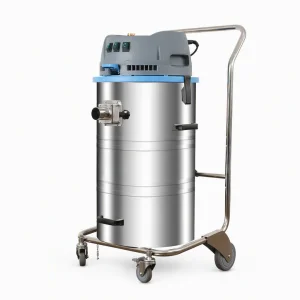
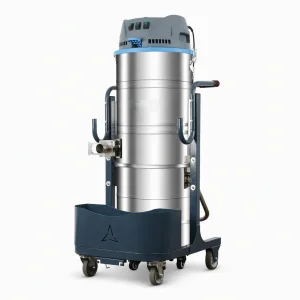
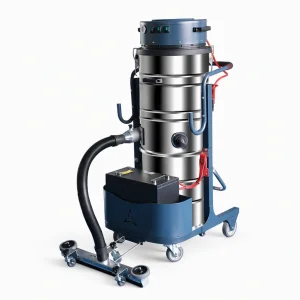
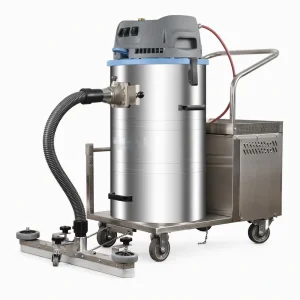
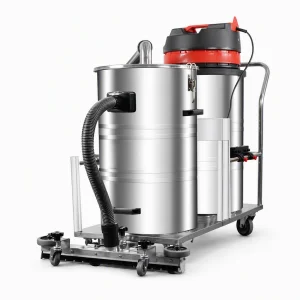
Pre-configured for local manufacturing plants, warehouse logistics corridors, and civil fit-out projects in the Riyadh Metropolitan Region.
How the Kingdom of Saudi Arabia's Vision 2030 industrial transformation in the Riyadh Province is revolutionizing environmental particulate sanitation.
The Riyadh metropolitan region is currently undergoing the most aggressive industrial transformation across the Middle East. Under the National Industrial Development and Logistics Program (NIDLP) and the direct purview of the Saudi Authority for Industrial Cities and Technology Zones (MODON), the capital is expanding its manufacturing zones across Riyadh 1st, 2nd, and 3rd Industrial Cities, as well as Sudair Industrial City. This expansion brings a specialized sanitation paradox: the confluence of hyper-arid desert geography and high-velocity manufacturing dust.
Unlike standard temperate factory environments, Riyadh's industrial facilities battle ambient airborne particulate matter characterized by micro-fine silica sand (sub-10-micron quartz particles), combined with abrasive industrial byproducts such as cement dust, aluminum swarf, limestone pulverization, and food-grade packaging powders. Facility plant managers throughout the Sulay logistics corridor and the King Salman Energy Park satellite hubs face severe equipment breakdowns when relying on domestic vacuum designs or oversized, immobile three-phase heavy equipment.
This is precisely where single-phase industrial vacuum cleaners (220V/230V, 60Hz) emerge as the ultimate strategic asset for plant sanitation directors. Standard industrial setups in Saudi Arabia feature ubiquitous 220V/230V single-phase secondary distribution. While three-phase 380V/400V supplies are reserved for major stationary production lines, deploying heavy-duty, high-CFM single-phase mobile units provides maintenance squads with unrestricted mobility across narrow mezzanine platforms, precision CNC stations, packaging lines, and pharmaceutical compounding bays without requiring dedicated multi-phase umbilical connections.
Examining why international facility managers are pivoting toward multi-motor single-phase bypass systems for rapid turnaround operations.
Globally, industrial hygiene engineering has transitioned from centralized, rigid vacuum piping systems toward flexible, decentralized point-of-source extraction squads. In premier industrial manufacturing zones across Germany, Japan, and North America, decentralized single-phase extraction units now handle up to 68% of floor-level maintenance incidents. The engineering rationale rests on operational adaptability, energy efficiency, and minimized downtime.
| Evaluation Parameter | High-Output Single-Phase (220V/60Hz) | Heavy Industrial Three-Phase (380V/400V) | Battery Lithium-Ion Autonomous Systems |
|---|---|---|---|
| Infrastructure Dependency | Universal 220V socket access; zero specialized electrical cabling required. | Requires dedicated 3-phase wall drops, interlock switches, and phase rotation checks. | Requires battery charging docking stations and battery management maintenance. |
| Mobility & Agility | Lightweight chassis (35–65 kg); easy single-operator transit via lifts and ramps. | Heavy chassis (120–300 kg); restricted to main ground floor transit channels. | Exceptional perimeter mobility; runtime limited by ampere-hour battery payload. |
| Suction Airflow (CFM) | 180 – 360 CFM (via dual or triple independent bypass vacuum stages). | 300 – 650 CFM (driven by side-channel turbine continuous blowers). | 120 – 220 CFM (optimized for high efficiency per watt draw). |
| Primary Application in Riyadh | Fast response spills, packaging line cleanups, CNC machines, textile, fit-out. | Heavy foundry sand, centralized pneumatic conveyance, bulk silo recovery. | Daily automated sweeping, daytime commercial lobbies, active transit halls. |
| Capital Investment (Capex) | Low to Moderate; optimal total cost of ownership (TCO) and rapid ROI. | High capital investment; high installation and panel commissioning cost. | Moderate to High depending on lithium battery pack chemistry and cycle rating. |
Consult with our lead application engineers for bespoke OEM/ODM quotes, SASO-certified technical documentation, and container-direct bulk pricing.
How DIKE's integrated engineering base delivers cost efficiencies, custom voltage adaptation, and rapid production cycles to Saudi contractors.
Unlike vendors who simply relabel 50Hz motors causing severe thermal overheating in Riyadh's 60Hz grid, DIKE winds pure copper rotors and stators tailored specifically to 60Hz electromagnetic curves, ensuring cool motor operation even under +45°C ambient conditions.
Vacuum collection drums undergo heavy-gauge hydraulic pressing in our Wenzhou facility, utilizing surgical SUS304 stainless steel. This completely neutralizes pitting and oxidation from aggressive chemical washdowns, saline groundwater particulates, and caustic salts.
By producing injection molds, filtration assemblies, high-speed bypass motor units, and electronic control boards within our Wenzhou industrial ecosystem, DIKE delivers 35%–45% procurement cost reductions compared to European imported legacy equipment.
Evaluating critical operational sectors across the capital city where DIKE machines deliver measurable uptime improvements.
Riyadh's booming e-commerce corridors feature mega-warehouses with massive racking systems. Fine desert dust seeps through automated loading docks, settling onto barcodes and automated conveyor rollers. Our single-phase vacuum units, coupled with HEPA H13 filtration, clear conveyor lines and shelf bays rapidly without halting multi-phase power infrastructure.
Driven by giga-projects like New Murabba and King Salman Park, metal and aluminum fabrication shops generate razor-sharp chips, abrasive swarf, and flammable polishing debris. DIKE's stainless steel single-phase wet/dry units handle hot metal shavings and cutting oils simultaneously, eliminating fire hazards and protecting machinist health.
Cleanroom environments and food packaging facilities require zero particulate bypass. DIKE's twin-tank and PTFE-coated cartridge vacuums prevent cross-contamination during active batch changes. With noise levels engineered below 72 dBA, operators maintain hygiene without ear protection fatigue.
Post-construction gypsum dust, marble polishing slurry, and silica particulate pose lethal risks to standard vacuums. Our heavy-duty single-tank DK-308 models allow fit-out contractors to vacuum toxic crystalline silica directly at the floor grinder shroud, achieving full compliance with Saudi OSHA safety standards.
A breakdown of the internal airflow dynamics, thermal heat dissipation, and multi-stage filtration mechanics built into every DIKE unit.
Standard industrial vacuum cleaners experience catastrophic motor burnouts in Riyadh primarily due to two factors: inadequate bypass cooling and premature filter blinding from sub-micron dust cake accumulation. DIKE's research and development team has engineered a multi-layered defense architecture specifically tuned for Gulf climate realities:
Critical verification points for procurement officers, contracting firms, and commercial distributors in Saudi Arabia.
Ensure the machine nameplate specifies 220V/60Hz or 230V/60Hz. Standard European 50Hz single-phase equipment running on the Saudi 60Hz grid experiences motor slippage, 20% higher rotational speeds, extreme heat generation, and immediate coil burnout.
Importing equipment into Riyadh requires registration on the SABER electronic platform and an approved Product Certificate of Conformity (PCoC) alongside a Shipment Certificate (SC). DIKE supplies complete IEC test reports and CE certifications required for smooth customs clearance.
Dry desert sand rushing through plastic vacuum hoses creates enormous electrostatic voltages (up to 35,000V). Ensure your vacuums include anti-static copper hose grounding paths and grounded stainless steel drum connections to prevent electrical shock or dust explosions.
Authoritative technical guidance compiled by our engineering lead for Middle Eastern procurement teams.
While three-phase vacuums provide uninterrupted continuous blower cycles, they lack agility. In most Riyadh warehouses, automotive workshops, and finishing areas, 380V high-amp drops are scarce or positioned far apart. Single-phase 220V/60Hz models can be plugged into standard wall outlets everywhere, enabling instant cleanups without running hazardous 50-meter extension cords across busy forklift thoroughfares.
We employ a three-tier defense system: First, a tangential intake deflects heavy silica sand into the drum via cyclonic centrifugal force. Second, our conical primary filter is lined with an impermeable PTFE membrane, forcing microscopic dust to accumulate on the outer layer rather than embedding inside the fabric fibers. Third, manual or electronic pneumatic reverse-pulse shakers knock the dust cake directly into the drum without requiring operators to open the machine.
Single-phase bypass carbon-brush motors are engineered for intermittent to heavy-cyclic duties (typically 2 to 4 hours of continuous operation per cycle). For 24/7 continuous operations, we configure our machines with multi-motor staging switches, allowing operators to rotate motors sequentially, or we recommend our brushless/induction motor series. Additionally, DIKE motors feature independent bypass thermal cooling channels that draw clean ambient air across the copper windings to prevent thermal cutouts.
DIKE provides comprehensive conformity support including CE declarations, IEC 60335 test reports, factory ISO9001 audit files, and technical product dossiers required by Saudi accredited conformity assessment bodies (CBs). We work directly with your clearing agent in Dammam, Jeddah, or Riyadh Dry Port to ensure instant Shipment Certificate issuance via SABER.
Yes. Models such as the DK-308 and DK-361ECO feature true wet-and-dry functionality. An integrated mechanical float-valve cutoff shuts off suction automatically when liquid levels reach capacity, protecting the bypass motors from water intrusion. This makes them ideal for machine tool sump pump cleaning, coolant spills, and chemical washdowns across Riyadh production facilities.
Standard production cycles for factory orders range between 12 and 18 working days. Ocean freight from Ningbo or Shanghai to Dammam (King Abdulaziz Port) or Riyadh Dry Port typically requires 18 to 24 days transit. For urgent project demands, critical replacement parts, motors, and sample machines can be air-freighted directly to King Khalid International Airport (RUH) within 4 to 6 business days.
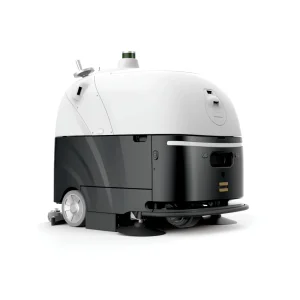
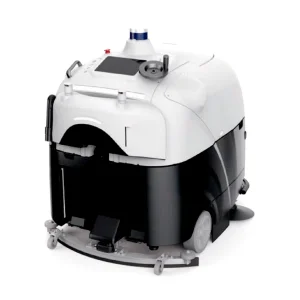
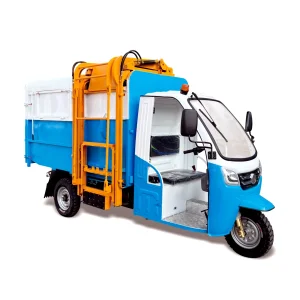
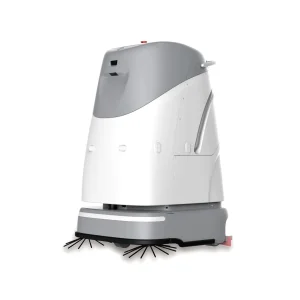
Explore our extended series of specialized textile extractors, autonomous driverless scrubbers, and industrial vehicles engineered for large Saudi infrastructures.
Equip your Riyadh industrial facility or expand your Saudi cleaning equipment distributorship with certified, desert-tested single-phase industrial vacuums. Direct factory pricing, customized OEM colors/branding, and full technical warranty support.
Send Inquiry Now