Direct-from-factory autonomous scrubbers, electric sanitation utility tricycles, and high-pressure washing systems engineered to meet Brazilian NR-12 mechanical safety criteria and tropical high-humidity environments.
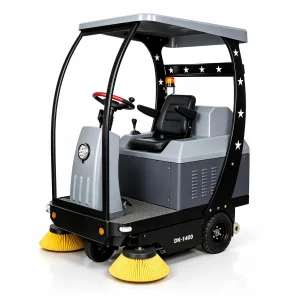
All-weather dust suppression sweeping unit customized for bulk loading terminals, agro-grain storage hubs, and Brazilian free-trade industrial parks.
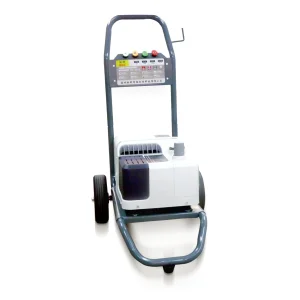
High-output hydraulic pressure washer calibrated for sugarcane ethanol refining lines, meatpacking hygiene sanitation, and heavy equipment degreasing.
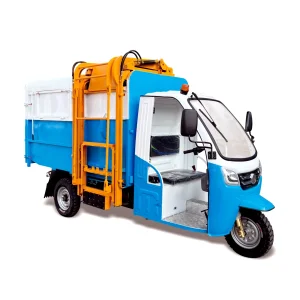
Zero-emission compact vehicle engineered for municipal waste logistics through narrow Latin American urban arteries, steep hills, and closed industrial parks.
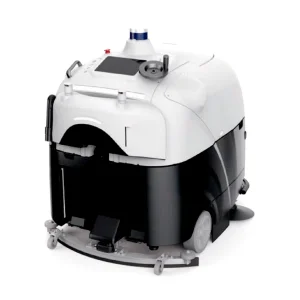
LiDAR and 3D vision automated scrubber-dryer designed for round-the-clock maintenance in Guarulhos air terminals, mega-distribution centres, and shopping malls.
Navigating Brazil's unique re-industrialization initiatives, logistical bottlenecks, and regulatory landscapes for specialized commercial cleaning and heavy manufacturing filtration equipment.
The industrial corridor encompassing São Paulo (ABC Paulista), Minas Gerais, and Paraná is undergoing intense modernization under the "Nova Indústria Brasil" framework. Automotive manufacturing, chemical synthesis plants, and pharmaceutical cleanrooms demand continuous vacuum collection and wet scrubbing compliant with strict ABNT and Ministry of Labour guidelines.
Mato Grosso, Goiás, and Rio Grande do Sul house the hemisphere's highest-capacity grain transshipment terminals, soybean crushers, and meat processing facilities (JBS, BRF). These facilities generate high particulate dust loads (chaff, grain flour, combustible organic particulates), requiring high-precision reverse-pulse vacuum cleaners and explosion-proof wash-down systems.
The Port of Santos, Port of Paranaguá, and inland multimodal hubs suffer extreme particulate accumulation from mineral ores (Vale) and fertilizers. Concurrently, regional logistics operators (Mercado Livre, Magazine Luiza) managing 100,000+ m² fulfilment centers require high-capacity ride-on scrubbers and autonomous scrubbing robots to reduce per-square-meter facility operating costs.
How Chinese precision OEM manufacturing bridges the gap between European design benchmarks and Latin America's demand for high-durability, cost-optimized industrial equipment.
| Evaluation Parameter | Legacy Western Brand Imports | Local Brazilian Assemblers | China DIKE Factory Direct Engineering |
|---|---|---|---|
| Compliance & Norms | CE certified; high adaptation costs for NR-12 & Inmetro | Direct NR-12 compliance; limited automated options | Full factory customization for 60Hz grids, NR-12 interlocks & tropical insulation |
| Power Systems | High cost Lithium-ion; proprietary locked BMS | Heavy lead-acid reliance; short battery lifecycles | Flexible LiFePO4 / AGM battery options with universal smart charging interfaces |
| Filtration Technology | Standard HEPA cartridge, expensive proprietary replacements | Basic woven textile bags; frequent clogging | Manual/Pneumatic blowback reverse-jet PTFE membrane systems down to 0.3μm |
| TCO (Total Cost of Ownership) | Prohibitive acquisition and replacement parts pricing | Moderate machine cost; higher maintenance frequency | Optimized CAPEX, non-proprietary wear parts, scalable distributor margins |
Every machine exported to Brazil must withstand regional electrical grid variations, intense coastal salt air corrosion, and heavy red-soil dust conditions.
Unlike Europe and Asia (50Hz), Brazil operates predominantly on 60Hz. Single-phase utility varies between 127V (Southeast) and 220V (Northeast/South), while heavy industrial three-phase infrastructure runs at 220V, 380V, or 440V. DIKE factory engineers calibrate induction vacuum turbine motors and pump drives with dual-wound stator sets and thermal overload relays to prevent motor burnouts.
Brazil's NR-12 (Norma Regulamentadora 12) enforces fail-safe physical guards, dual-channel emergency stop buttons, category-4 safety relays, and mechanical disconnect isolators. Our machines feature factory-configured emergency trip switches, sealed magnetic interlocks, and shielded rotative drive components to ensure smooth customs clearance without re-engineering upon arrival.
Operating in high-salinity ports (Santos, Paranaguá, Suape) and high-humidity equatorial climates (Manaus Free Trade Zone) causes premature structural failure on standard machinery. DIKE deploys rotomolded high-density polyethylene (HDPE) solution tanks, electrophoretic-dipped powder-coated steel undercarriages, and IP55/IP65 ingress-rated electrical junction housings.
Progressive architectural transitions from operator-dependent machinery to cloud-managed autonomous cleaning fleets for global B2B operations.
Full transition of push and ride-on sweepers to modular LiFePO4 battery architectures, reducing charging times from 8 hours to under 2 hours, paired with universal CAN-bus battery monitors.
Integrating differential pressure sensors across industrial vacuum filtration tanks. Vacuum units automatically detect micron-scale clogging and trigger timed acoustic reverse air bursts.
Adoption of hybrid 3D LiDAR, ultrasonic sonar arrays, and depth-vision neural cameras on scrubbing platforms (such as the SC80S) allowing reliable operation in high-traffic dynamic spaces.
Cloud IoT integration providing Brazilian distributors and facilities directors real-time telemetry: square meters cleaned, water flow rates, brush motor wear levels, and scheduled maintenance alerts.
Direct factory supply models engineered with reinforced metallurgy, multi-stage cyclone extraction, and ergonomic chassis designs for demanding commercial environments.
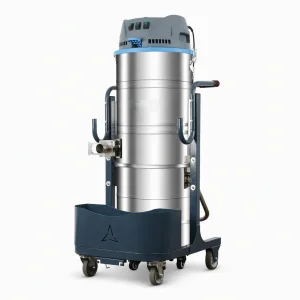
Twin-tank continuous dry/wet suction unit engineered for automotive workshops, tooling facilities, and commercial maintenance contractors.
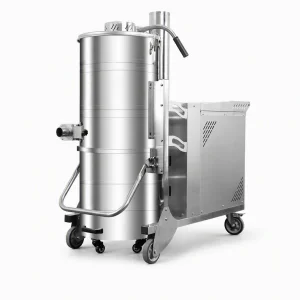
Specialized fine-dust collector equipped with reverse-jet filter purging, designed for Brazilian grain silos, flour mills, and cement packaging lines.
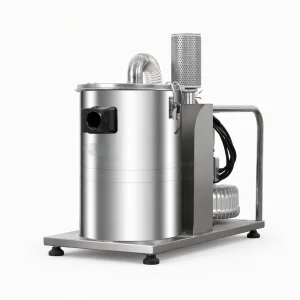
Designed for integration alongside CNC cutting tables, plastic granule hoppers, and packaging machinery for continuous dust and chip extraction.
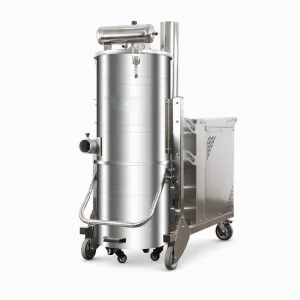
Continuous-duty industrial vacuum featuring a side-channel turbine pump, high-capacity 100L recovery barrel, and HEPA filter media for foundry slag.
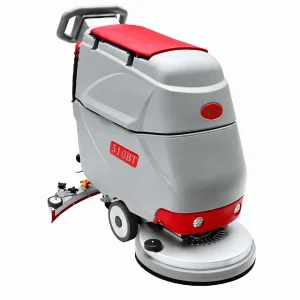
Self-propelled ergonomic scrubber-dryer engineered for Brazilian retail chains, private clinics, school corridors, and food court floors.
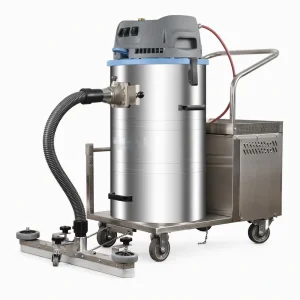
AISI-304 sanitary stainless construction with zero-emission onboard DC battery bank, ideal for pharmaceutical cleanrooms and food packaging corridors.
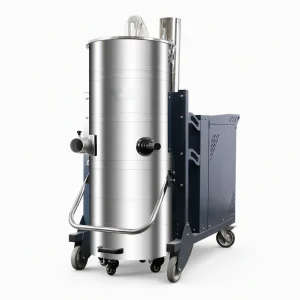
Twin-tank mechanical structure separating heavy solid debris from ultra-fine aerosols, purpose-built for ceramic tile, marble, and automotive casting plants.
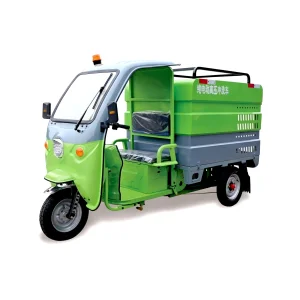
Integrated high-pressure jetting pump with built-in water storage tank on an electric tricycle chassis, engineered for public square and sidewalk sanitization.
Key insights on Brazilian customs compliance, Mercosur common external tariffs, voltage compatibility, and after-sales spare parts management.
Brazil exhibits a bifurcated electrical grid: consumer and light-commercial grids operate at either 127V/60Hz or 220V/60Hz depending on the state (e.g., São Paulo and Rio de Janeiro utilize 127V for standard single-phase outlets, whereas Brasília and Recife utilize 220V). Industrial installations commonly feature three-phase 220V, 380V, or 440V at 60Hz. DIKE configures motor stator windings, contactors, and chargers strictly for 60Hz operations, preventing the severe overheating and 17% rpm drop caused by running standard 50Hz European/Asian motors on Brazilian current.
Importing capital machinery into Brazil requires compliance with the stringent NR-12 mechanical safety standard enforced by the Ministry of Labour and Brazilian Federal Customs (Receita Federal). DIKE provides complete Portuguese technical files, electrical schematics featuring emergency stops with dual-redundant safety relays, mechanical schematics indicating physical guarding points, and factory-issued conformity certificates. For electrical cords and chargers subject to Inmetro certification, we supply pre-certified components or facilitate integration with locally approved power cables.
To overcome long maritime transit times (typically 35–45 days from Ningbo/Shanghai to Santos or Paranaguá), DIKE provides distributor partners with "First-Line Maintenance Service Kits" containing critical wear items: squeegee blades (polyurethane and oil-resistant Linatex), roller brushes, suction motor carbon brushes, filter cartridges, solenoid valves, and wheel bearings. We also maintain CAD-matched non-proprietary designs, allowing end-users to source universal consumables locally when emergency replacements are needed.
Yes. Over 65% of our international output is manufactured under OEM or ODM agreements. We provide custom rotomolded tank colors, laser-cut client logos, branded serial nameplates compliant with ABNT standards, and fully translated Portuguese user manuals and maintenance guides. Additionally, our firmware interfaces for autonomous sweepers (SC80S series) feature Portuguese language localization for local facility operators.
Cleaning machinery imported into Brazil falls under specific NCM (Nomenclatura Comum do Mercosul) classifications, such as 8479.89.99 (mechanical appliances with individual functions), 8424.30.90 (high-pressure washing equipment), or 8508.11.00 (vacuum cleaners with self-contained motors). DIKE works closely with licensed Brazilian despachantes aduaneiros (customs brokers) to ensure pro-forma invoices, commercial invoices, and packing lists accurately describe machine function and power ratings to prevent tariff misclassification penalties.
Connect with DIKE's senior export engineering team for 60Hz technical specifications, customized factory quotations, NR-12 compliance packages, and full OEM catalog access.