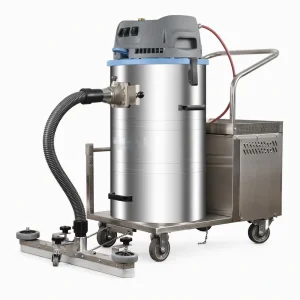
Engineered for continuous heavy extraction, fine dust mitigation, and commercial surface maintenance across high-throughput global infrastructure.
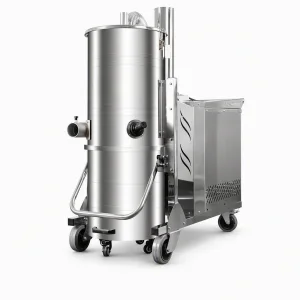
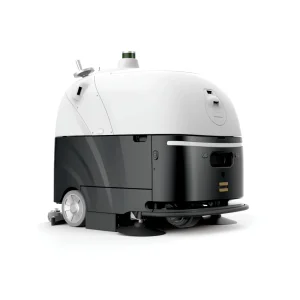
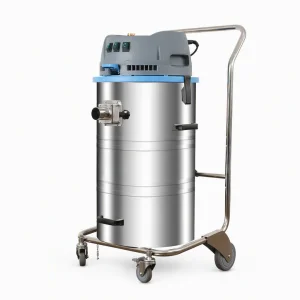
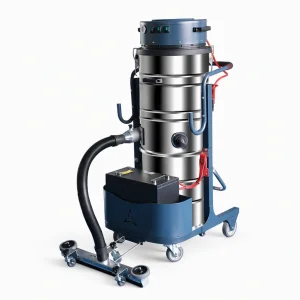
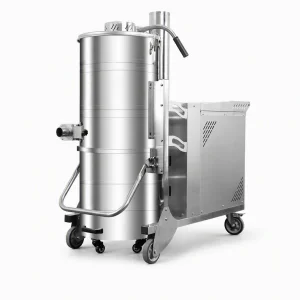
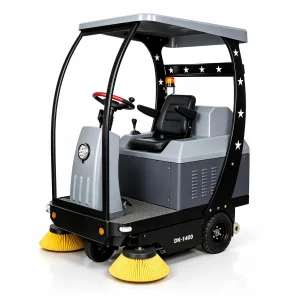
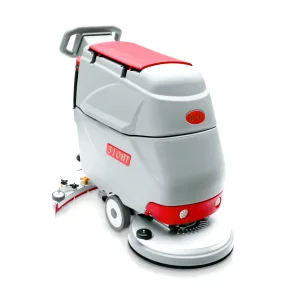
A rigorous industrial perspective: Moving beyond plastic domestic appliances toward heavy continuous duty, high air volume (CFM), HEPA-grade containment, and explosive zone protection.
Commercial vacuum manufacturers implement side-channel blowers and three-phase induction motors without carbon brushes. These systems deliver up to 20,000 hours of maintenance-free operation under heavy negative pressure without thermal throttling.
Incorporates star filters, PTFE membrane cartridges, and upstream/downstream HEPA (H13-H14) systems achieving 99.995% efficiency at 0.3 microns. Essential for OSHA compliance in silica dust, hexavalent chromium, and combustible flour or starch extraction.
Engineered for high CFM (Cubic Feet per Minute) to capture airborne particulate at a distance, combined with water lift (static suction up to 350 mbar) for slurries, abrasive swarf, and wet cooling liquids in automotive CNC machining.
How Chinese commercial vacuum manufacturing clusters deliver superior vertical integration, modular R&D agility, and competitive Total Cost of Ownership (TCO).
From sheet metal laser cutting, precision CNC stamping, automated mold rotational tooling to motor winding and PCB assembly. Complete in-house cluster control reduces component lead times by 45% compared to Western assembly plants.
Capitalizing on China's world-leading EV lithium iron phosphate (LiFePO4) battery supply ecosystem. Industrial vacuum cleaner units now feature fast-charging battery packs providing up to 4 hours of uninterrupted push-type operation.
Every commercial chassis, blowback filter shaker, and extraction motor undergoes dynamic load testing, high-voltage insulation tests, acoustic decibel verification, and IP-rated fluid ingress chamber audits before global shipping.
A decision framework developed by DIKE systems engineers to align operational facility requirements with exact extraction specs.
| Operating Scenario | Environmental Challenges | Recommended Category | Target Machine Model | Core System Advantage |
|---|---|---|---|---|
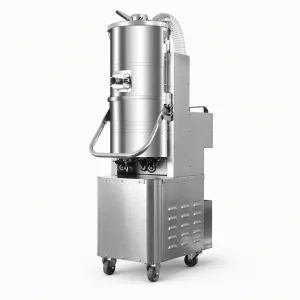
| Pharmaceutical Cleanrooms & Laboratories | Sub-micron airborne toxins, cross-contamination, static charges | Cleanroom Grade Industrial Extraction | China DK-1535Y Pharmaceutical Vacuum | Stainless 304 barrel, multi-stage HEPA filtration, anti-static grounding. |
| Chemical, Grain, & Flour Processing | Combustible dust explosions, continuous micro-particulate build-up | Explosion-Proof Extraction Systems | Wholesale DK-EX Three-Phase Explosion-Proof | ATEX-standard design, spark-free continuous duty side-channel turbine. |
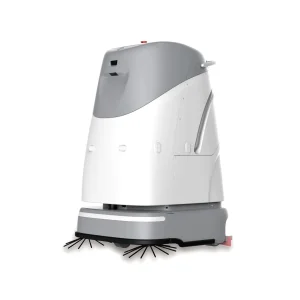
| Large Warehouses & Distribution Hubs | Massive square footage, dynamic traffic, recurring floor dust | Autonomous Scrubber Dryers | Wholesale SC80 Driverless Scrubber | SLAM LiDAR navigation, completely autonomous route cleaning, reduced labor cost. |
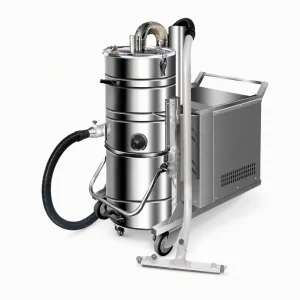
| Heavy Automotive & CNC Metal Machining | Metal swarf, sharp shavings, viscous coolant slurry | Dual-Barrel Wet/Dry Recovery | China DK-221FB Dual Barrel 100L Collector | 2200W motor, 248mbar vacuum lift, separated cyclone chip separation. |
| High-Traffic Commercial Retail & Supermarkets | Narrow aisles, tight turns, silent daytime operation demands | Walk-Behind Autonomous/Manual Scrubbers | Wholesale SC50 Driverless Scrubber | Zero-emission lithium drive, low-decibel scrub deck, rapid dry vacuum pickup. |
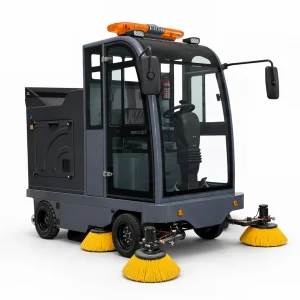
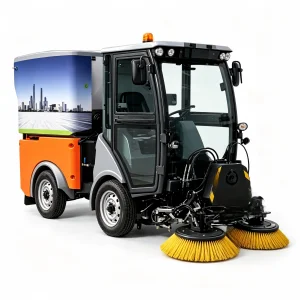
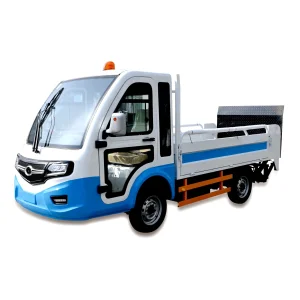
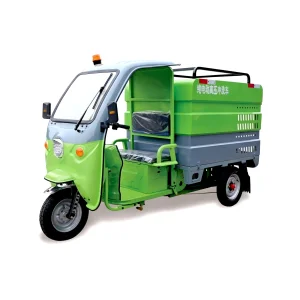
| Municipal Plazas & Campus Logistics | Outdoor solid waste, fallen leaves, loose grit and sand | Semi-Enclosed Electric Sweepers | Wholesale DK-1400 Sweeper Supplier | All-weather cabin, high-capacity hopper, high atomized mist spray for dust control. |
Clear, engineering-backed answers addressing the complex specifications involved in factory-direct sourcing.
CFM (Cubic Feet per Minute) defines the total volume of airflow moving through the vacuum hose, directly correlating with dust-sweeping capability across open floor surfaces. Static Water Lift (measured in mbar or inches of water) determines the vacuum motor’s ability to pull heavy debris, dense metal chips, or heavy slurries upwards. A balanced industrial extraction system carefully harmonizes both parameters.
Single-phase vacuums utilize commutator brush motors that run hotter and generally require brush replacements every 600-800 hours. Three-phase industrial units feature induction motors that do not experience brush friction, allowing for non-stop 24/7 continuous operation on assembly lines, heavy fabrication workshops, and centralized duct cleaning operations.
Fine dust like cement powder, flour, or powder paint quickly forms an impermeable layer over filter pores, drastically dropping airflow. A blowback system (like the reverse-pulse system on our DK-221SMC) redirects high-pressure air through the inside of the filter chamber, shaking loose accumulated particles into the collection drum without dismantling the machine.
Reputable OEM/ODM factories must supply verified CE compliance, Low Voltage Directive (LVD) documentation, Electromagnetic Compatibility (EMC) testing, and RoHS reports. For explosive atmospheres, ATEX or IECEx explosion-proof certification is mandatory to ensure full compliance with regional workplace safety legislation.
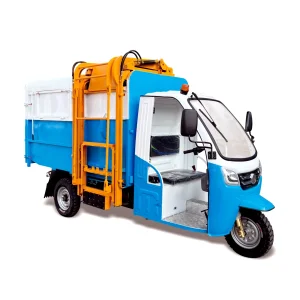
Comprehensive fleet engineering spanning three-wheeled waste transport, high-pressure street washing, autonomous floor robotics, and industrial dust extractors.