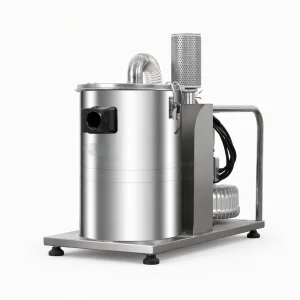
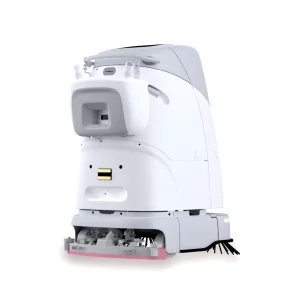
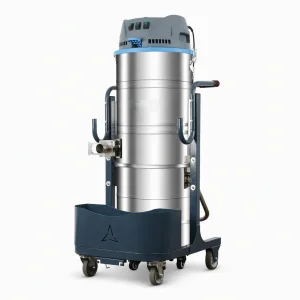
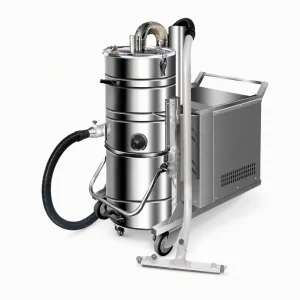
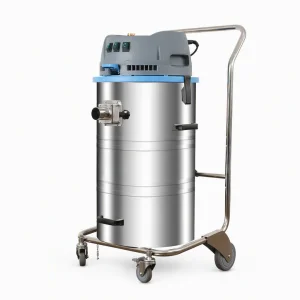
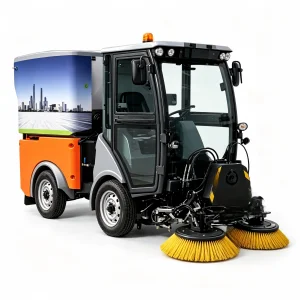
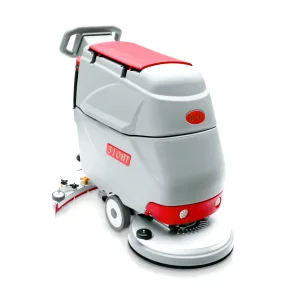
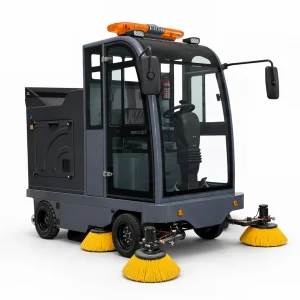
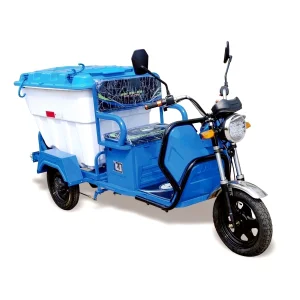
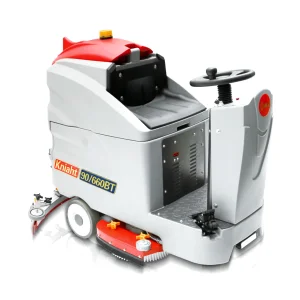
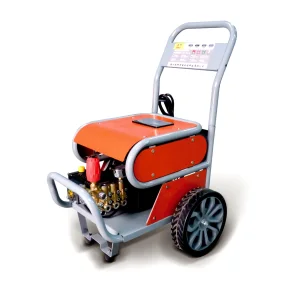
Direct factory wholesale distribution: Precision-engineered suction systems, high-pressure washing arrays, and autonomous floor scrubbers certified for cross-border deployments.
Analyzing the paradigm shift toward industrial automation, continuous air displacement (CFM), and strict workplace air-quality regulations.
The global commercial and industrial vacuum cleaner market is witnessing an unprecedented transformation driven by rigorous occupational safety policies (OSHA silica dust mandates, ATEX directives in the EU) and an urgent requirement for reduced operational downtime. Facility managers across North America, Europe, and the Asia-Pacific region are systematically retiring consumer-grade and light commercial appliances in favor of high-durability continuous-duty vacuum extraction stations. As manufacturing infrastructures scale, contamination control is no longer merely a janitorial issue; it is a core operational parameter safeguarding automated production machinery, preventing combustible dust explosions, and preserving worker pulmonary health.
In modern industrial facilities, the performance of a vacuum cleaner is quantified not just by static lift or motor wattage, but by its overall aerodynamic recovery efficiency, air volume displacement (measured in CFM or m³/h), filtration media longevity, and cyclic filter purge capability. Traditional single-stage bypass motors cannot endure continuous runtimes without thermal degradation. Consequently, wholesale commercial vacuum procurement is shifting toward turbine-driven, side-channel blowers and three-phase induction power plants capable of operating uninterrupted in 24/7 industrial deployments.
A rigorous comparative analysis designed for mechanical procurement officers and global distribution partners evaluating operational load requirements.
| Engineering Parameter | Commercial Single-Phase Vacuums | Heavy Industrial Three-Phase Vacuums | Explosion-Proof (ATEX / HAZLOC) Vacuums |
|---|---|---|---|
| Primary Power Supply | 110V – 240V / 50–60Hz (Single-Phase) | 380V – 480V / 50–60Hz (Three-Phase) | Anti-static spark-free three-phase / Pneumatic Venturi |
| Motor Technology | Dual or Triple Bypass Carbon Brush Motors | Maintenance-Free Cast Aluminum Turbine / Side-Channel | Explosion-isolated induction motor, thermal protected |
| Continuous Duty Capacity | Intermittent (2 to 4 hours per operational cycle) | Continuous (24/7 non-stop industrial processing) | Continuous (Class II Div 1 & 2 compliant zones) |
| Airflow Rate (CFM / m³/h) | 160 – 320 CFM (270 – 540 m³/h) | 300 – 750+ CFM (500 – 1280 m³/h) | Aerodynamically calibrated for zero friction ignition |
| Filtration Engineering | Polyester Cartridge + Optional Secondary HEPA | PTFE Multi-Pocket + Pulse-Jet / Reverse-Blow Cleaning | Conductive antistatic filtration media, M & H class |
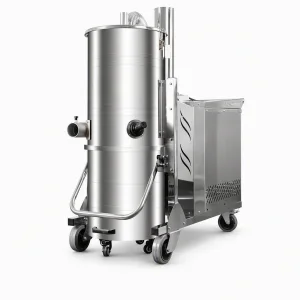
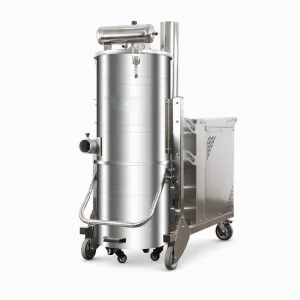
| Target Debris Class | Liquid spills, sawdust, light debris, retail dust | Metal swarf, fine powder, abrasive slurry, gravel | Combustible aluminum/titanium dust, chemical grain |
Form-factor engineered machinery deployed across rigorous industrial supply chains and commercial facility hubs.
Continuous chip and coolant recovery directly coupled with CNC milling stations. Industrial vacuum systems equipped with cyclone separators extract abrasive shavings and cutting oil emulsions without clogging secondary filtration chambers.
Multi-stage HEPA filtration capturing micro-particulates down to 0.3 microns with 99.97% retention. Prevents cross-contamination in batching zones, complying directly with international GMP and cleanroom ISO Class 5 hygiene protocols.
High-capacity tandem deployments where ride-on scrubbers and large-volume vacuum collectors clean high-traffic loading docks and pallet aisles, cutting floor re-soiling and tire wear on electric forklift fleets.
Ensuring distributor networks enjoy frictionless customs clearance, localized voltage adaptation, and complete tender readiness.
Sourcing commercial vacuum equipment from a verified manufacturing facility provides international distributors with substantial margin advantages and engineering agility. As an authoritative direct factory founded in Wenzhou, China, DIKE integrates full vertical manufacturing: from sheet metal laser stamping and roto-molding polymer fabrication to electric motor assembly and rigorous dyno-testing.
To eliminate international market entry hurdles, our manufacturing lines support bespoke voltage and frequency conversions (110V/60Hz for the Americas, 230V/50Hz for Europe and Australia, 380V–440V for heavy industrial three-phase grids). Each unit is built in accordance with international CE safety certifications, RoHS compliance, and EMC electromagnetic compatibility directives. Our wholesale OEM/ODM services extend beyond basic private labeling; our R&D department collaborates directly with regional brand owners to engineer customized chassis ergonomics, quick-dump canister balances, and specialized filtration substrates suited for unique regional dust classes.
100% custom voltage, cycle, and plug standards built directly into production runs.
Full laboratory test reports, electrical schematics, and factory compliance dossiers.
Standardized wear-and-tear replacement pipelines ensuring zero inventory bottlenecks.
Anticipating next-generation filtration physics, IoT fleet telemetry, and automated self-purging collection systems.
Integration of autonomous micro-burst differential pressure sensors. When air resistance across the PTFE filter reaches critical thresholds, an automated pneumatic blast reverse-cleans the filter without interrupting motor suction, ensuring maximum uptime.
Next-gen smart industrial vacuum units leverage integrated IoT modules that track motor bearing temperature, runtime vibration profiles, and canister volume status, delivering proactive maintenance alerts directly to fleet managers.
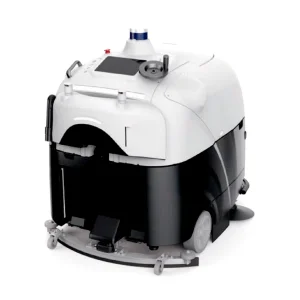
Bridging the gap between heavy industrial vacuum collection and driverless navigation systems (LiDAR and SLAM), allowing high-capacity vacuum modules to autonomously patrol production perimeters without manual operator tethering.
Authoritative technical guidance for procurement directors, commercial cleaning distributors, and tender contractors.
Comprehensive factory-direct commercial floor sweepers, stainless steel recovery vacuums, and self-propelled automated cleaners.