Explore our premier line of industrial floor cleaning solutions engineered for maximum operational uptime, stringent multi-phase HEPA dust extraction, and driverless autonomous robotics.
A deep-dive technical overview on commercial floor automation, labor dynamics, and the paradigm shift from operator-driven walk-behind units to fully autonomous mobile robots (AMRs).
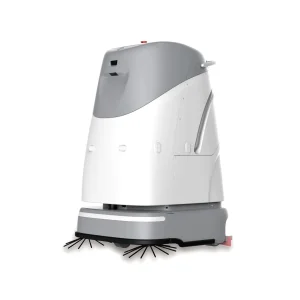
The global industrial and commercial cleaning equipment market is experiencing an unprecedented structural transformation. Driven by acute structural labor shortages, soaring wage inflation, elevated employee turnover rates (often exceeding 200% annually within commercial facility maintenance sectors), and stringent post-pandemic hygienic mandates, facility directors and international distributors can no longer rely on conventional manual or ride-on scrubbing machinery. The adoption of wholesale self driving floor scrubbers (also designated as Autonomous Mobile Cleaning Robots or AMRs) has shifted from early-stage pilot validation to mandatory baseline capital procurement.
According to comprehensive industrial automation market assessments, the global autonomous commercial floor cleaning robotics sector is expanding at a Compound Annual Growth Rate (CAGR) exceeding 22.4%, projected to surpass $4.8 billion within the next five years. While North America and Western Europe represent substantial consumption bases due to strict workplace safety regulations and higher labor rates, the manufacturing heartbeat and core hardware innovation originate from specialized robotic manufacturing centers in China. As an industry pioneer founded in 2017 in Wenzhou, Zhejiang, Wenzhou Dike Intelligent Environmental Protection Technology Co., Ltd. (DIKE) has positioned itself at the nexus of precision engineering, proprietary SLAM navigation integration, and high-volume OEM/ODM export manufacturing.
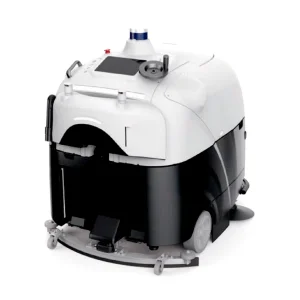
Historically, commercial contract cleaners allocated approximately 80% to 85% of their total operational expenditure (OpEx) entirely to janitorial human labor, with less than 15% spent on chemical agents, water utilities, and machinery depreciation. By integrating autonomous driverless floor scrubbers such as the DIKE SC50 and SC80S series, enterprise facility managers successfully pivot the labor cost curve downwards. Human personnel are reallocated to precision vertical dusting, disinfection touchpoints, and specialized facility management tasks, while driverless scrubbers execute repeatable, millimeter-precise nocturnal and daytime surface scrubbing across expansive concrete, epoxy, terrazzo, and marble floors.
How DIKE engineers proprietary sensor redundancy, multi-layer SLAM algorithms, and functional safety systems compliant with ISO 3691-4 industrial safety standards.
Combines 360-degree high-frequency pulsed LiDAR with dual-lens RGB-D depth vision sensors. Generates dynamic vector point clouds allowing real-time localization in changing industrial environments without physical magnetic guidance tapes or ceiling reflectors.
Millimeter-wave radar units coupled with ultrasonic ground-edge cliff sensors process unpredictable field obstacles—such as forklifts, wandering pedestrians, low-lying pallets, and clear glass walls—in under 20 milliseconds, dynamically recalculating safe detour paths.
Centralized telemetry, Over-the-Air (OTA) firmware deployment, heat-map cleaning path tracking, and comprehensive consumable maintenance alerts accessible via encrypted REST APIs and multi-tenant web dashboards for facility management operators.
DIKE self-driving floor scrubbers integrate hardware-level e-stop circuits, dual safety touch edges, fail-safe electromagnetic dynamic parking brakes, and acoustic/visual LED warning arrays. Even in the event of an operating system kernel interruption, physical microswitches immediately decouple actuator drives within 0.05 seconds, preventing collision incidents in mixed human-robot industrial workflows.
Self-driving scrubbers cannot operate on a one-size-fits-all premise. Discover how DIKE platforms adapt to specific flooring chemistry, soil mechanics, and localized workflow dynamics.
High-bay distribution centers with expansive 50,000+ m² polished concrete aisles. The SC80S coordinates directly with warehouse management systems (WMS), navigating high-traffic forklift crossroads without impeding high-velocity fulfillment cycles.
International airport terminals and railway junctions with relentless 24/7 foot traffic. Low-decibel (under 58 dB) silent scrubbing modes ensure uninterrupted passenger convenience while leaving high-gloss floors thoroughly dry within a single pass.
Machining shops and assembly plants with stubborn industrial lubricants, coolant spillages, and metal swarf. High down-pressure disc brush heads coupled with oil-resistant polyurethane squeegees eliminate slip hazards instantly.
Supermarket corridors, retail centers, and showrooms requiring frequent aesthetic maintenance. Compact turning radii (zero-radius in-situ turning) allow effortless navigation through narrow shopping display aisles and checkout lanes.
An objective, data-backed engineering comparison highlighting cleaning productivity, lifecycle utility, labor dependencies, and telemetry fidelity.
| Evaluation Parameter | Walk-Behind (e.g. Warrior 510B) | Ride-On (e.g. KNIAHT 860B) | Autonomous AMR (e.g. SC50 / SC80S) |
|---|---|---|---|
| Primary Labor Allocation | 100% Dedicated Manual Walking | 100% Dedicated Driver Operator | Unattended Autonomous (95% Automated) |
| Hourly Productivity Rate | 1,800 – 2,500 m²/hr | 4,000 – 6,500 m²/hr | 2,800 – 5,500 m²/hr (Continuous Operation) |
| Path Repeatability & Precision | Low (Subject to Human Fatigue) | Moderate (Operator Steered) | High Precision (±20mm LiDAR SLAM Repeatability) |
| Cleaning Telemetry & Auditing | None / Manual Logbook | Optional Hour Meter | Automated Cloud Heatmaps & Water Logs |
| Sensory Safety Systems | None (Operator Dependent) | Horn, Front Headlights | 360° LiDAR, 3D Vision, 4x Sonar, Dual Safety Edges |
| Shift Operation Flexibility | Restricted to Staff Shifts | Restricted to Certified Drivers | 24/7/365 Scheduled Off-Peak Operation |
| 5-Year Total Cost of Ownership (TCO) | High (Driven by Recurring Wages) | Moderate to High (Driver Wage Driven) | Lowest Net TCO (Amortized Hardware Cost) |
How international equipment dealers, building service contractors (BSCs), and industrial facility owners achieve rapid capital amortisation.
When procuring commercial floor cleaning assets, forward-looking wholesale distributors and corporate buyers look far beyond the initial equipment acquisition price. A comprehensive Total Cost of Ownership (TCO) framework evaluates four fundamental pillars over a typical 5-year operational lifecycle:
In traditional operations, an industrial facility spanning 30,000 m² demands 3 full-time equivalent (FTE) janitorial operators across two shifts. Integrating an autonomous scrubber reduces this requirement to a single supervisor overseeing automated cycles, yielding tens of thousands in annual wage savings per machine.
Human operators regularly overdose cleaning detergents or run scrubbing decks dry, causing accelerated pad wear and surface damage. DIKE self-driving scrubbers feature smart proportional water metering valves, slashing water and chemical waste by up to 42%.
Manual ride-on scrubbers suffer regular impact damage against metal racking, pallet stacks, and bollards caused by driver distraction. Autonomous AMRs navigate with verified centimeter-grade buffer margins, virtually eliminating collision repairs.
Enterprise clients are mandated to provide documented carbon and water conservation metrics. DIKE cloud platforms log exact water consumption volumes, kilowatt-hour power draw, and floor sanitization compliance for corporate sustainability disclosures.
For international distributors, partnering directly with DIKE provides wholesale pricing tiers, complete OEM white-label flexibility, and robust supply chain resilience. Headquartered in Wenzhou, China, DIKE operates comprehensive in-house tooling, rotational molding, chassis fabrication, wiring harness assembly, and electronic hardware testing facilities—bypassing intermediary trading markups and ensuring dependable availability of critical spare parts such as vacuum motors, polyurethane squeegees, battery packs, and optical sensors.
Pioneering the next decade of intelligent facility robotics: from standalone autonomous units to interconnected cyber-physical facility ecosystems.
Transitioning to zero-touch maintenance. Automated docking stations enable the robot to automatically discharge dirty wastewater, flush clean water tanks, refill chemical detergents, and engage high-amperage inductive or contact fast charging without human intervention.
Replacing high-cost mechanical rotating LiDARs with vibration-proof automotive-grade solid-state LiDAR. Onboard neural networks identify specific debris and stain categories in real-time, automatically modulating brush down-pressure and water discharge volume accordingly.
Standardized IoT elevator dispatch modules communicating via 4G/5G and facility Wi-Fi gateways. DIKE driverless scrubbers independently call elevators, board, navigate multi-story commercial corporate facilities, and resume localized cleaning maps autonomously.
Direct, highly transparent technical answers addressing sensor calibration, route mapping, fleet management, wholesale supply terms, and global aftermarket support.
Initial mapping is performed in under 45 minutes using DIKE’s intuitive handheld or teach-and-repeat tablet interface. An operator guides the machine around the facility boundary once. The LiDAR and visual SLAM sensors capture wall profiles, pillars, static machinery, and exclusion zones to build a millimeter-accurate vector map. The robot then automatically segments the area and calculates optimal, overlap-free cleaning paths.
DIKE AMRs are equipped with multi-tier reactive obstacle avoidance. If a pedestrian or forklift enters the primary detection zone (within 2–3 meters), the scrubber decelerates smoothly. If the obstacle remains static for longer than 3 seconds, the localized path planning algorithm dynamically calculates a detour trajectory around the obstruction. If an obstacle suddenly breaches the 0.5-meter critical envelope, the machine initiates an immediate safe stop.
Yes. Every DIKE autonomous floor scrubber features a hybrid dual-mode drive architecture. Operators can instantly disengage autonomous mode via an ergonomic control handle or physical drive toggle, transforming the unit into a manual self-propelled scrubber for localized deep stain removal, emergency liquid spill recovery, or transport between buildings.
DIKE autonomous scrubbers are powered by high-density lithium iron phosphate (LiFePO4) battery packs delivering over 3,000 deep discharge cycles. Standard configurations deliver 3.5 to 5 hours of continuous scrubbing per charge. For facilities demanding 24/7 continuous operations, we offer optional opportunity-charging autonomous docking stations or modular hot-swappable battery packs.
As an original manufacturer founded in 2017 with integrated R&D and assembly facilities in Wenzhou, China, DIKE supports B2B wholesale buyers with flexible MOQs starting from single evaluation sample units up to multi-container fleet orders. We offer complete OEM/ODM options including custom corporate housing colors, private-label branding, customized UI software language localization, and specialized brush/squeegee configurations tailored to local flooring standards.
DIKE provides worldwide technical support with a committed 24-hour engineering response time for distributor inquiries. All robotic units feature Over-the-Air (OTA) firmware upgrade capabilities to deploy improved navigation algorithms remotely. Modular wear parts (squeegees, disc brushes, vacuum gaskets, intake hoses) are globally standardized and kept in stock for immediate air dispatch. Regional representatives, including our India Market Head Mr. Harvansh Shandilya, ensure personalized territory support.
Complement your autonomous cleaning fleet with DIKE’s proven ride-on scrubber dryers, walk-behind scrubbers, industrial sweeping machines, and enclosed sanitation vehicles.
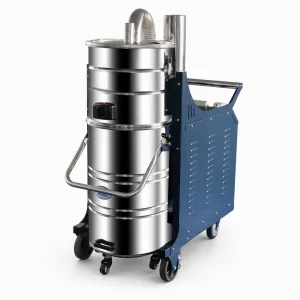
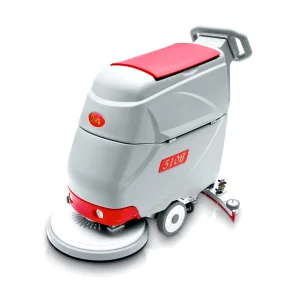
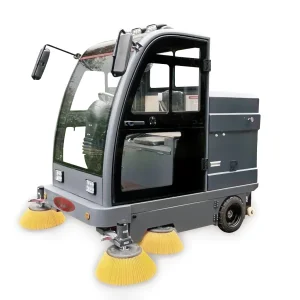
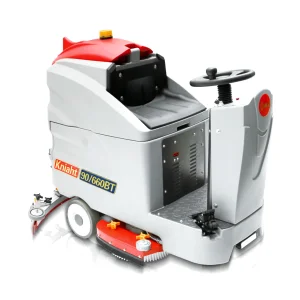
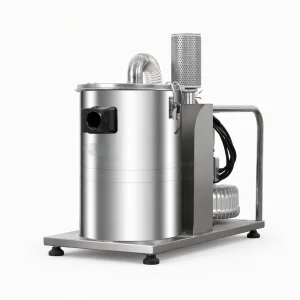
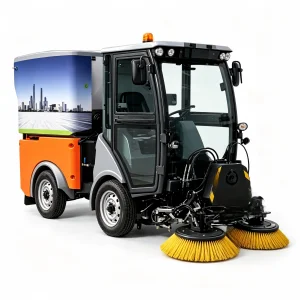
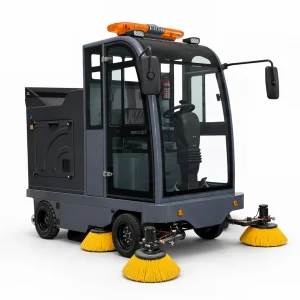
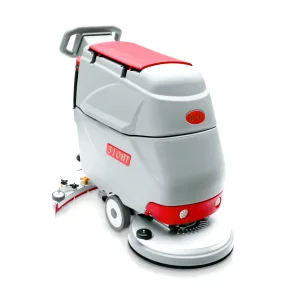
Established in 2017, Wenzhou Dike Intelligent Environmental Protection Technology Co., Ltd. combines specialized robotic mechanical engineering, software algorithm development, and precision production. Whether you are an industrial distributor expanding into commercial floor robotics, a corporate facility manager upgrading a distribution hub, or an OEM brand requiring customized autonomous cleaning solutions, our team delivers factory-backed reliability.