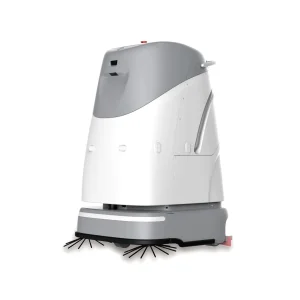
Engineered for high operational uptime, intelligent solution dispensing, and rugged industrial performance.
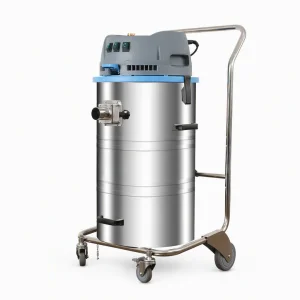
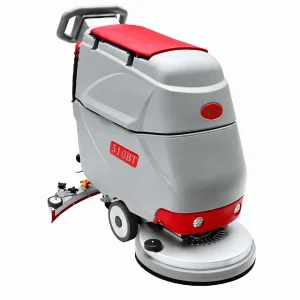
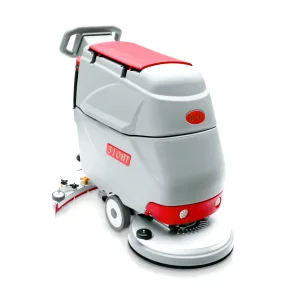
Deploying specialized industrial cleaning machinery requires a balance of high-density battery technology, rapid mechanical tooling, and precision electronic controls.
By producing rotationally molded polyethylene solution/recovery tanks, copper-core vacuum motors, and precision gearboxes in-house or through our cluster in Zhejiang, DIKE significantly compresses production lead times and tooling costs compared to Western counterparts.
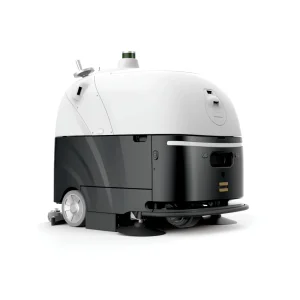
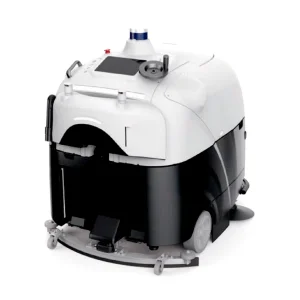
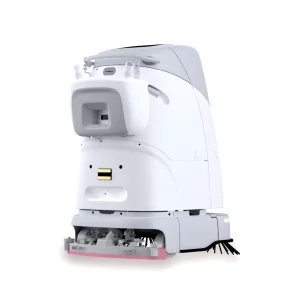
+ Direct Cost EfficienciesLeveraging China's world-leading commercial battery systems (CATL, EVE) and LiDAR sensor miniaturization, our driverless models (SC50, SC80) integrate SLAM navigation, collision evasion, and IoT fleet telematics directly at factory assembly lines.
+ Smart Automated NavigationFrom custom squeegee durometers (oil-resistant polyurethane vs. tear-resistant linatex) to tailor-made multi-voltage charging circuits (110V/220V/380V), we provide distributors with turnkey white-label branding, customized chassis, and international compliance certification.
+ Global Compliance ReadinessThe industrial sanitation market is transitioning from purely manual custodial shifts toward connected, energy-efficient mechanized equipment.
Global labor deficits across Europe, North America, and East Asia are forcing facility operators to replace manual mopping with high-efficiency ride-on scrubbers and autonomous machines that multiply square-meter cleaning productivity tenfold.
International safety standards require immediately dry walking surfaces. Modern floor scrubber dryers pair high-depression vacuum suction with parabolically curved squeegees to achieve 100% water recovery in a single pass.
Legacy lead-acid deep-cycle batteries are being replaced by high-cycle Lithium Iron Phosphate packs, eliminating off-gassing during charging, reducing recharge times to under 3 hours, and delivering continuous operating shifts.
Fleet operators and contract cleaners now demand remote telemetry to monitor runtime, water consumption, brush motor downforce wear, and battery discharge curves across distributed real estate portfolios.
Selecting the optimal equipment configuration requires balancing aisle geometry, floor substrate characteristics, and contamination types.
| Facility / Application Scenario | Predominant Floor Substrate | Contaminant Profile | Recommended DIKE Machinery | Operational Engineering Benefit |
|---|---|---|---|---|
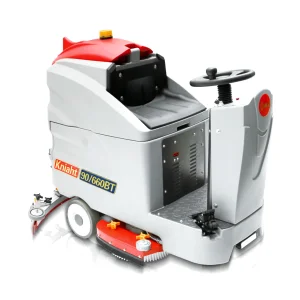
| Logistics Hubs & Warehouses | Polished / Sealed Concrete | Tire marks, fine pallet dust, spills | Ride-on Scrubber (KNIAHT 1020BT) | Cleans up to 6,500 m²/h; compact turning radius fits rack aisles. |
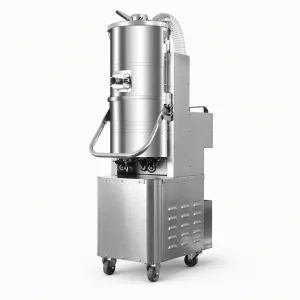
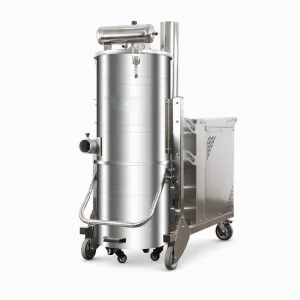
| Automotive & Heavy Manufacturing | Epoxy Coated / Hardened Slabs | Machining oils, metal shavings, grease | Three-Phase Vacuum + Scrubber Dryer | Pre-vacuums metal chips to protect squeegees; high downforce strips grease. |
| Healthcare Facilities & Clinics | Seamless Vinyl / Linoleum / Terrazzo | Biological matter, light dust, sanitizers | Walk-Behind (DIKE-510BT) | Ultra-quiet decibel rating (<65 dB); immediate floor drying prevents slip hazards. |
| Commercial Malls & Transit Hubs | Polished Granite, Marble, Ceramic | Foot traffic grime, slush, spilled liquids | Autonomous SC80 / SC50 Series | Continuous unsupervised cleaning shifts; automatic obstacle avoidance. |
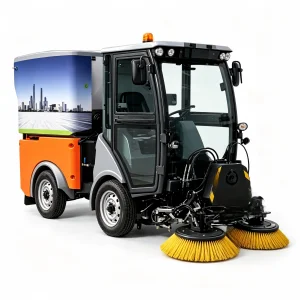
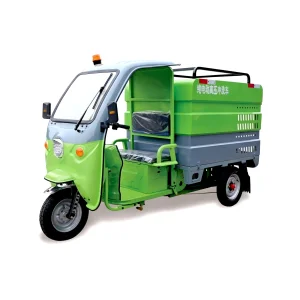
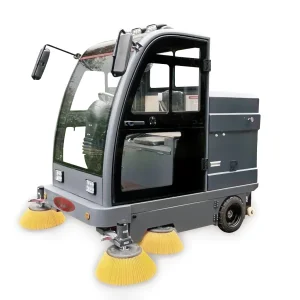
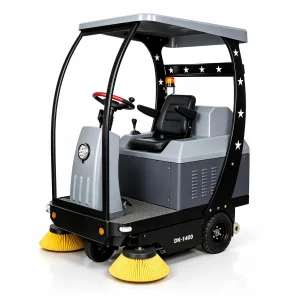
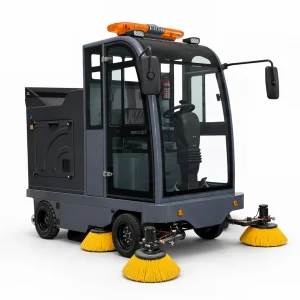
| Municipal Plazas & Campuses | Asphalt, Paving Stones, Curbs | Leaves, wind-blown litter, coarse sand | Sweeper DK-1800 / Electric 3-Wheeler | High-capacity waste hopper; dual misting nozzles eliminate airborne dust. |
A successful cleaning program relies on an integrated ecosystem of complementary machinery rather than a single device.
Attempting to wash floors laden with coarse particulate or wood fragments degrades squeegee rubbers and clogs recovery tanks. Industrial sweepers (such as the DK-1400 and DK-1800) clear heavy waste dry, capturing dust with high-surface-area polyester cartridge filters.
Once large matter is swept, walk-behind or ride-on floor scrubbers dispense balanced detergent solution. Brush heads exert continuous downforce, emulsifying embedded oils, while parabolic squeegees direct waste water into heavy vacuum recovery tanks in one motion.
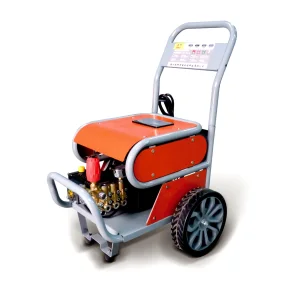
Machining sumps, overhead rafters, and narrow equipment voids require focused suction. High-depression three-phase vacuum units and high-pressure washers (such as the DK-10.13) tackle localized grease zones and process residues that floor scrubbers cannot access.
Technical evaluation parameters professional procurement officers and import distributors review before issuing volume purchase contracts.
A common operational flaw is mismatched tank sizes and battery capacity. An efficient scrubber balances battery endurance with solution tank volume (typically 1.5 to 2 hours of liquid run-time per fill) to minimize transit downtime for refilling.
Verify whether down-pressure is spring-assisted, floating, or actively pressurized. Heavy industrial epoxy requires 30–50 kg of downforce, whereas soft terrazzo requires lower friction to protect sealants from premature degradation.
Assess component modularity. DIKE utilizes standard brush mounting systems, universal American/European pad drivers, and reversible 4-edge squeegee blades, allowing distributors to source wear parts locally or directly at volume.
Ensure factory documentation includes CE safety certification, EMC testing reports, and MSDS/UN38.3 battery transit compliance declarations, ensuring smooth customs processing at major European, American, and Asian ports.
Key technical, production, and logistical answers direct from DIKE factory engineering teams.
Sanitation sweepers, pharmaceutical vacuums, high-pressure washing vehicles, and heavy-duty sweepers.