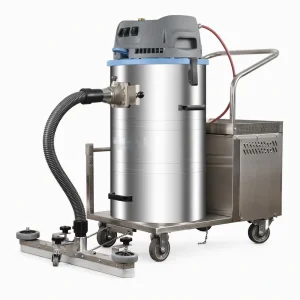
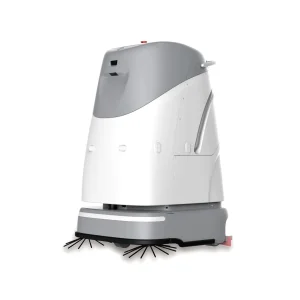
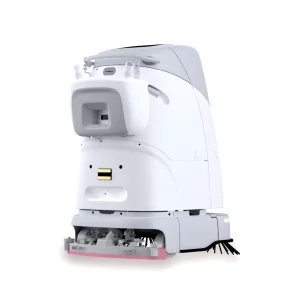
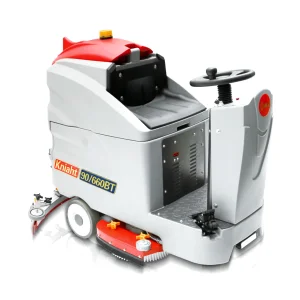
Explore our heavy-duty commercial sweeper and scrubber systems. Designed for exceptional particulate capture, sustained battery runtime, and low maintenance overhead.
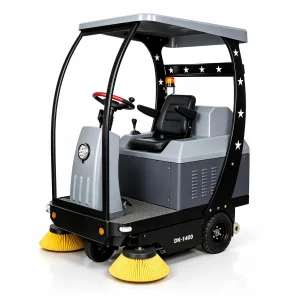
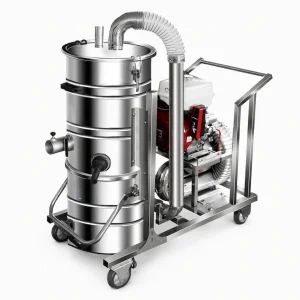
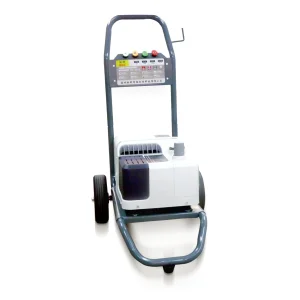
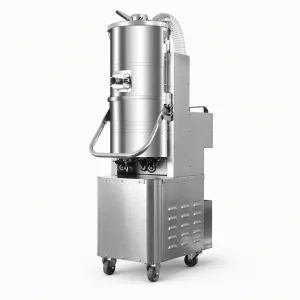
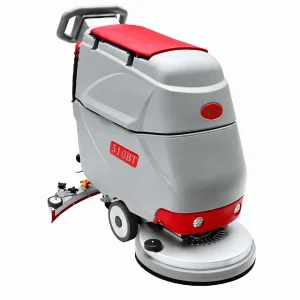
The manufacturing landscape for industrial ride-on sweepers has migrated rapidly toward highly consolidated, technologically agile regional clusters. DIKE’s primary production base in Wenzhou, Zhejiang, exemplifies how localized vertical integration drives tangible business advantages.
Within a 50-kilometer radius of our Wenzhou assembly plants, our tier-one supply chain provides rotomolded polyethylene chassis, precision high-torque brushless drive motors, micro-filtered HEPA canisters, and laser-cut structural steel frames. This proximity slashes production lead times from months to under 14 working days.
China commands over 75% of global lithium iron phosphate (LiFePO4) cell manufacturing. As an OEM/ODM supplier, DIKE incorporates advanced intelligent Battery Management Systems (BMS) with thermal runaway detection, rapid-charge architecture, and deep cycle stability delivering up to 3,500 continuous cleaning duty cycles.
By bypassing multiple distributor markups, international procurement departments access premium heavy-duty ride-on sweepers at 35% to 50% lower capital outlay compared to Western European or North American counterparts, while preserving exact CE, RoHS, and ISO 9001 compliance standards.
The global commercial cleaning machinery sector is undergoing a profound paradigm shift. Industrial hygiene operations are no longer viewed as low-tech cost centers, but rather critical operational assets directly impacting workplace health, ESG mandates, and warehouse automation throughput.
Strict corporate ESG metrics and internal combustion engine (ICE) bans inside enclosed distribution facilities have made traditional LPG, diesel, and petrol sweepers obsolete. High-efficiency lithium-powered electric ride-on units eliminate emissions, exhaust odors, and flammable fuel storage hazards entirely.
Modern ride-on sweepers are evolving into connected cyber-physical hardware. Remote CAN-bus diagnostics monitor brush motor resistance, battery degradation curves, operator runtimes, and predictive filter clogging, allowing facilities directors to manage enterprise fleets across geographically dispersed campuses.
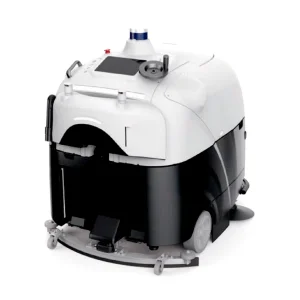
While fully autonomous driverless scrubber/sweepers (such as our SC80S and SC50 platforms) take on repetitive, open square footage, heavy ride-on equipment handles intensive deep cleaning, cross-dock transit paths, and bulk debris removal, establishing a collaborative cobotic workflow.
Fine respirable crystalline silica (RCS) dust regulations enforced by OSHA and EU-OSHA mandate zero fugitive dust discharge. Modern electric ride-on units integrate multi-stage water atomization misting nozzles and high-efficiency mechanical shaker filtration to safeguard facility air quality.
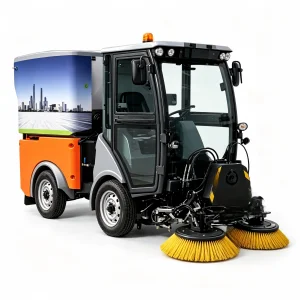
A single mid-to-large ride-on floor sweeper (e.g., DK-1400 class) replaces between 12 to 18 manual push brooms, sweeping up to 9,800 square meters per hour. Across 250 operating shifts annually, an enterprise reduces manual labor overhead by over $64,000 USD while elevating facility cleaning consistency from 62% to over 98.4%.
Every commercial environment presents unique floor coatings, abrasive particulates, and maneuvering restrictions. DIKE engineers customize sweeper brush polymers, hopper volumetric dimensions, and vacuum induction systems to target specific operational challenges.
Primary Challenges: High pallet-truck traffic, packaging wrap remnants, wooden splinters, and abrasive concrete dust.
DIKE Turnkey Solution: Ride-on sweepers equipped with anti-wrap side brooms, heavy debris flap doors, and massive 120L+ hydraulic self-dump hoppers to prevent logistics lane blockages.
Primary Challenges: Metallic shavings, coolant mist residues, stamped scrap burrs, and high point-load epoxy floors.
DIKE Turnkey Solution: Reinforced cast-iron broom hubs, magnetic front-rake attachments for ferric scrap pickup, and polyurethane non-marking pneumatic traction drive wheels.
Primary Challenges: Foreign Object Debris (FOD) prevention, vast contiguous hangar square footage, and mirrored floor reflectance.
DIKE Turnkey Solution: Ultra-wide dual-brush sweeping decks (1,400mm+ span) with continuous negative-pressure centrifugal suction ensuring 100% FOD elimination per ICAO recommendations.
Primary Challenges: Fine powdery ingredient dust, sanitation audits, strict microbial prevention, and noise controls.
DIKE Turnkey Solution: Zero-emission LiFePO4 battery platforms operating below 68 dBA, fitted with sealed brushless motors, H13 HEPA microfiltration, and easy-sanitize rotomolded poly construction.
Primary Challenges: Steep entry ramps, low clearance heights, tire carbon soot, and slick oil stains.
DIKE Turnkey Solution: High-torque 1,200W electric transaxle drive motors with 25% gradient climbing capacity, compact cabin profiles, and integrated front LED work spotlights for dim corridors.
Primary Challenges: Mixed external terrain, gravel, fallen leaves, beverage containers, and public pedestrian safety.
DIKE Turnkey Solution: Semi-enclosed and fully enclosed cabin ride-on sweepers with automotive-grade acoustic dampening, side mirrors, flashing beacon indicators, and low ground clearance guards.
A transparent side-by-side technical evaluation designed to assist corporate procurement officers, facility engineers, and tender evaluators in selecting the correct cleaning asset class.
| Evaluation Parameter | Electric Ride-On Sweeper (e.g. DK-1400) | Walk-Behind Sweeper | Autonomous Cobotic Scrubber (SC80S) | Manual Broom Labor Force |
|---|---|---|---|---|
| Theoretical Productivity | 8,500 – 11,000 m²/hr | 2,800 – 4,200 m²/hr | 2,500 – 4,000 m²/hr (Continuous) | 350 – 500 m²/hr per worker |
| Dust Suppression Tech | Multi-Stage Spray Nozzles + HEPA | Passive Filter Shaker / Dry | Active Wet Vacuum Scrub & Dry | Zero (Resuspends airborne dust) |
| Power Source / Lifespan | 48V 100Ah–150Ah LiFePO4 / 3,000+ Cycles | 24V Lead-Acid / 600 Cycles | Lithium Cartridge Quick-Swap / 3,500 Cycles | Manual Human Energy / Fatigue Factor |
| Operator Ergonomics | Padded high-back seat, power steering | Pedestrian push / Walk behind | Unmanned (SLAM LiDAR Autonomy) | High repetitive strain injury risk |
| Direct Carbon Footprint | Zero emissions (Direct Electric) | Zero emissions | Zero emissions | Zero emissions |
| Payback Period (ROI) | 3.2 to 5.4 Months | 6.0 to 9.5 Months | 8.0 to 14.0 Months | Ongoing Recurring Expense |
Purchasing heavy industrial cleaning machinery across borders requires strict adherence to technical validation, voltage compatibility, and after-sales spare parts redundancy. Here is our structured manufacturing-to-delivery protocol.
Submit your facility blueprints, surface coatings, incline grades, and typical particulate soil loads. Our engineering team calculates exact brush down-force requirements, battery amphour sizing, and filter micron ratings to guarantee optimal cleaning efficiency.
For industrial distribution brands and catalog retailers, we offer turnkey private-label programs: custom rotomolding body colors (Pantone matched), silkscreen logo placement, proprietary software display splash-screens, and localized user instruction manuals in over 15 languages.
Prior to container loading, every ride-on electric sweeper completes a rigorous 120-minute operational test protocol: ramp incline climbing verification, simulated dust-chamber vacuum leak tests, electronic braking response checks, and battery discharge calibration.
We supply container-level stocking kits including replacement polypropylene and steel wire main cylindrical brooms, disc side brushes, filter cartridges, drive belts, and squeegee blades ensuring our distributors provide continuous local aftermarket support without ocean freight delays.
Technical, logistical, and warranty inquiries answered directly by DIKE’s senior application engineering team.
A ride-on floor sweeper utilizes rotating side brushes and a cylindrical center broom paired with a dry vacuum filtration unit to collect dry particulate matter, gravel, packaging debris, and dust without using water. A ride-on floor scrubber dryer (such as the KNIAHT series) dispenses water and detergent, aggressively scrubs hard floors with flat disc pads, and vacuums up the resulting slurry using a rear squeegee. In heavy manufacturing or logistics, best practice dictates sweeping loose debris first, followed by scrubbing.
For operations running a single 4-to-6 hour shift daily on a restricted capital budget, high-capacity AGM batteries remain an economical choice. However, for multi-shift continuous logistics facilities, LiFePO4 lithium batteries are superior: they support opportunity fast charging during 30-minute worker breaks, deliver over 3,000 cycles at 80% Depth of Discharge (DOD), eliminate hydrogen degassing during charge cycles, and require zero water topping.
We support our overseas distributors by creating dedicated initial wear-part consignment packs (brushes, belts, squeegees, filters, fuses) shipped in the initial equipment container. Furthermore, we maintain rapid air-express courier dispatch from our central Wenzhou parts warehouse with 48-hour order dispatch. Technical schematics, exploded 3D component diagrams, and video calibration tutorials are available for field technicians.
Yes. Every industrial battery charger included with DIKE sweepers and scrubbers features an automatic wide-input switching capability (100V–240V, 50/60Hz single-phase, or 380V–480V 3-phase for high-pressure systems). We customize power plugs according to regional requirements, including Type A (US), Type C/F (European Schuko), Type G (UK), and Type I (Australia/China).
Under normal operating conditions on sealed industrial concrete, a premium polypropylene cylindrical main broom provides approximately 250 to 350 operating hours. Side disc brooms last between 180 to 240 hours. The primary cartridge polyester filter can be pneumatically shaken or washed and reused for 6 to 12 months, contingent upon the abrasiveness of airborne particulates.
For standard factory-specification machines, our wholesale MOQ begins at just 1 unit to allow international partners to conduct localized evaluation and field testing. For custom OEM/ODM branding programs, our typical MOQ is 5 to 10 units. Standard factory production cycle ranges from 10 to 18 business days from engineering confirmation.
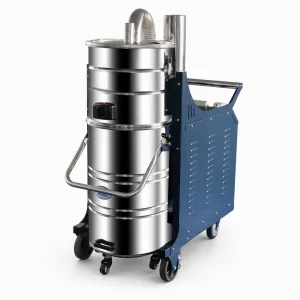
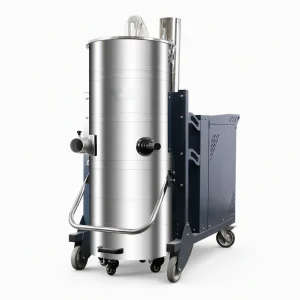
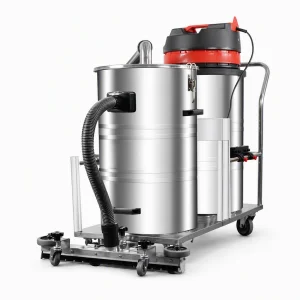
Review our specialized three-phase continuous vacuum units, pure electric multi-surface sweepers, and driverless autonomous scrubbers engineered for demanding industrial environments.