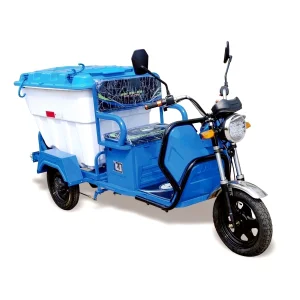
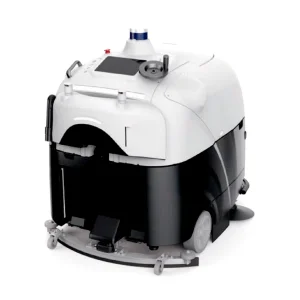
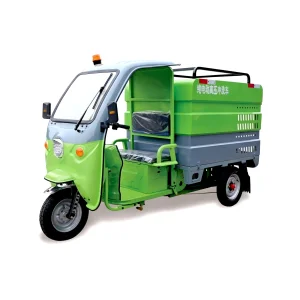
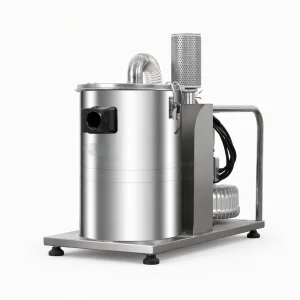
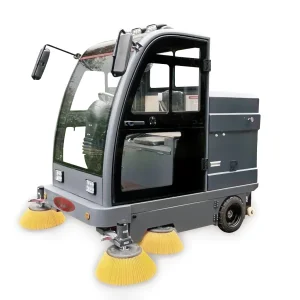
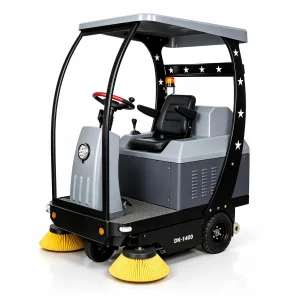
Explore flagship commercial ride-on scrubbers, heavy-duty suction collectors, and automated floor maintenance platforms built to handle expansive surface square-meterage with peak mechanical efficiency.
Analyzing the transition from labor-intensive sanitation to telemetry-monitored, large-scale ride-on scrubbing systems across global supply chains.
Modern mega-warehouses, multi-tier logistics fulfillment hubs, and heavy manufacturing compounds span hundreds of thousands of square meters. Manual mop-and-bucket sanitation or walk-behind scrubber dry systems are mathematically incapable of satisfying hygienic throughput demands.
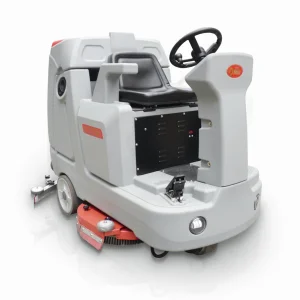
Large ride-on scrubbers decouple surface coverage from operator fatigue, converting an 8-person manual maintenance team into a single operator workflow, thereby resolving acute custodial labor shortages and occupational injury liabilities.
Environmental, Social, and Governance (ESG) mandates now govern global capital expenditures. Traditional scrubbing utilizes unmetered municipal water coupled with hazardous, high-pH chemical surfactants that damage delicate concrete sealants and leach into civic runoff channels.
Modern ride-on scrubbers incorporate micro-metered fluid injection solenoids, dynamic chemical proportioning, and closed-loop filtration options that slash clean-water intake by up to 45% while maintaining chemical-free surfactant efficacy.
Polished concrete, metallic aggregates, and epoxy-resin coated floorings represent massive capital investments. Leaving particulate swarf, abrasive metal cuttings, and chemical slurries uncollected causes microscopic surface fracturing and premature substrate degradation.
By balancing calibrated mechanical down-pressure with parabolic squeegee suction aerodynamics, industrial ride-on scrubbers lift embedded contaminants before they act as grinding agents beneath heavy forklift and AGV traffic.
A granular analysis of heavy-duty powertrain dynamics, disc-versus-cylindrical head mechanics, and fluid recovery engineering for industrial procurement directors.
| Subsystem Element | Standard Commercial Grade | Heavy Industrial Ride-On Benchmark | Operational Strategic Advantage |
|---|---|---|---|
| Chassis Architecture | Stamped sheet-metal / thin tubular frame | Robotic-welded, structural steel plate (5mm+) with electrophoretic zinc primer | Absorbs dynamic shock impacts during loading bay transitions; zero structural warping under continuous fluid load. |
| Scrub Deck Mechanics | Direct belt-driven dual flat disc heads | Heavy-duty gear-reduction dual/triple disc with floating down-pressure (up to 95kg) | Maintains uniform pad contact across uneven expansion joints, concrete seams, and ramp thresholds. |
| Fluid Recovery Vacuum | Single 2-stage peripheral bypass motor | Dual 3-stage high-efficiency brushless vacuum turbines with multi-chamber acoustic baffling | Yields immediate laminar airflow recovery across a wide parabolic squeegee, preventing turns-induced water streaking. |
| Traction Drive Axle | Front-wheel friction steering motor | Heavy-duty rear differential transaxle or AC brushless front-wheel drive with electro-braking | Effortlessly climbs 16% to 20% warehouse access ramps while fully laden with 200+ liters of solution. |
| Tank Construction | Standard blow-molded polyethylene | Rotomolded heavy-wall HDPE (8mm thickness) with integrated anti-microbial & chemical resistance | Immune to cracking from caustic degreasers, mechanical wall collisions, or thermal hydraulic expansion. |
Procurement teams must carefully differentiate between dual-disc rotary configurations and cylindrical roller assemblies:
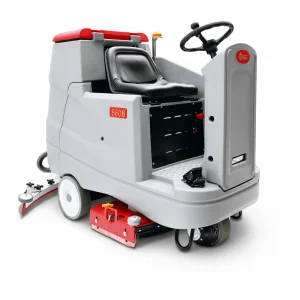
Rotary Disc Heads (e.g., KNIAHT 860B, 1020BT): Best suited for ultra-smooth surfaces, epoxy flooring, and facilities requiring high down-pressure to strip greasy tyre tracks and chemical films. Rotary pads offer variable grit selections (from non-scratch microfibers to diamond polishing pads).
Cylindrical Deck Assemblies: Integrate a dry pre-sweep hopper directly behind high-speed counter-rotating rollers. Ideal for logistics centers with scattered pallet splinters, shrink wrap fragments, and coarse gravel, eliminating the requirement for a separate pre-sweeping pass.
Water trail slippage represents the #1 liability risk in industrial facilities. A premium ride-on scrubber uses a parabolic, self-tracking squeegee assembly engineered to channel liquid directly toward the center suction port during sharp 90-degree turns.
Utilizing premium Linatex or oil-resistant polyurethane squeegee blades guarantees complete surface drying in a single pass, ensuring that forklift wheels do not lose traction over freshly scrubbed aisles, eliminating warehouse transport downtime.
Engineered cleaning protocols and machine configurations matched to specific facility hazards, hygiene standards, and operational cadences.
Facility Challenge: High-density automated sorting facilities operating 24/7 with continuous autonomous mobile robot (AMR) and counterbalanced forklift transit.
Engineered Solution: High-capacity ride-on scrubbers equipped with large solution tanks (150L+), lithium quick-charge batteries, and non-marking industrial polyurethane tires.
Facility Challenge: Severe hydrocarbon build-up, cutting-oil aerosol residues, coolant spills, and dense abrasive metallic swarf on hardened concrete.
Engineered Solution: Dual-barrel high-vacuum recovery units coupled with extreme down-pressure ride-on scrubbers fitted with oil-resistant chemical squeegee blades.
Facility Challenge: Massive foot-traffic volume across polished stone or terrazzo, requiring daytime cleaning without noise disruptions or slip hazards.
Engineered Solution: Acoustic-insulated ride-on scrubber dryers operating below 62 dBA, engineered with soft-bristle polishing pads and active water control.
Comprehensive regulatory alignment and international distributor support programs engineered to reduce total cost of ownership (TCO).
Exporting industrial cleaning equipment across Europe, North America, the Middle East, and Asia-Pacific demands uncompromising adherence to jurisdictional health and safety directives:
Unscheduled machine downtime costs industrial facilities thousands of dollars in lost productivity. Our manufacturing ecosystem empowers regional wholesale distributors with robust after-sales frameworks:
How the integration of AI navigation, digital twin telemetry, and closed-loop filtration is redefining industrial floor scrubbers.
The industry is transitioning toward hybrid ride-on / driverless autonomous architectures. Machine platforms like the SC80S utilize 3D LiDAR, multi-spectral ultrasonic sensors, and edge AI visual odometry.
Operators can ride the unit for spontaneous spot-cleaning, or switch the machine into full autonomous mode via a touchscreen interface to execute geo-fenced routes during off-shift hours, logging every cleaned square meter with high precision.
Enterprise cleaning fleets are no longer isolated mechanical assets; they are interconnected nodes within modern building management software (BMS). On-board 4G/5G telematics modules relay real-time operational diagnostics.
Fleet supervisors track brush motor current draws, battery cycle degradation, solution level metrics, and impact alarms remotely, allowing predictive maintenance schedules to completely replace reactive repair routines.
Future industrial ride-on platforms integrate multi-stage hydro-cyclonic filtration and UV sterilizing recovery loops directly within the machine's recovery tank. Dirty water is centrifugally separated from particulate matter.
This closed-loop recovery enables a single 150-liter tank of water to clean up to 20,000 square meters before requiring disposal, dramatically reducing both fresh water consumption and municipal wastewater disposal costs.
Essential guidance for purchasing agents, facility managers, and distributors evaluating wholesale floor scrubber investments.
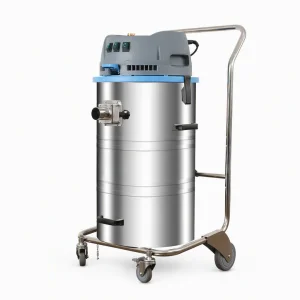
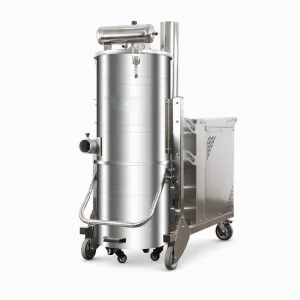
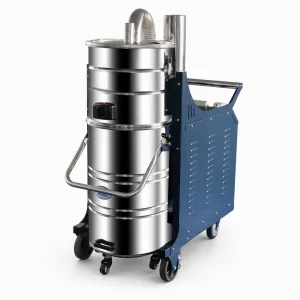
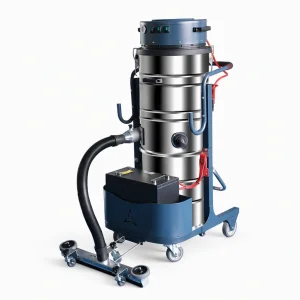
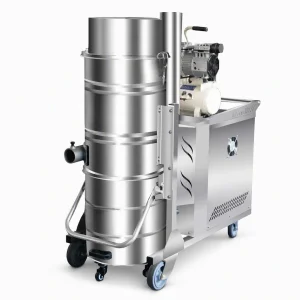
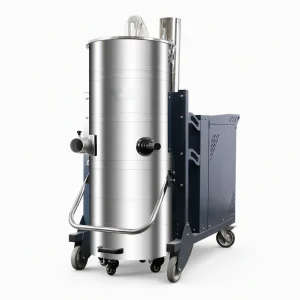
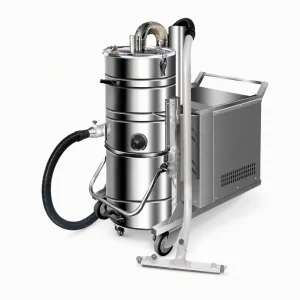
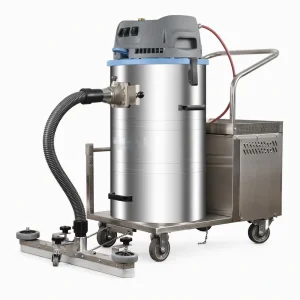
Complete your facility maintenance inventory with our specialized heavy-debris sweepers, three-phase continuous dust extractors, and explosion-resistant stainless steel vacuums.