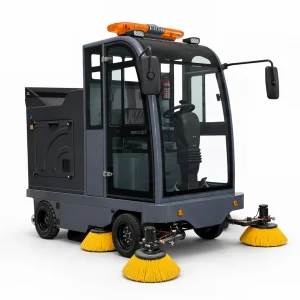
Direct industrial procurement options delivering massive square-meter hourly coverage, intelligent filtration, and long-endurance power architectures.
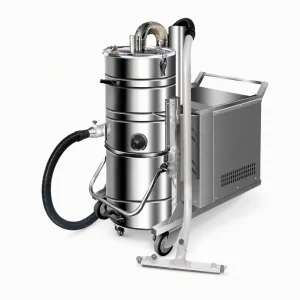
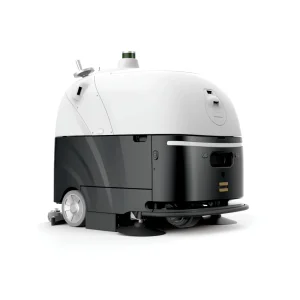
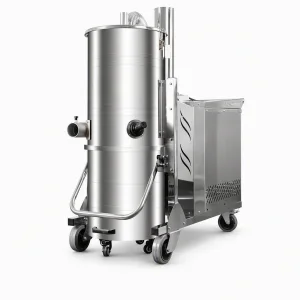
How automated sweeping mechanics are shifting facility management from manual reliance to calculated operational yield.
The global surge in automated fulfillment centers, gigafactories, and cross-docking facilities has triggered an exponential demand for large-format industrial ride-on sweepers. Facilities exceeding 50,000 square meters cannot sustain floor hygiene or OSHA airborne particulate standards using manual push brooms or basic walk-behind units. High-capacity sit-on platforms provide continuous debris clearing without bottlenecking material handling automation.
Across North America, Western Europe, and East Asia, industrial janitorial labor costs have risen over 34% since 2020, paired with an acute staffing shortage. Facility engineers are calculating strict Return On Investment (ROI) models where a single high-efficiency ride-on sweeping vehicle replaces up to 12 manual cleaning laborers, effectively paying for itself within four to six months while standardizing sanitation consistency.
Regulatory frameworks such as OSHA’s Respirable Crystalline Silica rule (29 CFR 1926.1153) and European air particulate guidelines have rendered traditional dry broom sweeping a hazardous regulatory liability. Modern wholesale industrial sweepers are engineered with pressurized misting arrays, sealed negative-pressure air paths, and multi-stage PTFE synthetic filter systems that retain micro-dust down to 0.3 microns.
Tailored mechanical designs capable of mastering extreme operating environments, from metallurgical foundries to food cold chains.
Combines zero-radius turning maneuverability with 120-liter high-dump debris hoppers, allowing non-stop clearing of wood pallet fragments, stretch wrap debris, and carton dust along narrow 2.2-meter rack corridors.
Reinforced dual-barrel collection bins, abrasive-resistant nylon/wire composite main brooms, and heat-resistant steel undercarriages built to handle swarf, sharp metal turnings, slag, and heavy casting sands safely.
Equipped with ultrasonic misting nozzles along side brooms and shaker-motor pulse air jet cleaning filters, stopping heavy particulate bypass and eliminating clouds of limestone, aggregate, and coal dust.
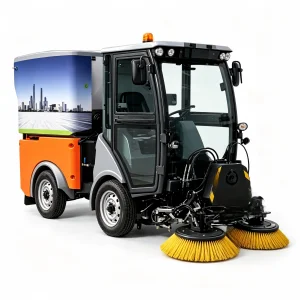
Enclosed cabin architectures (such as the DK-2000 series) featuring automotive-grade panoramic glass, climate control, LED warning beacons, and rapid transit speeds up to 25 km/h for large outdoor tarmac cleaning.
Clear technical configurations comparing mid-chassis battery sweepers, heavy municipal sweepers, and driverless autonomous units.
| Core System | Mid-Size Industrial Sweeper (e.g. E-800) | Heavy Fully-Enclosed (e.g. DK-2000) | Autonomous Sweeping Unit (e.g. SC80S) |
|---|---|---|---|
| Sweeping Width | 1,250 mm – 1,450 mm | 1,900 mm – 2,150 mm | 900 mm – 1,150 mm |
| Max Practical Yield | 7,500 – 9,800 m²/hour | 14,000 – 18,500 m²/hour | 4,500 – 6,200 m²/hour (Continuous) |
| Debris Hopper Volume | 80 Liters (Roll-out tray) | 180 – 240 Liters (Hydraulic auto-dump) | 60 Liters (Direct cassette) |
| Powertrain Architecture | 48V Maintenance-free Gel or LiFePO4 | 72V High-Torque AC Traction Motor | 48V Solid-State Lithium Fast-Charge |
| Filtration Subsystem | Pleated cylinder cartridge + vibrator | Multi-barrel PTFE membrane + auto air shaker | HEPA H13 cartridge + flow sensor |
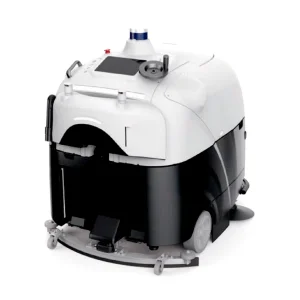
| Navigation / Driving | Ergonomic steering console | Full cabin, hydraulic power steering | 3D LiDAR + RTK-GPS + SLAM Navigation |
| Best Operating Scenarios | Factory workshops, food hubs, parking | Foundries, shipyards, outdoor municipal roads | High-tech automated warehouses, airports |
How intelligent sensor suites, cloud telemetry, and solid-state electrification are redefining machine performance and fleet operations.
The total replacement of lead-acid battery packs with thermal-stable Lithium Iron Phosphate (LiFePO4) architecture enables 1C to 2C charging rates. Sweep fleets can now perform 20-minute opportunity charges during operator shifts, supporting 24/7 continuous warehouse maintenance without battery swelling, acid venting, or dedicated charging room infrastructure.
Integrated CAN-bus telematics upload real-time operational telemetric data to facility management dashboards. Algorithms track broom brush down-pressure decay, suction motor vibration, filter pressure drop, and operator routes. This automated monitoring predicts maintenance windows before equipment breaks down, cutting unplanned downtime by over 45%.
Facility layouts will increasingly deploy hybrid operations where an operator drives a primary high-payload municipal sweeper for exterior perimeters, while autonomous driverless units (such as the SC80S series) coordinate via central SLAM cloud controllers. These autonomous machines scrub and sweep interior production aisles simultaneously, operating with dynamic obstacle avoidance around AGVs, forklifts, and personnel.
Critical insights for distributors, supply officers, and facility engineers evaluating wholesale purchases.
A ride-on sweeper uses cylindrical rotating main brooms and high-volume vacuum systems to pick up dry solid debris (such as pallet wood, gravel, metal shards, packaging straps, and dry dust) without water. A ride-on scrubber is a wet machine that injects water/detergent, scrubs hard floors with flat disc pads, and vacuums the wet slurry with a squeegee. In heavy industrial environments, facilities run sweepers first to clear solids and protect wet scrubber squeegees from tearing.
Our industrial sweepers use a dual dust-suppression system: adjustable micro-mist water nozzles located directly over the side brooms suppress airborne particulates at the point of contact, while a high-surface-area polyester or PTFE membrane filter inside the hopper captures vacuumed air down to 0.3-1.0 microns. Mechanical electric shaker motors clear the filter pores at the touch of a button, preventing suction loss.
Yes. As an end-to-end manufacturer based in Wenzhou, China, we support OEM/ODM color customization, private label branding, localized warning labels, and market-specific chargers (110V, 220V, or 380V; US, EU, UK, or Australian plugs). We also configure battery options with either sealed AGM gel batteries or high-cycle LiFePO4 packs depending on client tender demands.
Main cylindrical brooms and polypropylene/steel side brooms usually offer between 150 to 300 hours of active floor contact, depending on surface abrasiveness (such as rough outdoor asphalt vs. polished warehouse epoxy). Synthetic washable filter cartridges last 12 to 24 months with regular shaker operation and cleanings. We provide full container consignments with consolidated spare-part packages for distributors.
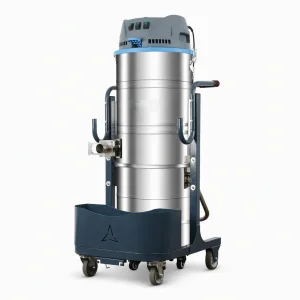
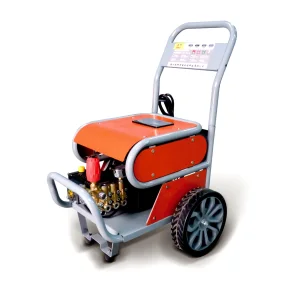
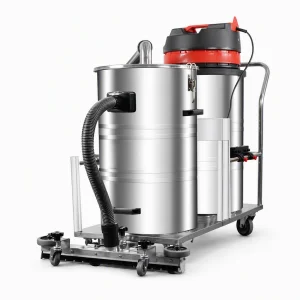
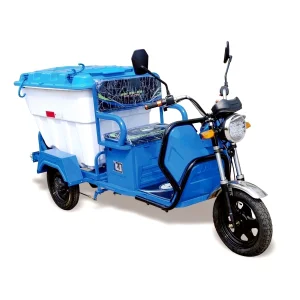
Expand facility maintenance operations with specialized industrial vacuums, high-pressure systems, and electric utility cleaning transport.