Explore our export-certified walk-behind and ride-on vacuum extraction equipment engineered for high filtration precision, rapid continuous cycles, and extreme workshop endurance.
In modern industrial manufacturing ecosystems, environmental compliance, operator ergonomics, and airborne dust suppression have converged into critical operational metrics. Walk-behind and hand-push industrial vacuum cleaners are no longer treated as standard custodial equipment; they serve as critical containment systems against respirable crystalline silica (RCS), volatile organic compounds, combustible metallic particulates, and fine composite waste. As international procurement executives, plant managers, and equipment distributors evaluate wholesale manufacturing partnerships, assessing factory engineering depth, filtration sustainability, and mechanical longevity is paramount to achieving a low Total Cost of Ownership (TCO).
Manual and automatic reverse-pulse jet blowback mechanics dislodge ultra-fine dust cakes from PTFE-coated conical filters without requiring chamber opening, preventing cross-contamination and suction loss.
Our heavy-duty induction motors utilize continuous-duty three-phase and dual-stage single-phase bypass cooling, running seamlessly across multi-shift routines without thermal cutouts.
Equipped with lever-actuated drop-down dust bins and Longopac continuous bagging modules, operators can safely dispose of heavy metal chips and toxic dust without back injuries or inhalation risks.
The manufacturing cluster located along the Yangtze River Delta and Zhejiang regions provides unparalleled competitive value across R&D turnaround, materials sourcing, and volume cost efficiency.
Direct supply line access to precision rotational molding, seamless AISI 304 stainless steel fabrication, CNC lathe milling, and specialized industrial motor windings enables rapid iteration and minimal lead times.
Where Western OEMs require 12 to 18 months to alter chassis designs or airflow pathways, domestic facilities iterate CAD prototypes, mold tooling, and flow simulations within 6 to 8 weeks, lowering capital risks.
Through optimized factory layouts, lean assembly methodologies, and strategic scale, procurement partners secure Tier-1 components (Schneider switchgear, Ametek turbines, Toray media) at fractional overhead costs.
Comparative structural matrix detailing airflow aerodynamics, containment ratings, and industrial duty cycles across core walk-behind configurations.
| Series Profile | Motor Configuration | Filtration Topology | Airflow & Depression | Primary Industrial Sector |
|---|---|---|---|---|
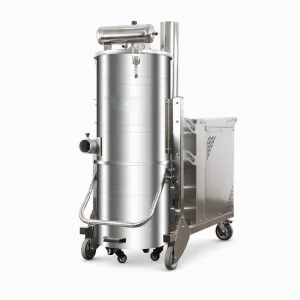
| Heavy-Duty Manual Blowback (DK-221SMC) | Single-Phase 220V Bypass Turbine (2.2 kW - 3.6 kW) | Star Filter + Manual Reverse Jet Airflow Mechanism | 280 - 360 m³/h | 240 mbar | Metal fabrication, CNC dry coolant recovery, composite routing |
| Twin-Tank High Capacity (DK-2290SE) | Dual-Stage Industrial Motor System (3.0 kW) | Primary Polyester Needle Felt + Secondary HEPA H14 | 420 m³/h | 280 mbar | Textile lint reclamation, plastic pelleted material transfer |
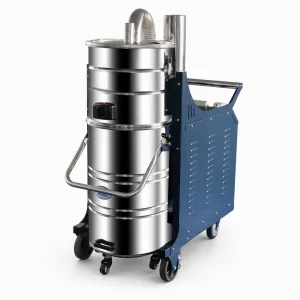
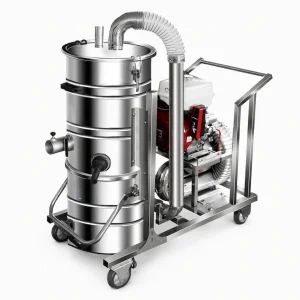
| Continuous 3-Phase Turbine (DIKE-221FC) | Side-Channel Induction Motor (380V / 4.0 kW - 7.5 kW) | PTFE Coated Cartridge with Automated Pulse Timer | 350 - 650 m³/h | 320 mbar | Foundry sand collection, continuous automated production lines |
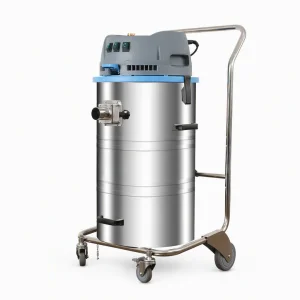
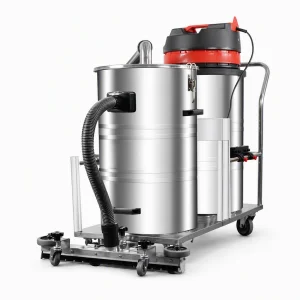
| Stainless Steel Single Tank (DK-308) | Wet & Dry Bypass Motor Assembly (1.4 kW - 2.4 kW) | Washable Polyurethane Filter + Float Ball Liquid Stop | 220 m³/h | 210 mbar | Pharmaceutical suites, food processing wet spills, laboratories |
| Textile Specialized (DK-FZ8018) | High CFM Lithium-Battery Motor Pod (24V / 36V) | Extended Surface Micro-Mesh Lint Capture Bag | 310 m³/h | 180 mbar | Spinning mills, textile weaving dust, mobile warehouse routes |
Targeted mechanical adaptations engineered to withstand complex debris matrices, corrosive washdowns, and micro-particulate threats.
Aluminum swarf, carbon steel shavings, and lubricating oil mists demand cast-alloy suction inlets and tangential cyclonic separators. Push models eliminate tangled chip clusters while preventing spark-induced fire hazards in confined tooling cells.
Equipped with non-magnetic AISI 304 or 316L stainless steel collection vessels, antistatic grounded conductive hoses, and dual exhaust HEPA filtration arrays, these units ensure total sterile biocontainment and zero cross-batch residue.
High-traffic dynamic distribution hubs generate constant paper fiber, pallet splinters, tire rubber abrading dust, and exterior grit. Wide front-mounted squeegee suction attachments enable operators to clear 50-meter aisles in rapid single-pass walking runs.
Three core technology vectors are redefining industrial push vacuum standards globally over the 2025–2030 product lifecycle horizon.
Corded mobility constraints are dissipating. High-density LiFePO4 battery platforms provide 2 to 4 hours of continuous peak water-lift suction, rapid 1-hour opportunity charging, and 3,000+ full discharge lifecycles without thermal degradation.
Embedded differential pressure transponders monitor filter permeability in real-time, communicating operational hours, battery state-of-health, and brush wear directly to facility maintenance dashboards via NB-IoT or LoRaWAN gateways.
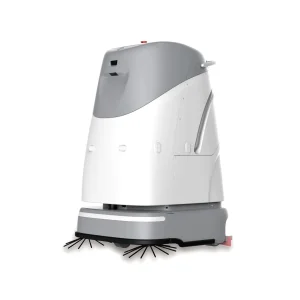
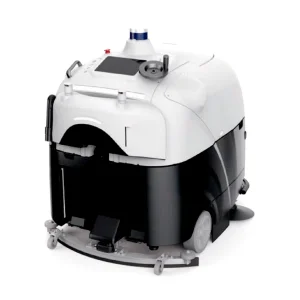
Walk-behind chassis designs are adopting modular drive architectures, allowing conversion into hybrid autonomous units capable of pre-programmed perimeter navigation while retaining manual grab-and-go handles for localized spot cleaning.
Evaluating vendor stability, technical compliance, and after-sales spare parts velocity is crucial when solidifying long-term factory supply agreements.
Factory-level wiring harnesses, emergency cut-offs, and switchboard components must carry certified compliance marks matching target port requirements (e.g., 110V/60Hz single phase for North America, 400V/50Hz 3-phase for EU industrial corridors).
Top-tier Chinese manufacturers offer tailored OEM solutions, including custom chassis color injection molding, silk-screened metal chassis plates, bespoke ergonomic grips, and localized multi-language operator manual printing.
Wholesale contracts must bundle consumable reserve packages—such as spare squeegee polyurethane blades, conical star filters, replacement float valves, and motor carbon brushes—to maintain rapid turnaround for local end-users.
Direct engineering responses to critical questions encountered by global supply managers and commercial purchasing boards.
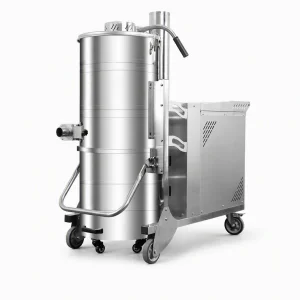
Industrial push vacuums utilize high-depression side-channel blowers or bypass motors built for continuous duty (up to 24/7 in 3-phase units). They feature high-gauge stainless steel or roto-molded poly tanks, heavy-duty filtration (HEPA/PTFE) with blowback mechanisms, and large-diameter static-dissipative suction paths (40mm to 75mm) to swallow dense metal chips, concrete slurry, and combustible dust without motor burnout.
Manual blowback requires the operator to cycle a top damper or plunger lever to direct clean air backward through the filter pleats, which is optimal for intermittent workshop operations. Automatic pulse-jet systems use timed solenoid valves driven by onboard micro-compressors to clean filters continuously during operation, essential for high-volume automated lines producing constant airborne particulate.
Yes. Our factory engineering team custom-winds motors and equips localized contactors for all international voltage configurations, including 110V/120V 60Hz single-phase, 220V/240V 50Hz single-phase, 380V/415V/480V 50/60Hz three-phase, as well as DC lithium packs ranging from 24V to 48V for battery operations.
Standard model evaluations typically start with sample or low-MOQ test orders (5 to 10 units). Full container load orders (20ft/40ft HQ) for customized OEM/ODM builds generally carry a manufacturing lead time of 20 to 30 business days following technical sign-off and container booking allocation.
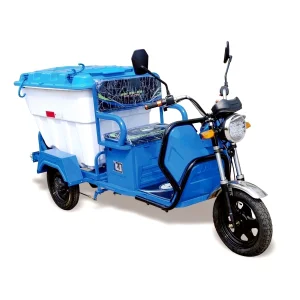
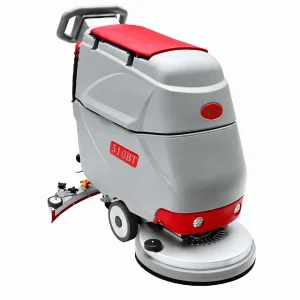
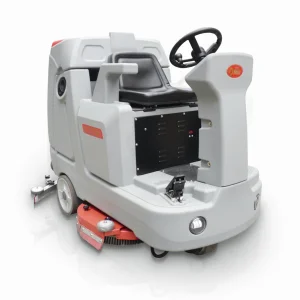
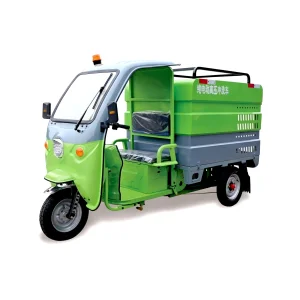
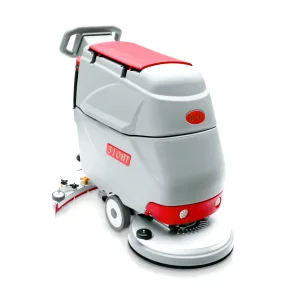
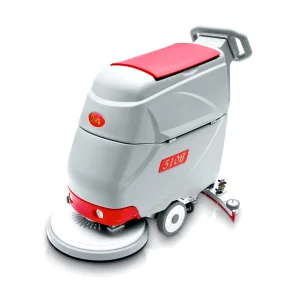
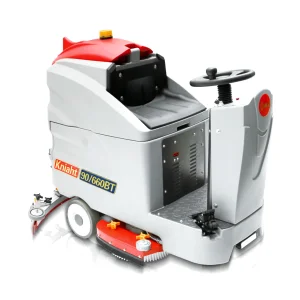
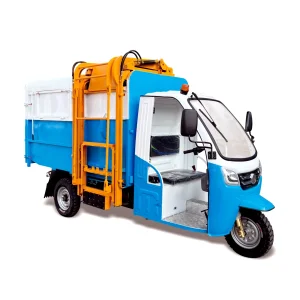
Comprehensive portfolio of three-wheeled sanitation vehicles, self-propelled walk-behinds, and specialized automated sweepers designed for facility-wide coverage.