Engineered by DIKE for mission-critical industrial manufacturing, pharmaceutical sanitation, hazardous environment handling, and high-coverage commercial applications.
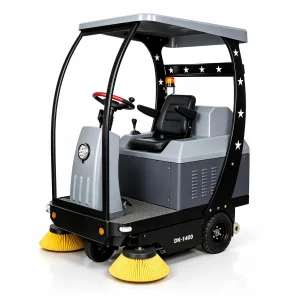
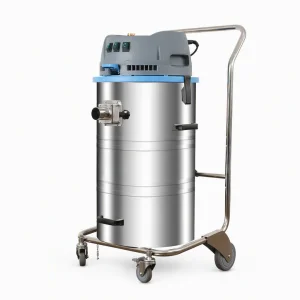
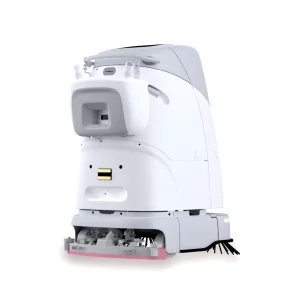
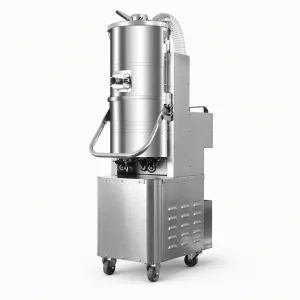
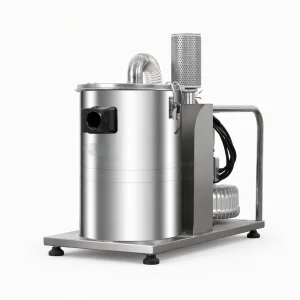
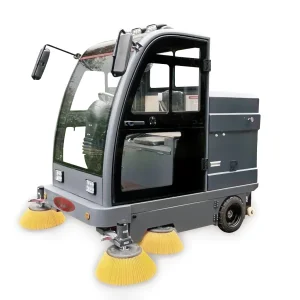
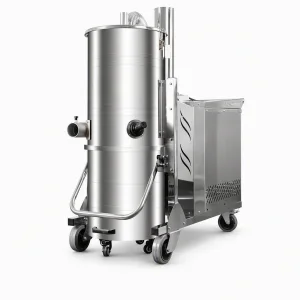
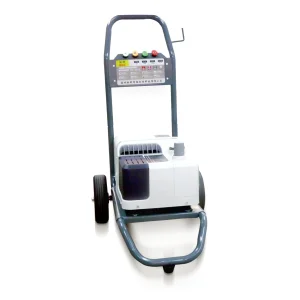
How the transition from manual sweeping to battery-assisted, multi-stage walk-behind push sweepers is redefining operational hygiene, worker ergonomics, and regulatory air quality metrics globally.
Across the global manufacturing, logistics, and heavy warehousing sectors, industrial floor sanitation has evolved from an afterthought into a strategic operational parameter. Traditionally, facility maintenance relied heavily on manual sweeping using broom lines—a technique that not only consumed immense human capital but actively recirculated dangerous particulate matter (PM2.5 and PM10), aerosolized crystalline silica, and combustible dust back into the ambient workspace. Today, the industrial push floor sweeper (walk-behind mechanical or battery-assisted floor sweeper) has emerged as the definitive solution for agile, zero-emission dust abatement in high-density facilities.
Modern industrial push sweepers bridge the engineering chasm between cumbersome ride-on sweepers and inefficient manual labour. Designed with hydrodynamic chassis structures, counter-rotating cylindrical roller brushes, and active vacuum particulate capture systems, these sweepers capture both granular particulates (such as concrete chips, metal shavings, and pallet fragments) and microscopic dust. As environmental regulatory frameworks—such as OSHA silica dust rules in North America and EU ATEX/Health & Safety directives—tighten, facility buyers increasingly mandate high-efficiency filter media (polyester needle felt with PTFE coatings) and motorized dust shaker mechanisms right into push sweeper chassis configurations.
Utilizing counter-rotating chevron-pattern bristle cylinders, DIKE push sweepers lift heavy soil from the base layer up and over into the debris hopper, maximizing storage capacity up to 92% fill efficiency without clogging the front aperture.
A single worker operating an industrial walk-behind push sweeper covers between 2,500 and 4,500 m²/h, matching the productivity of five manual workers while decreasing occupational strain and worker compensation claims.
Equipped with pleated synthetic or panel filters coupled with mechanical vibration shakers, capturing particles down to 3 microns to prevent motor housing ingress and preserve clean breathing zones in indoor facilities.
How Wenzhou Dike Intelligent Environmental Protection Technology Co., Ltd. combines advanced rotomolding, robotics, and complete supply chain transparency to empower wholesale partners worldwide.
Founded in 2017 in Wenzhou, Zhejiang, DIKE (Wenzhou Dike Intelligent Environmental Protection Technology Co., Ltd.) has spearheaded the transformation of China's cleaning equipment manufacturing ecosystem. While historic global markets were dominated by western conglomerates operating high-margin distribution channels, DIKE disrupted the status quo by introducing a fully integrated R&D, tooling, rotational molding, chassis fabrication, electrical harness assembly, and dynamic testing infrastructure directly on our factory floor.
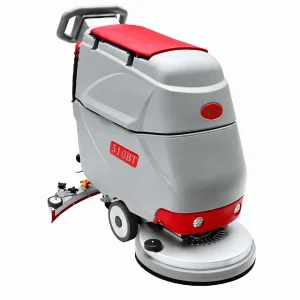
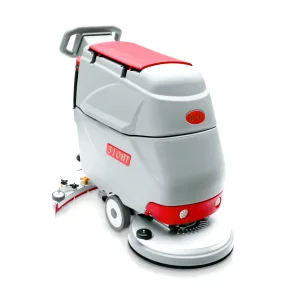
Our Industry 4.0 production framework solves the primary friction points faced by international importers and industrial distributors: fluctuating lead times, inconsistent component tolerances, and sluggish engineering responses. By manufacturing heavy-duty polyethylene chassis, rotational-molded water and waste tanks, and precision steel frames in-house, DIKE ensures modular interoperability across our entire range—spanning manual push sweepers, walk-behind scrubber dryers (like the DIKE-510BT and Warrior 510BT), massive ride-on scrubbers (such as the KNIAHT 1020BT and 860B), heavy-duty three-phase vacuums, and autonomous driverless machines.
From CAD simulation to proprietary rotational molds, our engineers develop impact-resistant polymer hulls capable of withstanding industrial acidic, alkaline, and heavy physical impacts without cracking or deforming.
Consolidated supply lines ensure that consumable components—brushes, drive belts, squeegee blades, electronic controllers, and high-efficiency filters—remain universally interchangeable, dramatically reducing aftermarket stocking costs for distributors.
Every export shipment accommodates global electrical requirements (110V, 220V, 380V, 415V at 50/60Hz), customized plug configurations, CE/RoHS conformity, and specialized liaison teams—including dedicated leadership for the Indian subcontinent led by Mr. Harvansh Shandilya.
Commercial floor environments demand nuanced brush densities, vacuum depression figures, and waste hopper dimensions. Here is how DIKE machines perform across premier industrial verticals.
| Industrial Vertical | Floor Substrate & Soil Profile | Primary Technical Challenges | Recommended Machine Type | Engineering Benefit |
|---|---|---|---|---|
| Heavy Machining & Foundries | Hardened concrete; cast iron swarf, cutting oils, metal filings | Severe brush abrasion, filter saturation, ignition risk from hot debris | Heavy Push Sweeper / 3-Phase Vacuum (DK-EX) | Oil-resistant bristles, steel-core hoppers, explosion-proof isolation |
| E-Commerce & 3PL Warehousing | Polished concrete / polyurethane; stretch film bits, wood splinters, pallet dust | Ultra-narrow racking aisles, continuous multi-shift operations | Walk-Behind Sweeper + Self-Propelled Scrubber (Warrior 510BT) | Tight turning radius, quiet operation (<68 dBA), single-pass water pickup |
| Pharmaceutical & Cleanrooms | Seamless self-leveling epoxy; fine chemical powders, active dust | Cross-contamination risk, strict ISO 14644 air purity compliance | Pharmaceutical Vacuum (DK-1535Y) / SC50S Autonomous | H14 HEPA filtration (99.995% @ 0.3μm), 304/316L stainless tank, driverless routes |
| Automotive Assembly & Paint Shops | Epoxy coating; silica dust, tire tracks, paint overspray dust | Tire marks require balanced brush down-force without surface scuffing | Ride-On Scrubber (KNIAHT 860B / 1020BT) | Adjustable down-pressure (up to 65 kg), dual parabolic squeegee blade |
| Municipal, Campus & Logistics Yards | Asphalt, interlocking pavers, concrete; gravel, leaves, packaging detritus | Severe outdoor environmental exposure, ramp climbing, long distances | Enclosed Sweeper (DK-1800) / Electric 3-Wheeler | High hopper capacity (150L+), misting sprayers to suppress road dust |
When selecting industrial push floor sweepers for wholesale distribution or large facility tenders, procurement managers must evaluate drive train architecture. DIKE manufactures two core varieties of walk-behind push sweepers:
1. Pure Mechanical Inertial Push Sweepers: Driven exclusively by the physical movement of the operator. As the operator pushes the machine, rubber-lugged front/rear wheels turn heavy-duty internal gears that spin the side brushes and central rolling brush. Zero battery dependency makes these units exceptionally reliable in remote zones, wet outdoor wash bays, or explosive chemical depots where electric motors represent a hazard. Maintenance is virtually nonexistent beyond occasional brush de-tangling.
2. Battery-Assisted Motorized Push Sweepers: Utilizing maintenance-free AGM or high-energy density Lithium Iron Phosphate (LiFePO4) battery packs. An onboard 24V DC brushless motor powers an active vacuum impeller and drives the brush cylinder. This allows the machine to traverse inclines effortlessly and pull micro-fine dust directly into a sealed filter chamber while sweeping loose debris. This configuration represents the gold standard for indoor distribution centers seeking dustless floor sanitation.
A comprehensive engineering checklist for distributor buyers, B2B purchasing consortiums, and operations directors navigating factory tenders.
Look for chevron (V-pattern) bristles rather than straight rows. Chevron configurations systematically funnel debris toward the center point of the roller brush, eliminating the "side trailing" effect common with inferior sweepers.
Manual or electric vibration filter shakers are essential. Without an effective shaker mechanism, micro-fine concrete dust clogs filter pores within 30 minutes of continuous operation, causing motor strain and suction loss.
Ensure waste hoppers are molded from cross-linked high-density polyethylene (XLPE) or corrosion-resistant stainless steel with dual balance handles. A hopper that is clumsy to empty leads to operator avoidance and downtime.
Consider a standard manufacturing or warehouse facility with an active sweeping footprint of 10,000 square meters:
• Manual Broom Sweeping: An average worker sweeps approximately 500 m² per hour. Clearing 10,000 m² requires 20 person-hours. At an average loaded wage of $18/hour, each daily sweep costs $360, totaling $108,000 annually in custodial labor alone—with widespread dust dispersal settling onto high-bay storage racks and machinery.
• DIKE Battery Push Sweeper: Operating at a conservative speed of 3,500 m² per hour, a single custodian finishes the identical area in under 3 hours. Daily labor drops to $54, yielding an annual operational expense of roughly $16,200.
The total capital expenditure of the push sweeper is amortized within the first 60 to 90 days of commissioning, generating compounding operational savings, reduced worker fatigue, and measurable air cleanliness improvements.
Detailed technical, compliance, and procurement clarifications prepared by DIKE's senior mechanical engineering and export team.
Push sweepers are dry collection systems utilizing counter-rotating brushes and vacuum filtration to collect loose gravel, powders, wood chips, and dry litter into a hopper without liquids. Floor scrubber dryers (such as the DIKE-510BT) utilize water, detergent, scrubbing discs, and a rear suction squeegee to deep-clean, emulsify oils, and dry floors in a single liquid pass. In heavily soiled facilities, sweeping prior to scrubbing prevents squeegee tears and hose blockages.
DIKE operates on a modular platform. Core consumable wear items—brushes, drive belts, bearings, solenoid valves, suction motors, and squeegee rubbers—are standardized across multiple equipment generations. We provide wholesale distributors with structured initial spare parts kits (covering 500 to 2,000 operational hours) with every container dispatch, backed by guaranteed expedited air freight dispatch for critical spares within 48 hours.
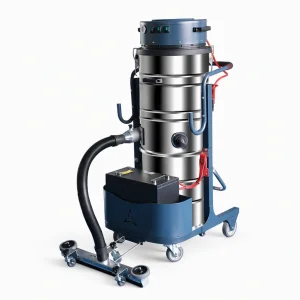
Yes. For facilities subject to combustible organic, plastic, or metallic dust hazards (such as flour mills, grain silos, pharmaceutical plants, or aerospace metal grinding), we manufacture specialized explosion-proof machines like the DK-EX Explosion-Proof Three-Phase series. These units feature grounded conductive pathways, explosion-proof ATEX-rated electric motors, static-dissipative antistatic filters, and hermetically sealed switchgear.
We supply two main battery configurations based on budget and duty cycles: Maintenance-free deep-cycle Lead-Acid (AGM/Gel) batteries for cost-sensitive standard applications, and advanced Lithium Iron Phosphate (LiFePO4) power units with integrated Battery Management Systems (BMS). LiFePO4 packs deliver over 2,500 life cycles, support opportunity charging during shift breaks, and reduce machine weight by up to 40%.
As a vertically integrated factory, DIKE supports extensive OEM/ODM collaborations. For established distributors and brand holders, we customize rotational mold resin colors, print customized brand decals, adapt UI languages on control panels, program motor speeds, and provide turn-key localized instruction manuals and compliance documentation for quick customs entry.
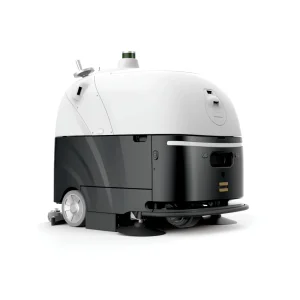
Our driverless models (such as the SC50S and SC80) utilize multi-sensor fusion combining 3D LiDAR, ultrasonic rangefinders, anti-drop sensors, and visual SLAM algorithms. Facility operators map out cleaning boundaries on their first walkthrough. Once mapped, the machine executes autonomous cleaning routes automatically, self-detects obstacles, maneuvers around temporary pallets, and generates cleaning efficiency reports via cloud dashboard.
Complete your fleet with commercial walk-behind scrubbers, lithium-powered stainless vacuums, and heavy industrial three-phase pressure cleaning systems.