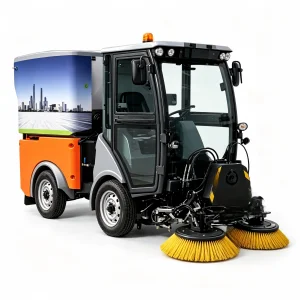
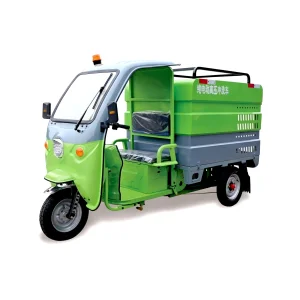
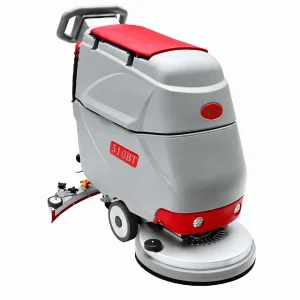
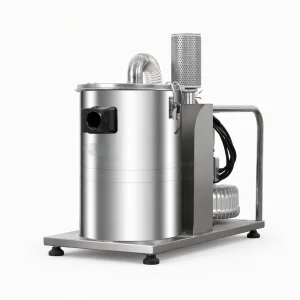
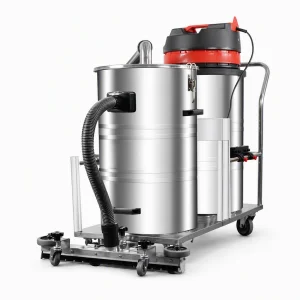
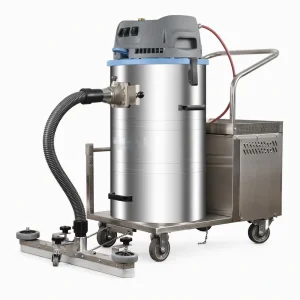
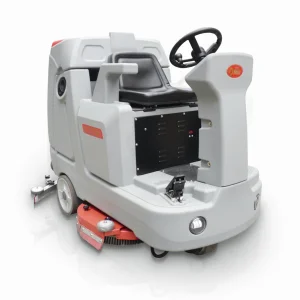
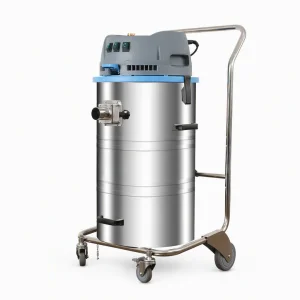
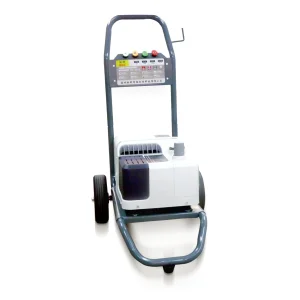
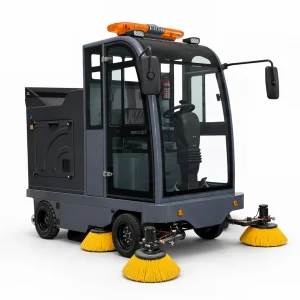
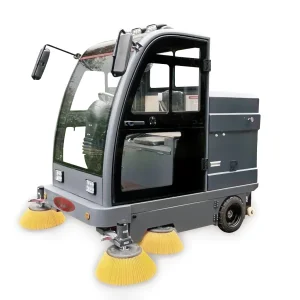
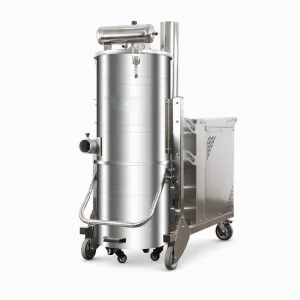
Explore our export-grade industrial scrubbing machines, road sweeping utility tricycles, and dual-purpose vacuum extractors engineered for demanding commercial and manufacturing environments.
Analyzing the macro shift from manual custodial labor to mechanized, intelligent floor cleaning equipment across global supply chain nodes.
Rising minimum wages across North America, Europe, and Asia-Pacific, combined with an aging custodial workforce, have created an acute structural shortage in industrial sanitation personnel. Facilities that previously relied on manual mop-and-bucket crews face crippling turnover and inconsistent hygiene standard compliance.
An industrial ride-on scrubber cleans between 3,500 m² and 7,500 m² per operating hour—outperforming manual teams by a factor of 12:1 to 18:1. This mechanization drastically lowers cost-per-square-meter while standardizing chemical dosing and surface dry times.
Industrial slip-and-fall claims represent one of the highest commercial liability categories globally. Regulatory frameworks such as OSHA 1910.22 (Walking-Working Surfaces) and European NF EN 13036 require hard surfaces to maintain certified dynamic coefficients of friction (DCOF).
Ride-on scrubbers utilizing high-recovery parabolic parabolic squeegees and continuous negative-pressure 3-stage vacuum turbines ensure surfaces are bone-dry within seconds of contact. This eliminates slip risk in 24/7 fulfillment centers, food packing bays, and heavy assembly halls.
Modern corporate environmental, social, and governance (ESG) commitments demand reduced freshwater utilization and non-toxic effluent runoff. Legacy scrubbers operated with wasteful open-flow gravity chemical discharge that saturated surrounding infrastructure.
Next-generation electric ride-on scrubbers integrate microprocessor-controlled micro-pulse solenoid metering. This precisely proportions detergent to water ratios down to 0.5%, slashing chemical expenditures by up to 60% and enabling extended cleaning cycles on single tank fills.
Across commercial logistics real estate exceeding 10,000 m², the capital investment payback window for an industrial ride-on floor scrubber dryer ranges from 3.2 to 5.4 months. Savings are realized primarily from reduced direct labor hours, decreased inventory damage caused by dust ingress, and minimized slip-and-fall workman's compensation exposure.
Why Tier-1 industrial buyers, B2B brand distributors, and facility management conglomerates partner directly with China's precision cleaning machine factories.
Based in Zhejiang's advanced industrial hardware hub, DIKE leverages sub-tier proximity for rotomolded LLDPE polyethylene tanks, CNC machined aluminum brush decks, and electromagnetic drive axles within a 50km radius. This localized cluster eliminates multi-week component lead times.
Every DIKE chassis undergoes dynamic load test-bench analysis, continuous motor thermal chamber exposure, high-vibration stress testing, and IPX4 ingress water spray tests before final pallet packaging. Our ISO9001 and CE compliance files simplify national import certifications.
Western brand equivalents carry massive corporate markups and legacy distribution tariffs. By purchasing directly from our manufacturing facility, wholesalers and contractors capture a 35% to 50% discount on initial unit procurement without sacrificing motor or electronics quality.
From custom brush pressure settings and customized livery/color matching to firmware modifications for localized languages (English, German, Spanish, French, Arabic), our in-house R&D team implements design modifications in fractions of the time required by traditional builders.
A closer look at the electromechanical architecture that guarantees continuous duty scrubbing in high-load commercial facilities.
Our ride-on scrubbers feature cast-aluminum scrub heads supported by self-leveling suspension linkages. Linear electric actuators deliver adjustable pad pressures ranging from 35kg to 85kg, ensuring deep grout scrubbing without damaging glossy epoxy coatings.
Engineered with fluid-dynamic parabolic curvature and oil-resistant Linatex or polyurethane blades. Even on tight 180-degree zero-radius cornering, dirty wastewater is channeled directly into the center suction orifice without trail-splatter or puddle leakage.
Equipped with maintenance-free deep-cycle AGM batteries or high-density Lithium Iron Phosphate (LiFePO4) packs. Integrated BMS delivers up to 5-6 hours of continuous scrubbing with rapid opportunity charging for uninterrupted multi-shift operation.
Specific engineering setups tailored for various commercial and industrial facility constraints.
Primary Challenge: Tire marks from forklifts, fine wood pallet dust, and sprawling footprint (20,000+ m²) requiring rapid turnarounds.
Optimized Configuration: Flagship large ride-on scrubbers (e.g., KNIAHT 1020BT) featuring dual 510mm disc brushes, high-volume 120L+ dual tanks, and high-traction non-marking drive tires able to negotiate 18% dock ramps.
Primary Challenge: Hydrocarbon lubricants, cutting fluids, stamping residues, and abrasive metal shavings settling into concrete pores.
Optimized Configuration: Cylindrical roller brush decks with integrated dry pre-sweep debris hoppers. Cylindrical rotation picks up small fasteners and swarf while heavy-duty degreaser is agitated and vacuumed away.
Primary Challenge: Rigid hygiene auditing, zero bacteria harbor points, chemical resistance, and non-toxic sanitation guidelines.
Optimized Configuration: Anti-microbial rotomolded polyethylene recovery tanks with smooth, accessible clean-out chambers. Compatible with hydrogen peroxide disinfectants and outfitted with food-safe non-marking squeegee blades.
| Facility Type | Area Size (m²) | Recommended Category | Cleaning Rate | Key Advantage |
|---|---|---|---|---|
| Mega Fulfillment Warehouses | 15,000 – 60,000 | Large Ride-On (KNIAHT 1020BT) | 5,500 – 6,500 m²/h | Massive coverage, dual-disc scrub head, extended runtime |
| Automotive Showrooms & Retail | 2,000 – 8,000 | Compact Ride-On (KNIAHT 90/660BT) | 3,200 – 4,000 m²/h | Narrow turning radius, quiet daytime operation (<62 dBA) |
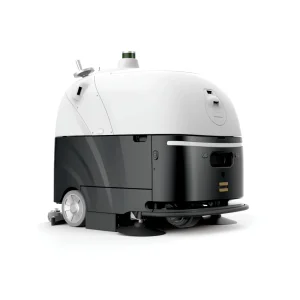
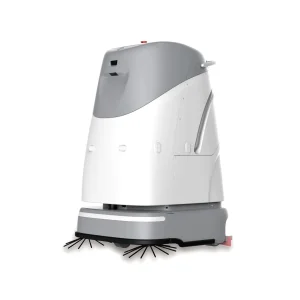
| Autonomous Hubs & Airports | 5,000 – 30,000 | Driverless Robotic (SC80 / SC50) | 2,500 – 3,500 m²/h | Unmanned autonomous routes, automated water refills |
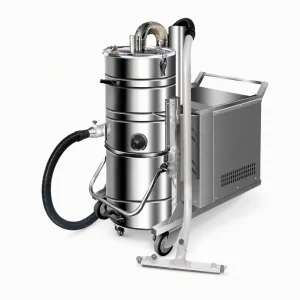
| Heavy Foundries & Machine Shops | 3,000 – 20,000 | Industrial Vacuum + Ride-On Sweeper | 4,500 – 7,000 m²/h | Continuous chip extraction, swarf prevention, robust steel body |
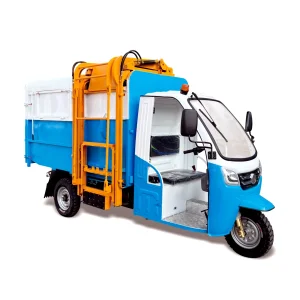
| Campus & Municipal Roads | 10,000 – 100,000 | Fully Enclosed Sweeper (DK-2000) | 8,000 – 14,000 m²/h | All-weather cabin, leaf/rubbish sweeping, dust filtration |
The transformation of custodial cleaning machines into connected, autonomous IoT industrial assets.
Driverless commercial scrubbers (such as the SC80 and SC50) utilize multi-line 3D LiDAR sensors, stereoscopic vision cameras, and ultrasonic edge sensors. Coupled with real-time SLAM algorithms, these machines map dynamic warehouses and maneuver around pedestrians without human intervention.
Every commercial scrubber in modern fleets connects via 4G/5G telematics to a central software dashboard. Facility directors track live square-meter coverage, battery discharge curves, brush wear alerts, water flow anomalies, and preventative maintenance schedules from anywhere in the world.
Advanced onboard electrolytic cells convert regular tap water into electrically activated aqueous ozone. This cleans light dirt and sanitizes bacteria without conventional surfactant chemicals, preserving delicate epoxy gloss and reducing environmental chemical discharge to zero.
A rigorous engineering framework for procurement directors evaluating overseas floor scrubber manufacturing partners.
Ensure drive and suction motors incorporate genuine brushless DC (BLDC) technology with IP54+ ratings. Brushless motors eliminate carbon brush wear, reduce thermal degradation, and run reliably for over 10,000 operational hours.
Demand heavy-duty rotational molded high-density polyethylene (LLDPE) tank walls of at least 6mm to 8mm thickness. Thin blow-molded bodies degrade under industrial vibrations and develop micro-cracks from caustic detergents.
Select manufacturers that standardize critical wear items—such as squeegee rubber profiles, brush bayonet couplings, solenoid valves, and charger ports—across their product lines, ensuring distributors maintain minimal, efficient spare parts inventories.
Verify that full CE Machinery Directive, Low Voltage Directive (LVD), Electromagnetic Compatibility (EMC), and RoHS certifications are registered directly in the manufacturer's name to guarantee smooth customs clearance at major international ports.
Direct technical answers from DIKE application engineers regarding ride-on floor scrubber procurement, warranty, and battery engineering.
Our standard configuration utilizes industrial sealed AGM deep-cycle battery banks providing 3.5 to 4.5 continuous run hours per charge, with an operational cycle life of 700 to 900 full discharge cycles. For multi-shift 24/7 facilities, we supply modular Lithium Iron Phosphate (LiFePO4) systems with fast-charging BMS, yielding 5.5 to 6.5 hours of continuous scrubbing, 2,500+ lifecycle charges, and 2-hour full opportunity recharging capability.
We provide a comprehensive 12-to-24 month core structural and motor warranty. For all full container load (FCL) orders, DIKE includes a complimentary 2% to 3% fast-wear spare parts package (squeegee blades, brush heads, suction hoses, gaskets, relays). Critical warranty replacement parts ship via DHL/FedEx courier within 24 hours of ticket validation, supported by our multilingual technical engineering team.
Yes. Our onboard smart high-frequency chargers are configured for global AC grid requirements: 110V/60Hz for North American markets, 220-240V/50Hz for Europe, UK, Australia, and Asia-Pacific, complete with country-specific NEMA, Schuko, or BS plug terminations. We offer complete OEM private labeling, custom rotomolding body color matching, and digital control panel branding for regional distributors with minimum order quantities (MOQ) as low as 5 units.
The standard industry guideline is surface area: when a facility cleans more than 2,500 m² to 3,000 m² per operational shift, walk-behind scrubbers become economically inefficient due to operator fatigue and slower transit speeds (approx. 3.5 km/h). Ride-on scrubbers operate at 5.5 km/h to 7.0 km/h with scrub paths of 700mm to 1020mm, tripling cleaning productivity and achieving complete labor capital recovery within months.
Disc brush decks utilize flat, rotating circular pads ideal for smooth concrete, commercial tile, and epoxy surfaces, delivering aggressive scrubbing and pad interchangeability for stripping or polishing. Cylindrical roller brush decks rotate at much higher RPM (approx. 600-800 RPM) and feature an integrated pre-sweep waste tray, allowing the machine to capture loose screws, pebbles, and chips while scrubbing non-slip, textured, or grouted tile floors.
Yes. The SC80 and SC50 driverless series meet ISO 3691-4 industrial AGV safety compliance. They feature an integrated triple-redundancy safety stack: 360-degree LiDAR obstacle avoidance, 3D optical depth cameras for low-height pallet detection, dynamic path planning, and hardware-level touch bumpers that trigger emergency stops within 0.1 seconds, enabling completely safe co-working alongside personnel and forklifts.
Complete your fleet with our high-power industrial vacuum units, closed-cabin municipal sweepers, and flagship ride-on scrubbers designed for high uptime in harsh working environments.