Analyzing structural shifts, regulatory pressures, and ROI metrics governing modern food service, hospitality, and industrial facility maintenance.
In the modern global supply chain, the procurement of Wholesale FSW (Food Service & Wholesale) Restaurant Supplies has evolved far beyond traditional dining utensils, prep hardware, and basic manual janitorial accessories. Today’s multi-unit restaurant operators, central production kitchens, hospitality enterprises, and food logistics hubs demand comprehensive, heavy-duty sanitation engineering solutions. Driven by stringent international food safety standards—such as HACCP (Hazard Analysis Critical Control Point), FDA Food Code regulations, and EU Regulation (EC) No 852/2004—the integration of automated cleaning machinery into daily operational workflows has become a core business imperative rather than an operational luxury.
High-density commercial kitchens, food processing facilities, and large-scale dining establishments generate complex waste streams containing organic lipids, hydrophobic oils, abrasive food debris, and wet sludge. Traditional manual mop-and-bucket sanitation protocols fail to achieve the microbial log-reduction required in modern high-throughput environments. Furthermore, manual floor cleaning introduces significant operational risks, including prolonged floor drying times, cross-contamination vectors, and high slip-and-fall liability exposure for kitchen staff and patrons alike.
Statistical evaluations across global commercial restaurant networks indicate that floor maintenance accounts for up to 38% of total labor hours within daily sanitation routines. Transitioning to automated walk-behind scrubbers and specialized wet-dry extraction systems reduces labor expenditure by an average of 65% while elevating surface cleanliness metrics by over 80% based on ATP (Adenosine Triphosphate) bioluminescence testing.
Eliminating grease film accumulation in food prep zones to comply with local health department inspections and prevent pathogenic biofilm development (e.g., Listeria monocytogenes, Salmonella).
Restaurant floors must be washed, scrubbed, and dried instantly during shift changes to maintain continuous operating schedules without risking slip injuries on greasy epoxy or tile floors.
Global procurement teams prioritize equipment featuring brushless motors, high-efficiency lithium battery packs, robust stainless steel tanks, and low consumption rates of water and chemical detergents.
Deconstructing the mechanics of industrial floor scrubbers, pulse reverse-blow vacuums, and high-pressure sanitation vehicles.
The manufacturing ecosystem of enterprise sanitation equipment requires advanced mechanical design, fluid dynamics engineering, and durable chemical-resistant material selection. As a direct-from-factory leader in Wenzhou, China, manufacturing specialized floor scrubbers, sweepers, and industrial vacuum cleaners, DIKE (Wenzhou Dike Intelligent Environmental Protection Technology Co., Ltd.) implements rigorous technical benchmarks across all machine series to handle the grueling demands of enterprise kitchens, wholesale warehousing, and industrial plants.
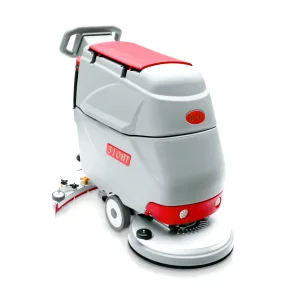
Commercial kitchen floors feature challenging surface textures, ranging from anti-slip quarry tiles with deep grout lines to smooth polished concrete and seamless epoxy coatings. Effective oil and grease removal requires dynamic mechanical energy input. Our floor scrubber platforms feature dual counter-rotating disc brushes or cylindrical roller brush systems capable of applying up to 45 kg of down-pressure. High-torque copper-core motors maintain constant RPM even under extreme frictional resistance caused by sticky organic residues.
Liquid recovery performance hinges on aerodynamic suction flow and blade geometry. Our engineering teams utilize CAD-modeled parabolic squeegee assemblies equipped with oil-resistant Linatex® or polyurethane rubber squeegee blades. Connected to multi-stage high-vacuum suction turbines, these systems create a differential pressure zone that instantly pulls dirty water, suspended solids, and emulsified fats off the floor. Moisture recovery rates exceed 99%, rendering surfaces completely dry and operational immediately after passage.
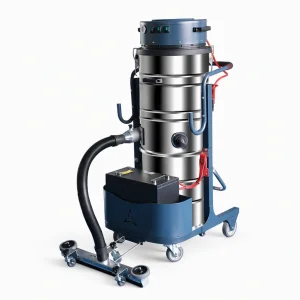
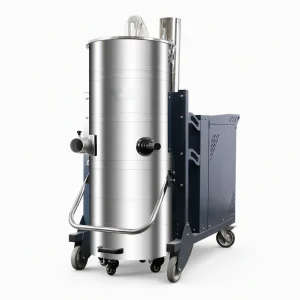
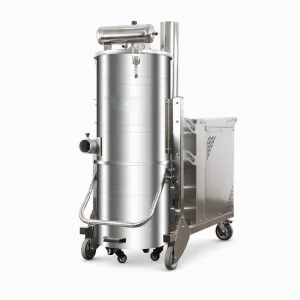
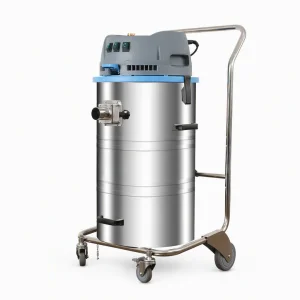
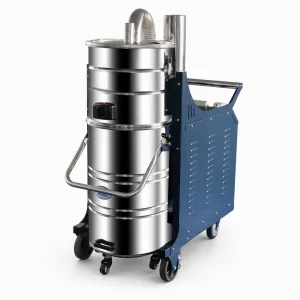
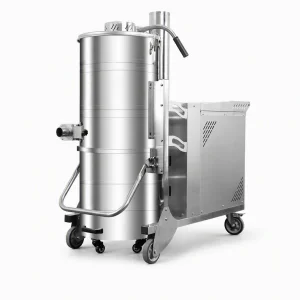
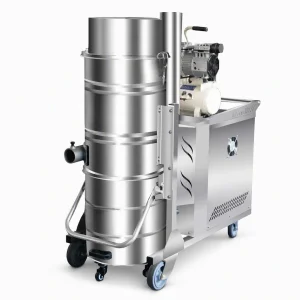
For dry ingredients wholesale facilities, flour mills, and commercial bakery production lines, fine airborne dust particles pose both health hazards and explosion risks (combustible dust). Equipment like the DK-221MFC Industrial Vacuum Cleaner integrates fully automated Pulse Reverse Blow Systems paired with PTFE-coated HEPA H13 filtration media. Compressed air bursts periodically reverse airflow through the filter cartridges, dislodging micro-fine dust down to 0.3 microns without interrupting continuous suction flow (up to 280 m³/h capacity).
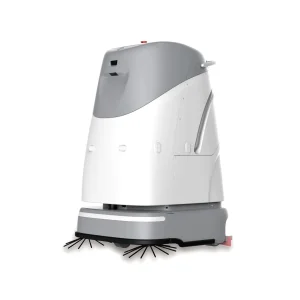
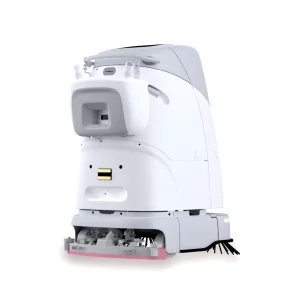
| Engineering Specification | Commercial Walk-Behind (e.g., Warrior 510BT) | Heavy Industrial Vacuum (e.g., DK-221FC 380V) | Autonomous Driverless (e.g., SC50 Series) |
|---|---|---|---|
| Target Application | Kitchens, Dining Rooms, Retail Aisle Cleaning | Bulk Flour, Metal Chips, Heavy Sludge Pickup | Large Distribution Centers, Airport Halls, Malls |
| Power Platform | 24V DC Deep-Cycle / Maintenance-Free AGM | 380V Three-Phase Continuous Duty Motor | High-Density LiFePO4 Lithium Battery Array |
| Cleaning Productivity | Approx. 2,000 – 2,500 m²/h | Continuous 24/7 Suction Operation | Up to 3,500 m²/h Autonomous Mapping |
| Filtration / Recovery | 50L Clean / 55L Recovery Polyethylene Tanks | 100L Heavy Duty Tank + HEPA H13 Filter | Multi-stage Water Recycling & Filtration System |
| Control Interface | Ergonomic Touch Panel with Eco-Mode | Manual Blowback / Pulse Jet Reverse Air Control | LiDAR Sensor Fusion + AI Navigation GUI |
Tailored equipment deployments engineered to address specific operational bottlenecks across diverse facility footprints.
Primary Challenge: Heavy grease accumulation, restricted maneuverability around prep tables, slip hazards.
Engineered Solution: Self-propelled compact walk-behind scrubbers (e.g., Warrior 510BT). Features tight turning radiuses, squeegees specialized for vegetable/animal fats, and low-noise operation for daytime use.
Primary Challenge: Massive floor coverage requirement, dry packaging debris, pallet dust, tire marks.
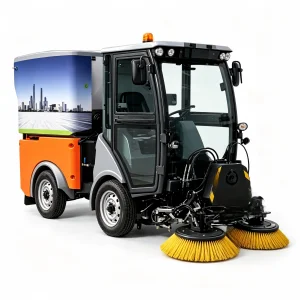
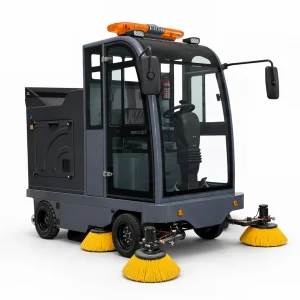
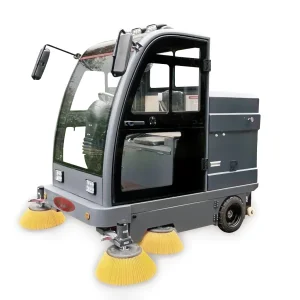
Engineered Solution: Fully enclosed pure electric sweepers (e.g., DK-1800 / E-800) paired with driverless floor scrubbers (e.g., SC50). Sweeps dry refuse before wet-scrubbing to protect squeegees and double operational throughput.
Primary Challenge: Hardened chewing gum, stubborn organic stains, leaf build-up, outdoor grime.
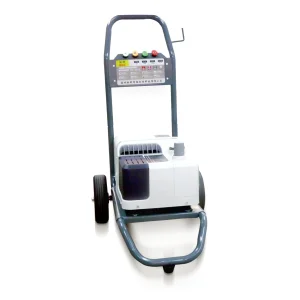
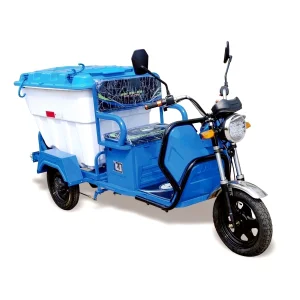
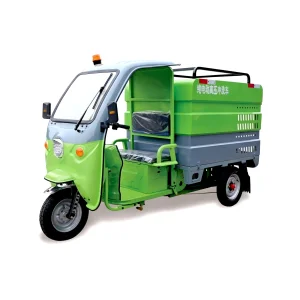
Engineered Solution: Electric three-wheeled high-pressure washing vehicles (e.g., LB3CX600). Combines mobile water storage with high-psi hot/cold water jet lances for rapid outdoor surface restoration.
The convergence of robotics, artificial intelligence, IoT telemetry, and sustainable green engineering in commercial cleaning machinery.
As enterprise procurement teams look toward 2030, the commercial cleaning equipment market is undergoing a profound technology transformation. The future of facility management relies on autonomous operational capabilities, dynamic resource allocation, and zero-emission sustainability goals. DIKE’s continuous investment in internal R&D ensures our manufacturing lines lead this evolutionary curve across four critical technological pillars:
Next-generation autonomous scrubbers (such as our driverless series like the SC50 / SC50S) bypass basic wire-guided routes. Utilizing 3D LiDAR sensors, visual simultaneous localization and mapping (VSLAM), and ultrasonic anti-collision sensors, these machines map multi-story commercial facilities dynamically. They detect moving obstacles (such as restaurant staff, forklifts, or customers), adjust cleaning paths in real time, and operate reliably during off-hours or peak operating cycles.
Industrial facility managers overseeing multiple restaurant chains or distributed warehouses require centralized oversight. Modern equipment incorporates 4G/5G IoT telematics modules that transmit real-time telemetry data to cloud dashboards. Metrics tracked include lithium battery health, brush wear status, motor temperature profiles, square footage cleaned per shift, and precise GPS geofencing. Predictive maintenance algorithms alert service teams to replace squeegee blades or vacuum carbon brushes *before* component failure occurs, eliminating unplanned downtime.
Environmental, Social, and Governance (ESG) mandates are compelling commercial kitchens and food logistics centers to reduce fresh water consumption and synthetic detergent discharge. Advanced scrubbers integrate multi-stage internal filtration systems that recycle dirty recovery water back into clean solution streams through micro-sieves and ozone (O₃) injection. Aqueous ozone technology sanitizes surfaces on contact, killing 99.99% of bacteria without requiring harsh chemical reagents that leave chemical residues on kitchen floors.
Providing international distributors and procurement agents with certified, factory-direct machinery adapted to local electrical and environmental standards.
Navigating global import markets requires strict adherence to regional regulatory frameworks and electrical safety standards. Based in Wenzhou, Zhejiang, China—a global hub for advanced equipment manufacturing—DIKE operates an integrated infrastructure covering in-house R&D, structural design, sheet metal fabrication, motor assembly, and international sales testing.
All machinery series carry full export documentation, including CE Safety Certification, ISO 9001:2015 Quality Management Systems accreditation, and RoHS Environmental Compliance to ensure seamless customs clearance in Europe, North America, the Middle East, and Asia-Pacific markets.
Recognizing global power variance, our industrial vacuums and battery chargers support customized electrical architecture: 110V/60Hz for North American grids, 220V–240V/50Hz for European/Asian standards, and 380V–415V three-phase systems for heavy industrial setups, equipped with region-specific NEMA, Schuko, or BS plug configurations.
We support global brand distributors, restaurant supply wholesalers, and government contract tenders with custom colorways, private-label branding, customized chassis modifications, and SKD/CKD (Semi-Knocked Down / Completely Knocked Down) shipping formats to minimize import tariffs.
Technical, logistical, and operational answers curated by senior application engineers for enterprise procurement managers.