
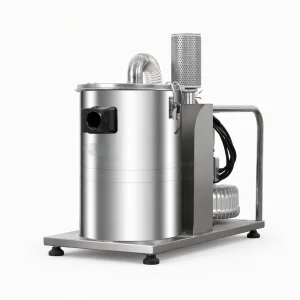
Explore heavy-duty single-tank vacuums, semi-enclosed street sweepers, multi-functional electric sweepers, and high-efficiency floor scrubbers calibrated for high-traffic facilities.
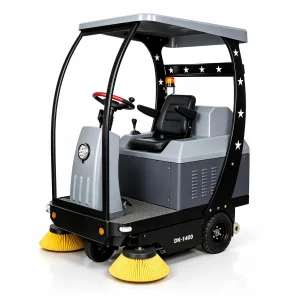
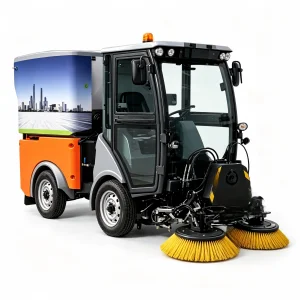
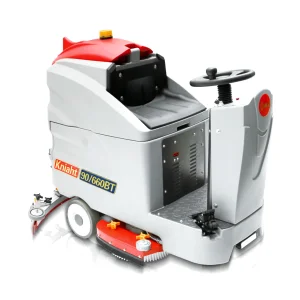
From mechanical broom dragging to dual-stage negative pressure cyclonic filtration: Understanding the technological transitions shaping modern environmental sanitation engineering.
Traditional sweepers relied primarily on rotary mechanical agitation, generating airborne particulate plumes. Modern industrial sweep-vac units incorporate twin-turbine negative pressure fluid dynamics, capturing PM2.5 and PM10 micron dust through multi-cartridge PTFE micro-porous filtration membranes before releasing laminar exhaust.
Legacy commercial sweepers used heavy lead-acid configurations subject to thermal decay and deep-cycle degradation. Today’s wholesale sweeper vacuum factories integrate high-density Lithium Iron Phosphate (LiFePO4) systems monitored by CAN-bus Battery Management Systems (BMS), yielding >3,500 full charge cycles and opportunity charging flexibility.
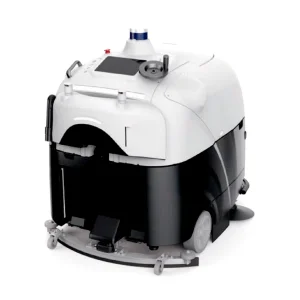
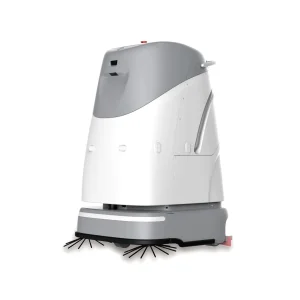
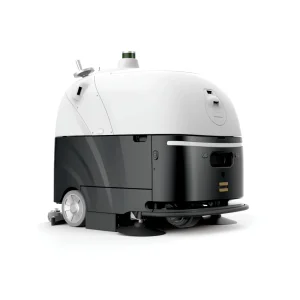
Commercial facilities demand driverless execution. Incorporating 3D LiDAR, stereoscopic SLAM cameras, and ultrasonic edge detection, autonomous sweeper vacuums map 100,000+ sq. meter logistics hubs, dynamically recalculating obstacle trajectories and reporting cleaning validation data straight to facility ERPs.
Procuring commercial sweepers and industrial vacuum systems requires calculating Total Cost of Ownership (TCO), Mean Time Between Failures (MTBF), and factory-level engineering compliance.
Initial machine acquisition accounts for only 20-25% of operational expenditures. Global buyers scrutinize consumable lifespans—such as polyurethane squeegee blades, brush bristles, and filtration cartridges—to guarantee long-term operational viability.
Heavy commercial vacuum collectors run continuous shifts. Sourcing requires high-grade copper winding, dual-stage bypass cooling systems (separating motor cooling air from particulate-laden suction vacuum paths), and IP54/IP55 environmental sealing.
Corrosion resistance is paramount in chemical, food, or oceanic port facilities. Tier-one factories employ linear low-density polyethylene (LLDPE) rotational molding alongside electro-coated or stainless steel (AISI 304/316) structural frames.
Global distributors demand stringent homologation: CE Machineries Directive 2006/42/EC, EMC compatibility, RoHS validation, ATEX/IECEx compliance for combustible dust zones (DK-EX series), and UL/CSA electrical motor compatibility.
Why modern original equipment manufacturers (OEMs) and wholesale cleaning machinery factories in Zhejiang provide unparalleled cost-efficiency, engineering depth, and global delivery agility.
Situated within the Yangtze River Delta manufacturing corridor, DIKE capitalizes on immediate access to high-precision CNC tooling, motor winding centers, lithium battery packaging hubs, and specialized rotational mold builders within a 50km radius. This industrial density slashes lead times for custom tooling from months to weeks.
From initial structural tube laser cutting and automated robotic seam welding to electrostatic powder coating and computerized dynamometer dynamometer motor testing, vertical factory ownership eradicates contractor margins, ensuring stringent quality control and high-volume scalability.
Industrial operations differ across continents. Chinese manufacturing agility allows foreign distributors to customize operating voltages (110V/220V/380V/440V), standard plug interfaces, client branding, telemetry IoT gateways, and language-specific interface consoles without prohibitive Minimum Order Quantities (MOQs).
Analyzing floor topography, contamination characteristics, and machine parameter alignments across complex commercial and heavy-industrial facilities.
High-bay distribution hubs require zero residual moisture and fine tyre dust removal to ensure uninterrupted traction for autonomous AGVs and reach trucks. Heavy sweep-vac machines (like the DK-1800) clear debris without secondary dust scattering.
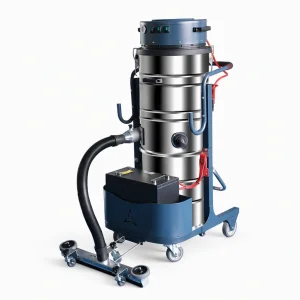
Sharp steel swarf, oily chips, and coolant liquids rapidly destroy domestic and standard commercial vacs. Dual-barrel stainless units (such as the DK-221FB and three-phase vacuum series) capture heavy bulk solids alongside liquids without filter blinding.
Strict FDA and HACCP guidelines forbid particulate re-emission. Stainless steel commercial vacuum cleaners with HEPA H14 class filtration ensure sanitary compliance, capturing ultra-fine flour dust, powdered chemicals, and micro-contaminants.
High footfall airport terminals and high-speed railway concourses necessitate whisper-quiet operation (<65 dBA) and 100% dry floor recovery in a single pass to eliminate slip-and-fall liabilities. Compact ride-ons and autonomous scrubbers excel here.
Engineered reference data to assist project specifiers, facility directors, and commercial equipment importers in configuring optimal machinery fleets.
| Equipment Category | Drive System | Theoretical Efficiency | Filtration Type | Primary Target Media | Optimal Deployment Arena |
|---|---|---|---|---|---|
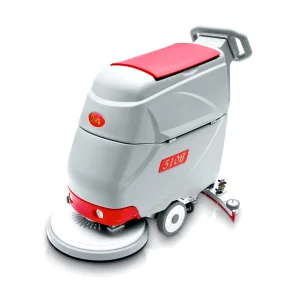
| Walk-Behind Floor Scrubber | Traction Motor / Manual Push | 1,800 - 3,200 m²/h | Liquid Squeegee Direct Vacuum | Spills, grease, fine dust | Retail aisles, clinics, light assembly lines |
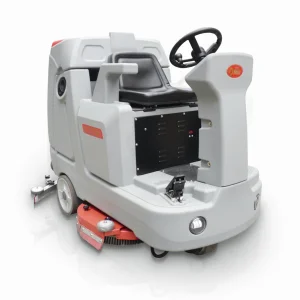
| Ride-On Heavy Scrubber Dryer | Brushless Rear-Axle Electric | 4,500 - 8,500 m²/h | Dual-Chamber Recovery Separation | Heavy liquid slurry, grime, tyre marks | Warehouses, underground parking, airport gates |
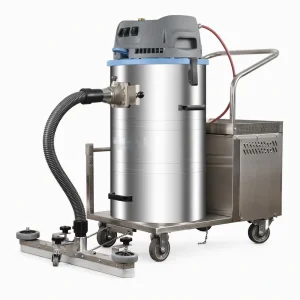
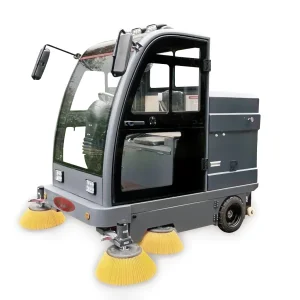
| Enclosed Sweeper Vacuum | Pure Electric / Heavy Suspension | 8,000 - 15,000 m²/h | Multi-Barrel PTFE Filter Cartridges | Sand, gravel, leaves, plastic scrap, dust | Logistics yards, municipal plazas, campus streets |
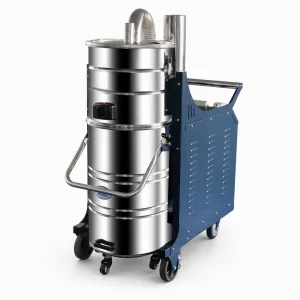
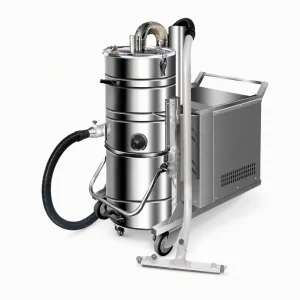
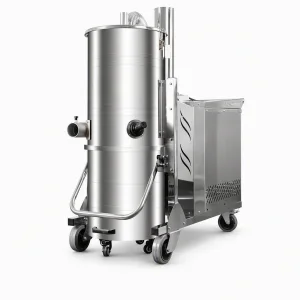
| Stainless Industrial Vacuum | Single/Three-Phase Bypass Turbine | Airflow: 275 - 500 m³/h | HEPA + Cyclonic Spark Trap | Metal chips, combustible dust, heavy slurry | Heavy machining plants, chemical silos, foundries |
| Autonomous AI Driverless Scrubber | LiDAR + Visual SLAM Drive | 2,000 - 4,500 m²/h | Automated Internal Water Recycling | Routine daily dust, footfall dirt | Modern automated logistics hubs, mega-malls |
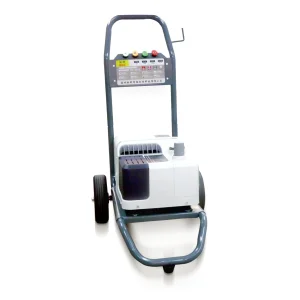
Explore next-generation driverless robotics, high-output pressure sanitation machines, fully enclosed sweepers, and ATEX/IECEx compliant explosion-proof vacuum collectors.
Comprehensive engineering clarifications addressing air flow, filtration maintenance, battery chemistries, explosion safety, and factory OEM private labeling.
Airflow (cubic feet per minute or m³/h) governs particulate velocity and volumetric carrying capacity—vital for capturing lighter dust, sawdust, and large dry debris in sweeping machines. Water Lift (negative vacuum pressure in mbar or kPa) reflects the motor’s ability to pull heavy, dense materials such as metal swarf, thick oil slurry, or deep liquids through long hose assemblies. DIKE engineering calibrates both variables according to application profiles.
In facilities handling airborne flour, coal, aluminum powder, or organic pharmaceutical dust, static electricity or brush motor sparking can induce catastrophic deflagrations. The DK-EX three-phase series features ATEX Zone 21/22 and IECEx-rated continuous-duty brushless induction turbines, complete electrical grounding from nozzle to exhaust, anti-static HEPA filtration, and spark-free stainless steel housings.
While lead-acid presents lower upfront procurement capital, it yields only 500-800 cycles at 50% depth of discharge, requires 8-10 hour charging cycles, and risks acidic off-gassing. LiFePO4 batteries deliver >3,500 cycles at 80-90% depth of discharge, allow rapid opportunity charging during shift breaks, eliminate toxic venting, and drastically lower 5-year operating expenditures.
Autonomous models like the SC50 and SC80S provide rapid ROI in spaces with predictable layouts, standardized flooring, and multi-shift routines (such as e-commerce distribution warehouses, international transit hubs, and exhibition halls). They eliminate labor volatility and ensure verifiable cleaning coverage. Conversely, dynamic manufacturing zones with irregular layout shifts and unpredictable large obstructions are better served by manned ride-on units like the KNIAHT 1020BT.
We provide full white-glove OEM/ODM manufacturing partnerships. This encompasses custom powder-coated chassis coloration, proprietary rotomolded tank colors, private-label silk-screen branding, bespoke control firmware in local languages, tailored shipping container packing densities (CKD/SKD), and dedicated spare parts buffer stock allocations.
DIKE utilizes a modular engineering framework across all product lines. Core wearing items (squeegee blades, suction hoses, bypass motors, valves, and wheels) share standardized part architectures across multiple models, enabling regional distributors to maintain minimal SKU counts while delivering fast regional service turnaround times.