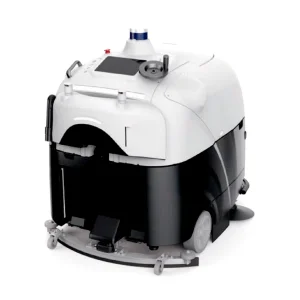
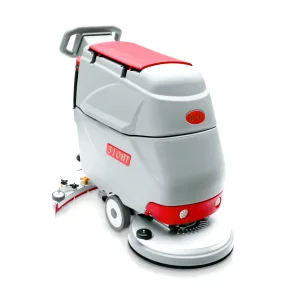
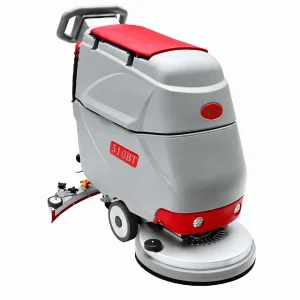
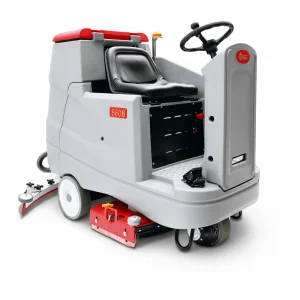
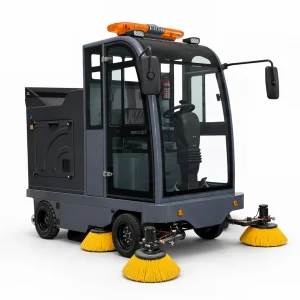
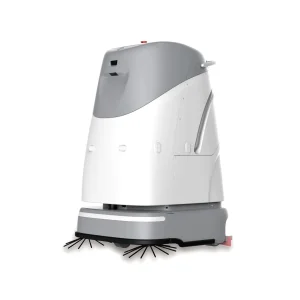
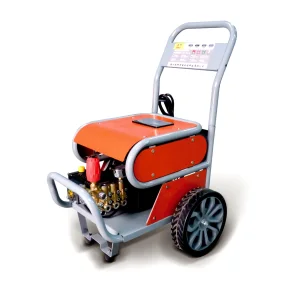
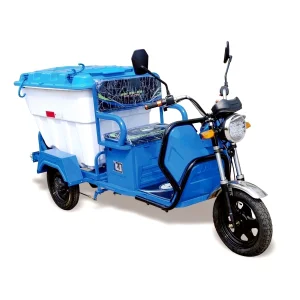
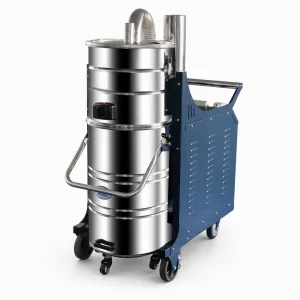
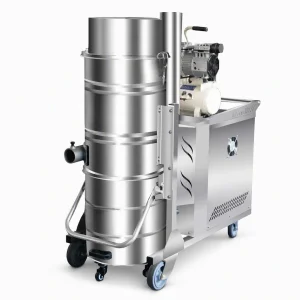
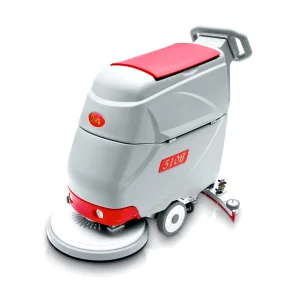
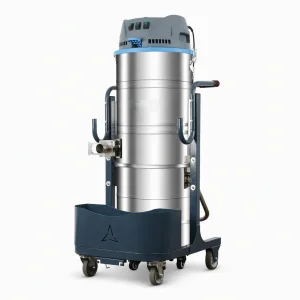
Direct factory production models integrating heavy-downforce scrub decks, LiFePO4 battery infrastructure, and single-pass fluid evacuation mechanisms.
How mechanical sanitation engineering is converging with solid-state LiDAR, multi-sensor SLAM navigation, and closed-loop water recirculation systems.
Modern commercial autonomous scrubbers combine 360-degree laser telemetry with ultrasonic edge sensing to establish millimetric navigation in high-traffic logistics hubs without floor-marking fiducials.
Electrolyzed micro-bubble injection activates standard municipal feed-water into a potent sanitizer, cutting industrial chemical expenditures by up to 85% and preventing greasy surfactant residues.
Cellular IoT controllers aggregate real-time metrics: squeegee degradation indicators, water dissipation rates, battery health cycles, and automated preventive maintenance schedules.
OEM/ODM Strategic Paradigm: Enterprise B2B buyers no longer evaluate cleaning hardware solely on mechanical throughput (m²/h). The standard has shifted toward Total Cost of Ownership (TCO), algorithmic duty-cycle balancing, and global compliance verification.
As global supply chain architects reconfigure sanitation maintenance, original equipment manufacturers are tasked with bridging high-durability mechanical design with complex cyber-physical controls. In high-bay fulfillment distribution centers, floor cleaning can no longer cause downtime or pose safety hazards. Modern ride-on and robotic machines operate using high-cycle Lithium Iron Phosphate (LiFePO4) chemistries, allowing opportunity charging and 24/7 round-the-clock facility cleaning protocols.
Custom-engineered architectural layouts demanding high-efficiency particulate recovery, zero-slip hazard prevention, and heavy industrial sludge clearance.
| Industry Sector | Surface Challenge | Optimal Machine Architecture | Operational Efficiency Impact |
|---|---|---|---|
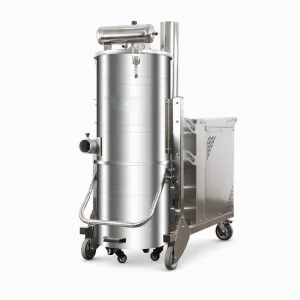
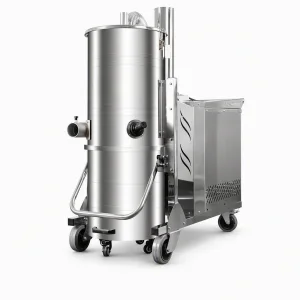
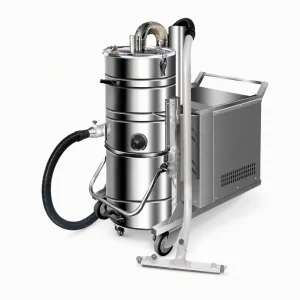
| Aerospace & Automotive Logistics | Heavy hydraulic oils, aluminum swarf, micro-dust contamination | Dual-stage sweepers + 3-Phase Industrial Vacuums (DK-EX / DK-221FB) | Eliminates FOD (Foreign Object Debris), ensures safe dry traction within 8 seconds. |
| Cold-Storage & Food Distribution | Condensation slip hazards, organic residue, cross-contamination risks | Ride-on Scrubbers with Parabolic Squeegees & Antimicrobial PE Tanks | Instant dry-down prevents sub-zero surface ice formation and bacterial blooms. |
| Commercial Retail & Healthcare | Narrow traffic aisles, acoustic sensitivity (<62 dBA required), pedestrian presence | Walk-behind self-propelled scrubbers (Warrior 510BT) or Autonomous SC50 | Quiet day-cleaning capabilities; zero disruptions to public or patient throughput. |
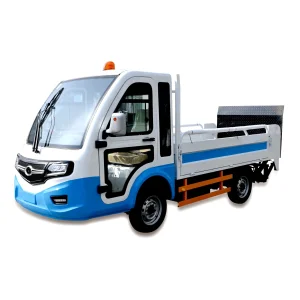
| Municipal Sanitation & Urban Parks | Scattered bulk litter, uneven curbs, pedestrian pathways, vehicle emissions | Electric Three-Wheeled Cleaning Vehicles (DK-2000 / LB3BJ500) | Zero-emission urban transport, reducing municipal operational fuel costs by 70%. |
How end-to-end integration across Wenzhou's precision hardware corridor delivers short lead times and strict component traceability.
In-house rotational molding produces seamless, high-density polyethylene (HDPE) solution and recovery tanks that resist industrial acids, impacts, and stress-cracking.
Proprietary brushless drive motors and bypass vacuum assemblies undergo 1,000-hour continuous stress testing, ensuring reliable daily duty cycles under heavy loads.
From raw ingot casting to final PCB firmware loading, every unit carries a digital passport, enabling overseas distributors to source matched spares quickly by serial number.
Operating from Wenzhou, China—a hub for electromechanical and fluid-power engineering—our manufacturing complex leverages a dense local supply chain. Sourcing critical cast-aluminum decks, specialized rubber squeegee blades, and micro-controller motherboards within a 50-kilometer radius minimizes supplier volatility. This integrated footprint protects our overseas partners from the stock shortages and extended lead times that often disrupt global industrial supply chains.
A structured operational methodology designed to meet the strict technical, legal, and operational criteria of corporate procurement teams.
Flexible Semi-Knocked-Down and Completely-Knocked-Down shipping modules help international distributors optimize shipping cube volume and lower local destination tariffs.
We provide complete OEM support, including corporate custom mold injection, custom-branded front covers, localized HMI software, and region-specific manuals.
We assist distributors with fast-moving spare parts kits—including squeegees, bypass motors, drive belts, and caster wheels—ensuring field replacements ship within 48 hours.
Our cleaning machinery is engineered to meet diverse international grid voltages, electrical safety rules, and regional workplace standards.
Exporting industrial cleaning equipment requires strict adherence to international electrical, mechanical, and environmental standards. Our machines are built with multi-voltage charging circuits (110V/60Hz, 220–240V/50Hz, 380V/415V three-phase) to run reliably across European, North American, Middle Eastern, and Asia-Pacific power grids. Lithium-ion platforms use certified battery management systems (BMS) with UN38.3, CE, and RoHS approvals to ensure smooth customs clearance and safe shipping.
In key markets such as India, our dedicated regional operations manage customer relations, technical consultations, and localized bid-filing. This hands-on presence ensures local municipal, warehousing, and facilities teams receive responsive pre-sale and post-sale engineering support.
Engineered for fine powder recovery, reverse-pulse filter cleaning, explosion-proof environments, and large-scale urban waste handling.
Direct answers to the most common questions raised by facility operations directors, procurement leads, and international distributor networks.
For smooth high-build epoxy floors, down-pressure should be maintained between 25 kg and 45 kg to prevent surface micro-abrasions while lifting grease. Squeegee suction relies on a 248 mbar vacuum assembly paired with a parabolic urethane squeegee blade. This balances friction and seal integrity, drying the floor completely within 6 to 10 seconds at typical operational speeds of 4.5 to 6.0 km/h.
Autonomous units (like the SC50 or SC80S) deliver positive ROI on predictable, high-frequency routes running more than 5,000 square meters daily—such as in airports, transit hubs, and central distribution hubs. When daily shifts exceed two cycles, autonomous units help reduce labor overhead while maintaining consistent floor cleanliness.
Single-phase vacuums (e.g., DK-361ECO) use carbon brush collector bypass motors designed for intermittent cleaning, tool attachments, and mobile site cleanup. Three-phase industrial units (such as DIKE-221FC) use side-channel induction turbine blowers rated for 24/7 continuous duty. These can handle high-density industrial loads—such as steel grit, fine silica, and coolants—without thermal overheating.
Models equipped with pulse reverse-blow systems (e.g., DK-221MFC) use an integrated pressure differential valve to blast compressed air back through the HEPA filter cartridges. This dislodges microscopic dust cakes (0.3 micron particulates) into the lower recovery drum without requiring the operator to open the canister or stop work.
Every export shipment includes CE Conformity Declarations, Machinery Directive (2006/42/EC) compliance, EMC test certifications, and UN38.3 lithium battery air/maritime transport dossiers. Factory inspection test logs and customized Certificates of Origin (COO) are also provided to ensure straightforward customs clearance.
Yes. We offer complete OEM/ODM engineering customization. This includes custom RAL exterior color matching, custom injection molds, localized LCD/LED multilingual interface firmware, and custom instructional labeling to fit our partners' regional brand portfolios.