Direct wholesale allocations for hospitality groups, janitorial distribution networks, and facility procurement managers requiring high-suction, low-downtime cleaning technologies.
An authoritative analysis of particulate dispersion, grease saponification thresholds, and pneumatic suction mechanical requirements in heavy-turnover hospitality spaces.
Commercial dining rooms represent one of the most mechanically demanding environments for floor care engineering. Unlike corporate office buildings or tertiary academic institutions, restaurants feature a complex convergence of hydrophobic animal fats, hydrogenated cooking oils, acidic liquid spillages, organic food remnants, and intense, localized pedestrian traffic. When carpet is chosen for dining rooms, lounges, and banquet spaces—primarily for superior acoustic dampening (Noise Reduction Coefficient ratings ranging from 0.25 to 0.55) and enhanced customer tactile comfort—it acts as an aggressive particulate filter. This filter captures airborne grease vapors and dry abrasive micro-debris within its fibrous matrix.
Kitchen foot traffic transfers lipid chains directly onto nylon and polypropylene pile, accelerating soil adherence and requiring vacuum lift ratings above 2,200 mmH2O.
Dry particulates trapped at the carpet backing act like miniature cutting chisels under foot traffic, accelerating fiber shearing unless addressed with continuous-frequency vibration.
Multi-stage micro-filtration prevents fine aerosolized allergens and lipid molecules from re-entering the dining atmosphere, ensuring compliance with strict public health metrics.
Standard commercial vacuums built for residential or light office applications consistently fail in restaurant settings. The primary failure mode involves motor burnout caused by premature filter blinding from airborne grease particulates, coupled with inadequate static water lift. To achieve effective remediation across heavy-duty commercial restaurant carpets, extraction systems manufactured by specialized facilities must combine multi-stage tangential bypass motors, dual-tank isolation architectures, high-frequency cylindrical roller agitation, and HEPA-grade filtration certified to ISO 29463 and EN 1822 benchmarks.
Deconstructing the exact specifications demanded by procurement committees, janitorial distributors, and multinational hotel engineering departments.
Wholesale buyers searching for factory partners to supply vacuum fleets for restaurant carpets fall into three distinct operational profiles: multi-unit restaurant franchise operators seeking standardized equipment across hundreds of locations; commercial facility service contractors managing outsourced cleaning shifts under strict Service Level Agreements (SLAs); and regional janitorial hardware distributors demanding high-margin, private-label OEM/ODM configurations.
Restaurant cleaning cycles operate under severe time constraints. Typical turnaround windows occur between closing hours (midnight or 01:00 AM) and early prep shifts (06:00 AM), leaving cleaning crews a narrow window to vacuum, extract spots, and dry high-traffic corridors. For fine-dining spaces open all day or luxury hotel breakfast ballrooms, sound pressure level becomes an overriding procurement factor. Machinery running above 68 dB(A) creates acoustic disruption, prompting high demand for vacuum cleaners equipped with acoustic baffling, low-vibration brushless motors, and decibel-attenuated bypass airflow canals operating between 54 and 60 dB(A).
Enterprise procurement professionals evaluate cleaning equipment through lifecycle operating economics rather than base equipment cost. An analysis across 500 restaurant installations reveals that motor failures, damaged cord assemblies, broken squeegee manifolds, and cracked rotomolded housings account for over 65% of lifecycle expenses when sourcing cut-rate units. By contracting directly with certified manufacturing plants like DIKE, institutional buyers secure roto-molded polyethylene tanks capable of withstanding industrial chemical attack, modular brushless vacuum plants with MTBF ratings exceeding 1,500 hours, and universal component standardized architectures that minimize maintenance inventories.
Ensuring absolute compliance across international consumer safety frameworks, food contact protocols, and interior air quality mandates.
Commercial restaurant flooring is governed by a complex intersection of food safety mandates, occupational slip-and-fall standards, and indoor air safety standards. In dining areas adjacent to open kitchens, preparation areas, or cold bars, the deployment of sub-standard carpet vacuum cleaners can cause cross-contamination under Hazard Analysis Critical Control Point (HACCP) protocols.
| Regulatory Framework | Critical Requirement | DIKE Factory Engineering Response | Operational Impact on Facility |
|---|---|---|---|
| HACCP & ISO 22000 | Prevention of aerosolized biological hazards and food-borne pathogens. | Multi-stage sealed filtration, anti-microbial clean-solution poly-tanks, seamless hose sanitization. | Eliminates fine dust migration from dining areas into kitchen prep stations. |
| CRI Seal of Approval (SOA) | Deep soil removal efficiency without excessive pile damage or surface distortion. | Precision brush roller torque calibration with dual-motor height adjustability. | Protects warranty conditions on commercial nylon/olefin tufted and woven carpets. |
| NFSI Walkway Safety | Rapid moisture evaporation on hard floors adjacent to extracted carpet boundaries. | Integrated rear curved squeegees on wet-dry extractors with high-recovery vacuum shoes. | Prevents wet slip-and-fall incidents when customers step from carpet onto polished tile. |
| CE / UL / RoHS Standards | Electrical safety, dielectric breakdown protection, and hazardous substance elimination. | Double-insulated electrical systems, heavy-duty oil-resistant Neoprene cables, certified switchgear. | Guarantees legal compliance for distribution across European, North American, and Asian markets. |
Vacuum extraction systems intended for commercial carpet sanitization must maintain adequate airflow (CFM) while generating deep static lift. When addressing carpet impregnated with edible oils, vegetable shortening, and sticky beverage residues, mere high airflow fails to dislodge embedded material. Systems must generate static pressure (measured in mm water lift) to draw air through the compressed carpet backing, pulling emulsified soil into twin recovery tanks before moisture penetrates the secondary backing or subfloor adhesive.
Technical evaluation metrics matching specific foodservice operational requirements with the correct machine power and suction architectures.
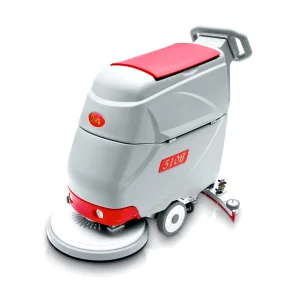
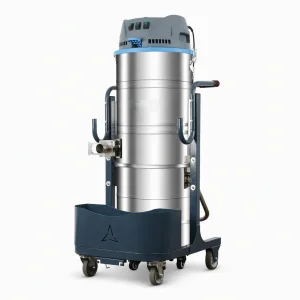
Operates on standard 110V/220V commercial outlets. Designed for everyday dining room operations, rapid spill recovery, and quiet maneuverability between fixed tables.
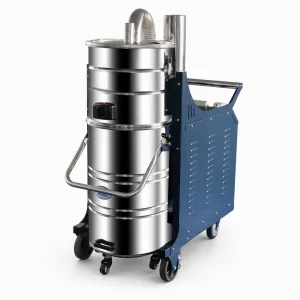
Engineered for massive banquet operations, food packing hubs, and back-of-house storage. Side-channel blowers support 24/7 continuous extraction without motor fatigue.
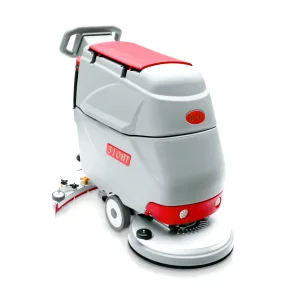
48V/24V high-density lithium iron phosphate (LiFePO4) architecture eliminating tripping hazards during daytime spot cleaning in active dining and cocktail areas.
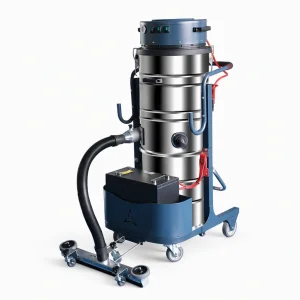
A critical engineering differentiator between low-end retail vacuums and industrial-grade restaurant carpet extraction machines lies in thermal separation and motor ventilation. Restaurant vacuums frequently encounter liquid spills, moisture, and fine flour dust. In DIKE engineered units like the DK-361ECO and DK-2290SE series, tangential bypass motor configurations route the vacuum intake air completely away from motor cooling fans. Clean ambient air cools the motor windings, preventing grease vapors, detergent mist, or humid air from reaching internal electrical components. This architecture prevents dielectric breakdown and extends motor operating life beyond 1,800 running hours.
Inside the advanced production processes of Wenzhou Dike Intelligent Environmental Protection Technology Co., Ltd.—delivering precision commercial floor care equipment globally since 2017.
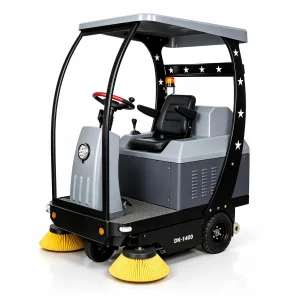
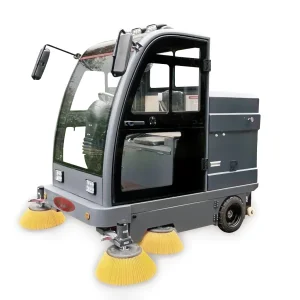
Founded in 2017 in Wenzhou, Zhejiang, China, DIKE operates a vertically integrated industrial production base specializing in the research, mechanical engineering, and worldwide distribution of intelligent floor maintenance machinery. Our product portfolio spans automatic floor scrubbers, ride-on scrubber dryers, sweepers, specialized industrial vacuums, and commercial high-pressure cleaning stations. By controlling tooling, injection rotomolding, metal chassis fabrication, motor assembly, and electronic testing under one roof, DIKE provides unmatched agility for international private label partners.
Every commercial vacuum and carpet extraction machine leaves the Wenzhou assembly line subject to strict functional validation: dynamic vacuum water-lift verification using digital differential pressure transducers, acoustic sound-profile logging, insulation resistance breakdown testing up to 1,500V, and 4-hour continuous burn-in load tests. For battery-powered platforms, comprehensive impedance matching and safety testing ensure complete compliance with UN 38.3 shipping criteria and international air/sea transport directives.
DIKE supports overseas distributors and corporate clients through rapid-response technical networks, with dedicated factory engineering replies delivered within 24 hours. Regional support, including dedicated market coordination for the Indian subcontinent led by Mr. Harvansh Shandilya in New Delhi, guarantees fast parts dispatch, technical training, and customized warranty administration. We maintain critical spare parts inventory—such as bypass vacuum motors, squeegee blades, intake manifolds, circuit controllers, and charging units—ensuring container-load distributors and hospitality procurement teams eliminate costly fleet downtime.
Pioneering the next decade of commercial restaurant carpet care through sensor-driven automation, adaptive brush pressure, and cloud-managed fleets.
The hospitality cleaning industry is undergoing a structural transformation driven by rising labor costs, high staff turnover, and demand for verifiable cleanliness audits. DIKE's forward-looking technology roadmap is directly aligned with these trends, integrating smart technologies into our autonomous and industrial product platforms.
Deploying LiDAR, SLAM, and optical sensor matrices on units like the SC50 and SC50S to navigate dynamic dining room seating, under-table areas, and narrow aisle transitions.
Integrated 4G/Wi-Fi telemetry modules streaming real-time motor temperature, water-lift drop, battery state-of-health, and square-meter cleaning verification directly to facility dashboards.
Optical particulate and turbidity sensors that automatically adjust roller brush RPM, down-force, and chemical-solution dosing based on real-time carpet soil saturation levels.
Furthermore, our engineering teams are optimizing chemical-free nano-bubble water activation and ultra-microfiber encapsulation technology. These innovations allow dining facilities to dissolve lipid-bound soil particles without leaving alkaline detergent residues that attract grease, prolonging carpet aesthetics and cutting facility chemical expenditures by up to 40%.
In-depth engineering answers to common technical, logistics, and machine selection questions from commercial procurement specialists.
Heavy-duty, pharmaceutical-grade, and driverless cleaning machinery built for large foodservice facilities, event centers, and commercial properties.
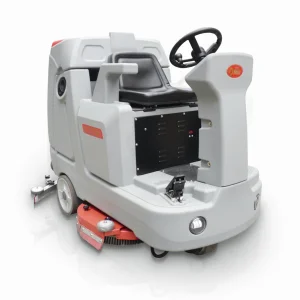
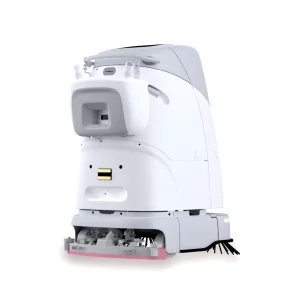
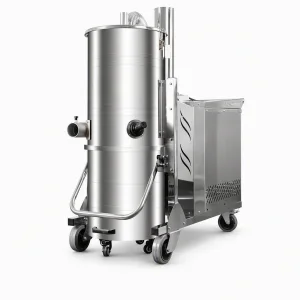
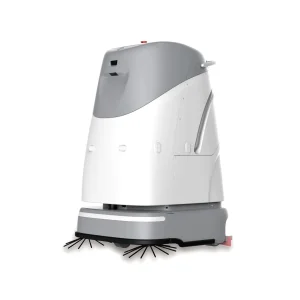
Send your facility floor plan, total area per shift, local power standards, and target order volumes. Our engineering team will prepare a detailed machine configuration proposal, technical spec sheets, and direct wholesale pricing.