Explore high-vacuum industrial vacuums, explosion-safe units, and commercial scrubber platforms built to ISO9001 and CE standards in Wenzhou, China.
A macroeconomic and engineering breakdown of how global environmental standards, fine dust regulations, and automation are reshaping facility procurement.
Across the international maintenance, repair, and operations (MRO) landscape, determining what is the best commercial vacuum manufacturer and supplier in China requires looking past surface-level marketing to examine fluid dynamics, motor life, filtration efficiency, and total cost of ownership (TCO). Historically, Western European and North American legacy brands dominated high-vacuum recovery and heavy particulate filtration. However, the last decade has seen a rapid technological transition.
Modern commercial and industrial facilities no longer view vacuums merely as domestic cleaning tools scaled up for commercial use. Today's commercial dust extractors are critical life-safety and operational continuity assets. Stricter occupational safety regulations—such as OSHA’s respirable crystalline silica standards (29 CFR 1926.1153) in North America, ATEX directive 2014/34/EU in the European Union for combustible dusts (Class II, Division 1 and 2 environments), and ISO 14644 cleanroom protocol compliance—have driven global enterprises to source systems engineered with multi-stage HEPA filtration, continuous-duty side-channel blowers, and precision pulse-jet self-cleaning systems.
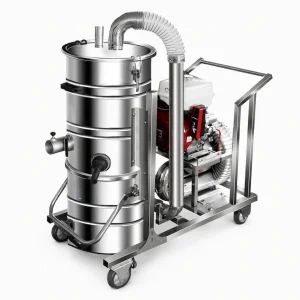
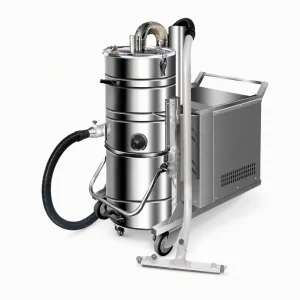
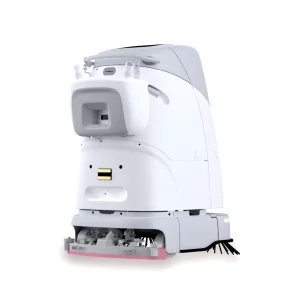
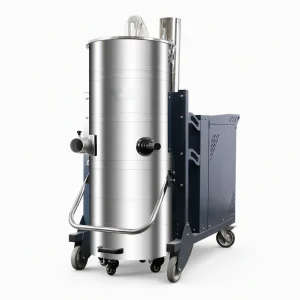
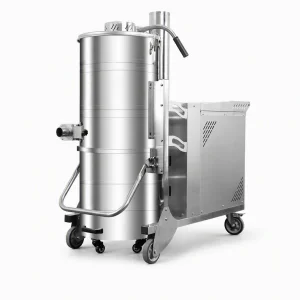
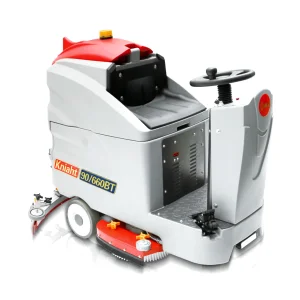
In this evolving landscape, Chinese manufacturing has transitioned from simple assembly to end-to-end precision engineering. Facilities like Wenzhou Dike Intelligent Environmental Protection Technology Co., Ltd. (DIKE) have established dedicated R&D centers that build complete industrial air purification solutions. These span from compact 2200W stainless-steel mobile collectors to autonomous LiDAR-navigated driverless scrubber-dryers, setting new benchmarks for durability, energy efficiency, and operational safety.
Direct supply partnerships with specialized Chinese factories eliminate tiered distribution markups, yielding 30% to 50% capital savings while preserving industrial-grade motor and material specifications.
By shifting from standard brush commutator motors to induction-driven, side-channel regenerative blowers, Chinese manufacturers deliver systems capable of non-stop operation across demanding shifts.
Top-tier manufacturers certify products to CE low-voltage, electromagnetic compatibility (EMC), and RoHS directives, ensuring turnkey integration for multinational distribution.
Deconstructing the core mechanics of industrial extraction: airflow volume, static vacuum depression, multi-stage separation, and filter regeneration.
Determining the optimal industrial vacuum requires evaluating the balance between two physics principles: Static Water Lift (Vacuum Depression measured in mbar or mmH2O) and Airflow (Air Volume measured in m³/h or CFM). In commercial and industrial environments, neither figure alone determines performance.
High airflow (m³/h) sweeps and conveys light, airborne debris across wide areas. High vacuum depression (mbar) is required to overcome resistance and lift dense, heavy bulk solids—such as metal turnings, slurries, and lead dust—or pull fines through dense HEPA filters. China's top tier manufacturers balance these properties with precision-machined cast-aluminum turbine assemblies.
A common failure point in commercial vacuums is filter clogging caused by micro-powders (such as cement silica, epoxy sanding dust, or pharmaceutical excipients). When sub-micron particulate fills the interstitial spaces of the primary filter, airflow drops, motor windings overheat, and extraction halts. Premium manufacturers overcome this challenge with advanced engineering designs:
Manual Blowback and Reverse-Air Purging: Models like the DK-221SMC use an internal directional damper. By toggling the blowback mechanism, high-velocity atmospheric air rushes backward through the filter pleats, dislodging the dust cake into the collection chamber without opening the machine or exposing the operator.
Tangential Cyclonic Inlets: Directing incoming air into a downward vortex uses centrifugal force to separate up to 90% of particulate before it touches the filter media, dramatically extending the operational lifespan of the secondary cartridge.
Single-phase universal brush motors are lightweight, deliver high peak suction, and suit intermittent commercial tasks (such as hotel corridors, contract janitorial, and mobile automotive detailing). However, three-phase continuous-duty induction turbines (featured in units like the DK-221VAC) operate without friction-wearing carbon brushes. With dynamic balance tolerances within G2.5 grades, these motors can run thousands of hours continuously inside production cells, automated packaging lines, and CNC machine sumps.
| Component Core | Standard Commercial Grade | Heavy-Duty Industrial Grade (DIKE Benchmark) | Operational Impact |
|---|---|---|---|
| Motor Type | Universal series carbon brush motor | Side-channel induction regenerative blower | Continuous 24/7 run time without thermal shutdown or spark hazard. |
| Chassis & Drum | Recycled ABS or thin steel sheeting | AISI 304 Stainless Steel or Rotomolded PE | Resists caustic chemicals, oil, impact, and deep vacuum collapse. |
| Primary Filter Media | Standard cellulose / non-woven paper | Antistatic PTFE coated needle felt (Class M/H) | 99.9% separation down to 1 micron; washable and hydrophobic. |
| Cleaning Mechanism | Manual shake or none (requires disassembly) | Manual blowback / Automated pulse-jet purging | Restores peak CFM instantly without operator particulate exposure. |
| Mobility Framework | Plastic swivel casters | Industrial non-marking polyurethane with locks | Smooth transport over debris-covered floors and expansion joints. |
How the industrial clusters of Zhejiang province streamline research, precision tooling, rotational molding, and rapid customization for global export.
Situated within China's specialized electrical and precision machinery corridor, DIKE leverages local component sourcing, precision CNC motor manufacturing, and low-lead brass/die-cast tooling ecosystems.
Rapid mold fabrication, custom voltage motor winding (100V, 110V, 220V, 380V, 415V, 480V at 50/60Hz), custom private-label powder coatings, and branded rotomolding tooling without excessive lead times.
Direct proximity to Ningbo-Zhoushan and Shanghai deepwater container ports simplifies logistics, lowering container drayage fees and expediting shipping schedules to Europe, the Americas, and Australasia.
In-house computerized balancing, laser cut profiling, pressure leak-testing, and dynamic decibel sound chamber validation maintain rigorous consistency across all production runs.
Matching equipment design and air filtration mechanics to the specific needs of diverse commercial and industrial operations.
Heavy oil mists, sharp chips, and abrasive metal turnings destroy conventional vacuum equipment. Units like the DK-221FB feature dual-barrel stainless steel sumps that separate heavy metal swarf from liquid lubricants, allowing clean recycling and keeping workshops safe.
Epoxy grinding, concrete scarifying, and floor leveling generate respirable crystalline silica that can cause silicosis. Systems equipped with manual blowback systems (e.g., DK-221SMC) and certified Class M/H HEPA filter arrays collect fine particulates and help contractors maintain OSHA compliance.
Static electricity buildup from airborne powders poses deflagration and explosive risks. Fully grounded, antistatic stainless steel systems with HEPA H14 filtration capture fine powders safely, protect product purity, and prevent cross-contamination in cleanroom environments.
Office parks, shopping centers, and retail stores require quiet operation, low weight, and agile maneuverability. High-efficiency cordless models like the DK-1810DC remove cord trip hazards, lower noise levels below 68 dB(A), and allow seamless cleaning in populated public spaces.
Where electrical hookups are unavailable—such as highway repair sites, remote ports, municipal bus depots, or railyards—gasoline-driven extraction platforms like the DK-951B deliver reliable, independent collection performance.
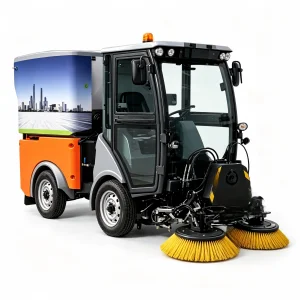
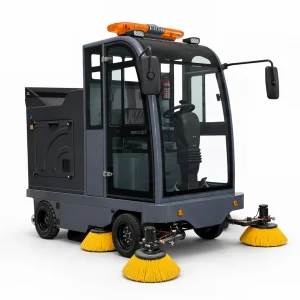
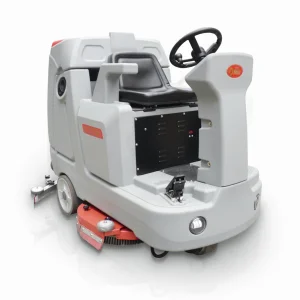
Expansive e-commerce logistics centers with concrete flooring face heavy cardboard lint, tire dust, and plastic wrap debris. Combining high-capacity twin-tank industrial vacuums with ride-on scrubbers and sweepers ensures high-throughput, round-the-clock facility cleanliness.
How the integration of LiDAR slam, lithium iron phosphate chemistry, and automated fleet monitoring is revolutionizing commercial floor management.
The global cleaning and floor maintenance sector is in the midst of a major shift driven by persistent labor shortages, rising wages, and corporate sustainability mandates. Modern facility operators are transitioning from labor-intensive manual cleaning toward autonomous driverless platforms and clean, electric machinery.
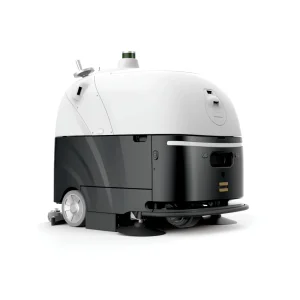
1. Driverless Autonomous Floor Scrubbers (Robotics in Cleaning): Modern automated systems like the SC50S and SC80 represent a major leap in commercial floor care. Combining 3D LiDAR, multi-sensor ultrasonic obstacles detection, and visual SLAM (Simultaneous Localization and Mapping), these machines clean complex routes autonomously. They work alongside staff, returning to docking stations to empty recovery tanks and recharge, freeing human teams for detailed spot cleaning.
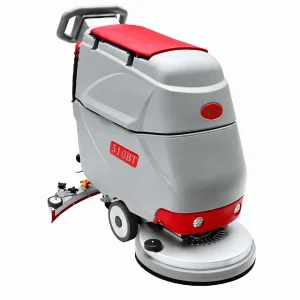
2. Transition from Lead-Acid to LiFePO4 Lithium Battery Architectures: Traditional lead-acid deep-cycle batteries require lengthy charging periods, daily distilled water top-ups, and dedicated ventilation to manage off-gassing. Modern platforms (like the DK-1810DC and DIKE-510BT) use Lithium Iron Phosphate (LiFePO4) systems. These support rapid opportunity charging during break shifts, deliver more than 3,000 charge cycles, run with zero maintenance, and produce zero indoor emissions.
3. Fleet Telemetry and Predictive Maintenance: Premium commercial vacuum and scrubber manufacturers now build IoT hardware directly into their machines. Fleet managers can monitor operating hours, battery state-of-charge, brush wear, water consumption, and filter differential pressure in real time, preventing sudden breakdowns and optimizing maintenance schedules across global deployments.
Key procurement criteria to evaluate when selecting an industrial cleaning machine manufacturer in China.
Ensure the manufacturer supplies complete test reports for CE-LVD, CE-EMC, UL/CSA (where required), and verified IP ratings (IP54/IP55 for dust ingress and water spray protection).
Request independent laboratory test reports for filtration media (EN 1822 or IEST-RP-CC001). Confirm HEPA filters achieve true 99.97% or 99.99% collection efficiency at the most penetrating particle size (MPPS, ~0.3μm).
Long-term fleet costs depend heavily on the availability of wearing parts: squeegee blades, filter cartridges, drive belts, and suction hoses. Reliable partners offer standardized spare-parts packages and maintain fast dispatch turnarounds.
Clear, practical answers to common engineering, import, and equipment selection questions.
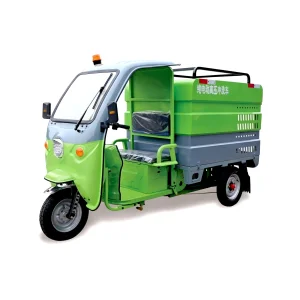
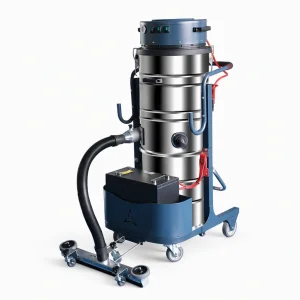
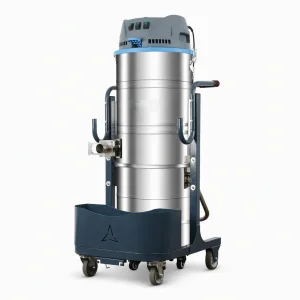
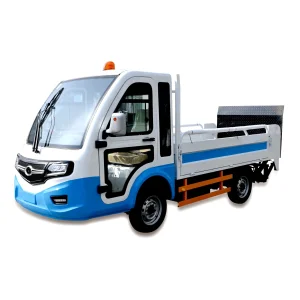
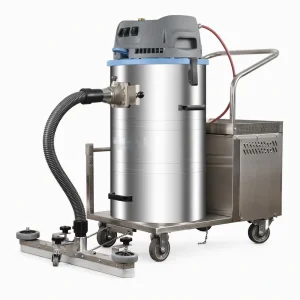
Explore our full line of driverless scrubbers, municipal cleaning tricycles, lithium-ion vacuums, and walk-behind commercial scrubbers.
Send us your floor type, daily square footage, dust characteristics, and voltage requirements. Our engineering team will prepare a tailored system recommendation and quote within one business day.