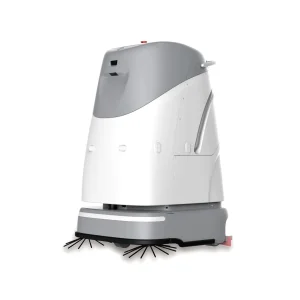
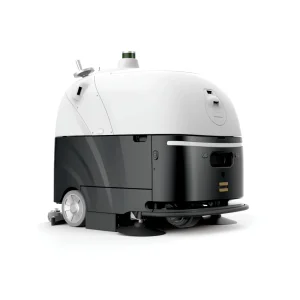
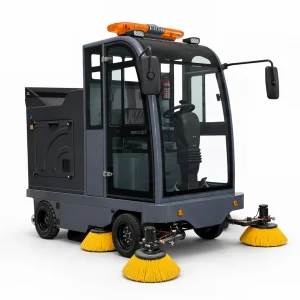
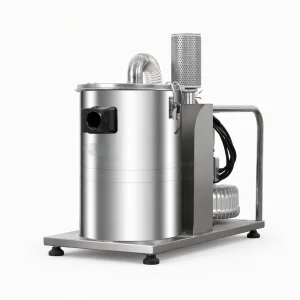
Direct factory production models certified for continuous operational cycles, particulate containment, and rigorous facility maintenance across international logistical and industrial sectors.
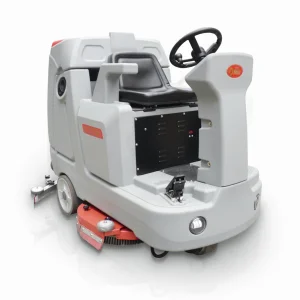
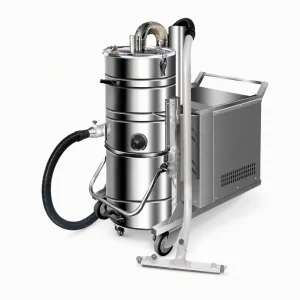
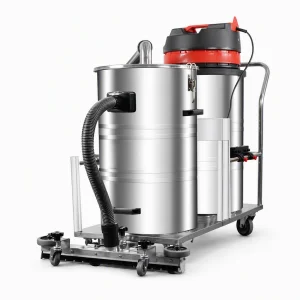
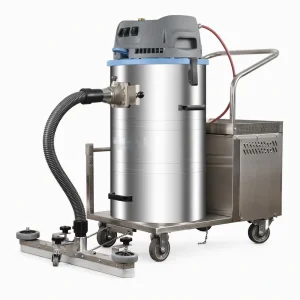
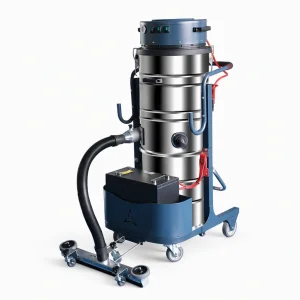
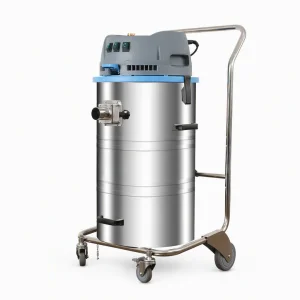
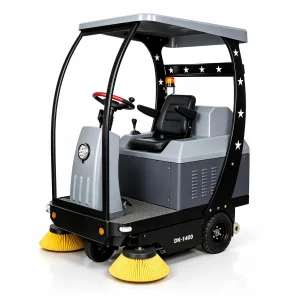
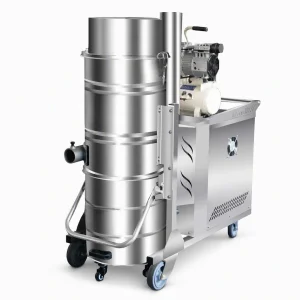
An empirical evaluation of mechanical architecture, cyclonic air dynamic management, multi-stage filtration mechanics, and automated drive systems manufactured in Wenzhou for extreme duty cycles.
Industrial ride-on vacuum cleaners represent a pinnacle of electromechanical integration, requiring high volumetric airflow capacity combined with sustained static depression pressures. Unlike commercial domestic vacuums that prioritize light frame materials and low decibel thresholds at the cost of static vacuum lift, China industrial ride-on vacuum cleaner manufacturers engineer heavy-duty steel chassis combined with multi-stage centrifugal turbines. These systems generate dynamic air velocities exceeding 450 m³/h per extraction channel, maintaining water lift thresholds beyond 280 to 340 mbar.
In high-particulate logistics, metal machining, and cement processing, filter clogging represents the primary point of failure. Modern manufacturing designs in Wenzhou integrate tangential cyclonic separation chambers upstream of the primary filtration matrix. The tangential inlet forces incoming debris into high-speed cyclonic vortices, dropping 92% to 96% of bulk particulate matter into the lower collection bin by gravitational inertia before the airstream reaches the primary polytetrafluoroethylene (PTFE) membrane.
Continuous industrial run-times require continuous filtration integrity. Traditional mechanical filter shakers suffer from mechanical wear and incomplete particulate liberation. Modern China industrial vacuum platforms utilize autonomous pneumatic reverse-pulse jet systems. Driven by an integrated compressed-air accumulator or differential vacuum reverse valves, reverse pulses of high-pressure air shock the interior core of cylindrical cartridges at programmatic intervals, shattering filter cake formations without interrupting the vehicle's driving path.
Fabricated from electro-galvanized cold-rolled steel and rotomolded high-density polyethylene (HDPE). Chemical resistance against industrial oils, coolants, acidic residues, and saline cleaning agents.
Equipped with brushless permanent magnet AC (PMAC) or high-torque BLDC traction motors. Delivering 18% to 25% gradeability to ascend warehouse ramps and loading bays with full payload bins.
Drop-down heavy-duty debris hoppers featuring hydraulic or scissor-lift dumping mechanisms. Direct discharge into standard 1,100-liter municipal dumpsters without secondary manual labor.
How vertical integration, precision machining clusters in Zhejiang, and battery pack supply ecosystems provide unparalleled cost-performance ratios for global machinery buyers.
The manufacturing ecosystem for industrial ride-on sweepers, scrubbers, and vacuum extractors in China—specifically centered in the Wenzhou, Ningbo, and Yangtze River Delta industrial belts—operates under a unique localized integration model. While European and North American brand assemblies rely heavily on outsourced assemblies imported across maritime borders, Chinese tier-1 factories benefit from comprehensive localized sourcing spanning a 50-kilometer industrial radius.
Precision brushless motors, vacuum turbine impellers, polyurethane squeegee blades, and electronic micro-controllers are sourced directly from domestic Tier-1 specialist suppliers, shortening lead times from months to 15-20 production days.
Direct partnerships with domestic CATL, EVE, and BYD cell integrators allow China industrial vacuum manufacturers to provide native 24V, 36V, and 48V Lithium Iron Phosphate (LiFePO4) architecture with integrated Battery Management Systems (BMS).
In-house CNC laser cutting, automated robotic welding, and rotational molding ovens allow rapid adaptation for bespoke custom orders, OEM chassis coloring, custom voltage compliance, and private-label fleet specifications.
| Architecture Metric | Standard Lead-Acid Platform | Next-Gen LiFePO4 Lithium Platform | Three-Phase Continuous Stationary Platform |
|---|---|---|---|
| Usable Battery Depth of Discharge (DoD) | 50% - 60% Maximum | 90% - 95% Safe DoD | Direct AC Line Power (100% Continuous) |
| Cycle Life Expectancy | 500 - 800 charge cycles | 3,500 - 4,500 charge cycles | 15,000+ motor operation hours |
| Static Vacuum Lift (mbar / mm H2O) | 180 - 220 mbar | 260 - 320 mbar | 300 - 450 mbar |
| Opportunity Fast-Charging Capability | No (Requires 8h charge + 8h cool down) | Yes (Full recharge within 1.5 - 2.5 hours) | Not applicable (Continuous utility grid) |
| 5-Year Total Cost of Ownership (TCO) | Baseline (High maintenance + replacement) | -42% reduction in lifecycle capital | -58% reduction for fixed station lines |
Navigating complex international import requirements, occupational safety thresholds (OSHA, CE), and dedicated engineering after-sales channels.
Procuring industrial cleaning and vacuum machinery globally requires strict alignment with local health, safety, and electrical directives. Leading Chinese manufacturers design equipment with comprehensive international regulatory roadmaps:
A primary bottleneck in overseas industrial machinery procurement has historically been spare parts latency. To resolve this, premier Chinese manufacturing consortiums have deployed localized hub models across strategic logistics territories, including Rotterdam for the European Union, Dubai for the Middle East, and dedicated regional heads in New Delhi for the Indian Subcontinent.
Wear components—such as oil-resistant natural rubber and Linatex squeegees, drive belts, filter bags, heavy-duty caster wheels, and vacuum motors—are standardized around internationally accessible industrial form factors. This ensures facility engineers can procure replacement consumables from local mechanical distributors or tap direct emergency express replacement channels within 48 to 72 hours.
From heavy metallurgical swarf to sterile pharmaceutical warehouses: matching volumetric throughput and filtration topology to specific industrial floor environments.
High-bay distribution centers face continuous packaging dust, pallet wood splinters, and abrasive tire dust. Ride-on vacuum sweepers clear expansive 20,000+ m² surfaces at travel speeds up to 8-10 km/h without releasing secondary dust clouds.
Dealing with metal shavings, cast iron chips, coolant puddles, and slag. Heavy-gauge stainless steel recovery tanks (AISI 304/316) prevent puncture risks and endure hot metal chips up to 120°C without tank degradation.
Static-conductive grounded pickup tools and anti-static filter coatings neutralize electrostatic charges generated by ultrafine powder pigments, plastic granules, and dry resin mixtures, eliminating spark hazards.
How Chinese manufacturers are fusing LiDAR SLAM autonomous technology with high-volume industrial extraction hardware for dark-warehouse operations.
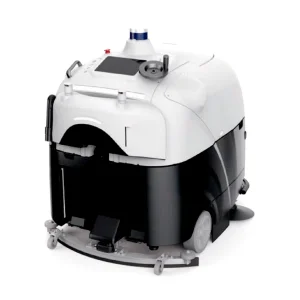
The industrial sanitation equipment sector is witnessing a transformative convergence: the transition from purely manual ride-on extraction to hybrid autonomous co-botics. Driven by global labor shortages and the proliferation of 24/7 dark distribution centers, modern China factory R&D centers are embedding solid-state 3D LiDAR, stereoscopic depth cameras, and ultrasonic edge-detection arrays directly into industrial chassis platforms.
Through embedded 4G/5G telematics, facility directors receive live mission reports detailing square-meter coverage, water and power consumption metrics, filter clogging levels, and predictive bearing wear warnings. Fleet operators can program dual-purpose operating schedules: manual operator ride-on mode during peak daytime production spikes, switching autonomously to driverless unattended floor scrubbing and vacuum passes along optimized robotic navigation corridors throughout the night.
Collaborate directly with our Wenzhou application engineering team to customize chassis dimensions, suction turbine CFM ratings, and international voltage compliance.
Direct answers to the most rigorous technical, electrical, and commercial inquiries raised by international procurement managers and plant operators.
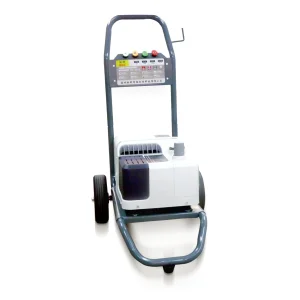
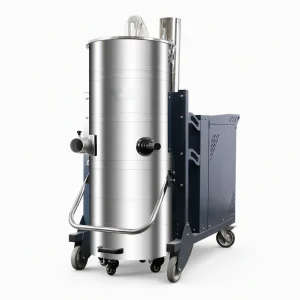
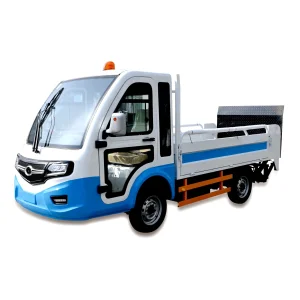
Explore our complementary lineup of three-phase stationary extractors, autonomous robotic scrubbers, high-pressure washers, and municipal transport utility vehicles.