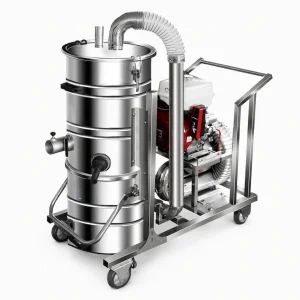
Direct-from-factory autonomous scrubber platforms, heavy industrial vacuums, and municipal sweepers built under strict ISO-grade manufacturing protocols.
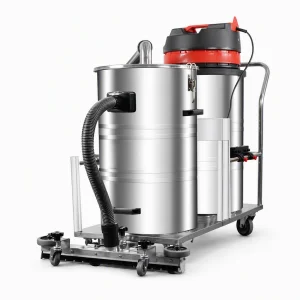
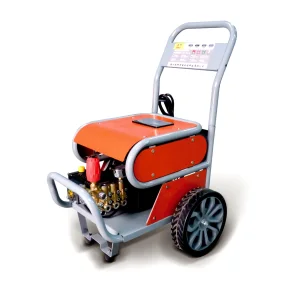
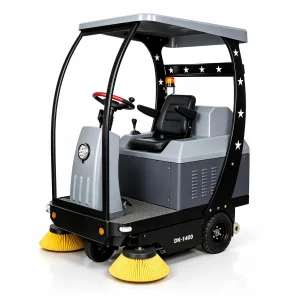
Accelerating urbanization, heightened hygiene regulations, and soaring labour expenses drive the transition from manual janitorial methods to automated ride-on scrubber dryers.
Facilities management globally confronts recurring labour shortages alongside double-digit wage escalation. Ride-on floor scrubbers drastically boost hourly square-meter throughput, slashing ongoing cleaning overheads by over 60% compared to traditional manual mopping setups.
The transition away from flooded lead-acid power packs toward fast-charging Lithium Iron Phosphate (LiFePO4) systems minimizes maintenance. Intelligent battery management systems (BMS) provide multi-shift runtimes and round-the-clock machine readiness.
Modern corporate governance protocols demand sustainable facility operations. Next-gen ride-on scrubber dryers incorporate metered water disbursement, chemical-free scrubbing technology, and high-recovery squeegee vacuums to leave floors instantly walk-ready.
Global distributors and industrial buyers require vetted manufacturing agility, predictable parts availability, and robust engineering over superficial catalogue claims.
Sourcing heads demand commonality in wear items like polyurethane squeegee blades, scrub pads, suction hoses, and standard controllers, ensuring simplified aftermarket inventory management.
Machinery distributors leverage DIKE’s full-chain R&D infrastructure in Wenzhou to configure chassis colors, brand badging, multi-lingual firmware, and specialized voltage plug sockets.
Global buyers require traceable electrical, mechanical, and safety certifications (CE, RoHS, ISO9001) that streamline local customs clearance, commercial distribution, and municipal bidding.
Procurement agreements require dependable factory technical support, rapid 24-hour turnaround on engineering inquiries, and direct regional liaison representation for critical markets.
Floor surface composition, particulate matter, and operational traffic dictate specialized equipment configurations.
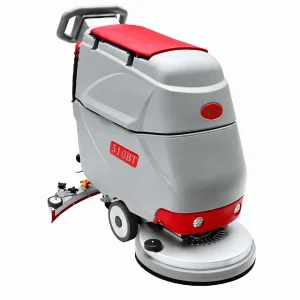
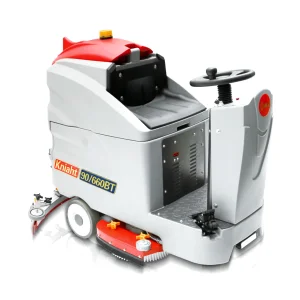
Logistics facilities deal with expansive polished concrete surfaces covered in tyre marks and abrasive airborne dust. Ride-on scrubbers like the KNIAHT 1020BT deliver broad scrub paths, high-down pressure discs, and dual recovery tanks to clean aisleways in a single pass without interrupting automated forklift traffic.
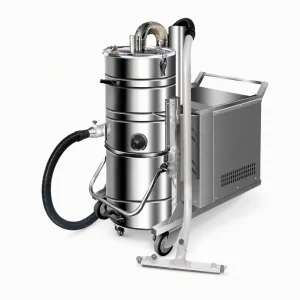
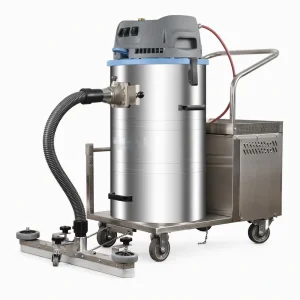
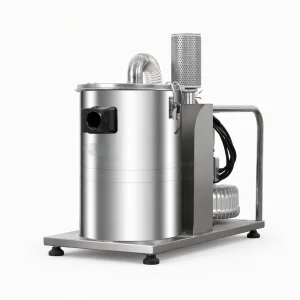
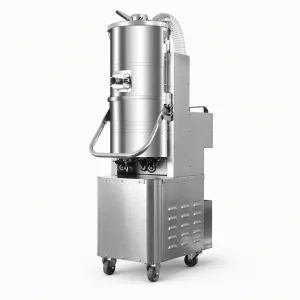
Pharmaceutical cleanrooms require strict particulate suppression and dry floors. Combining wet-scrubbing machines with specialized vacuum systems (such as the pharmaceutical-grade DK-1535Y) prevents microbial growth, airborne cross-contamination, and slippery chemical residues.
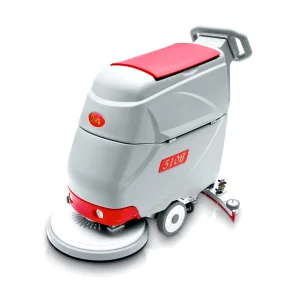
Shopping centres, transit hubs, and airports require low operational noise, tight turn radii, and spotless cosmetic drying. Compact ride-on systems and autonomous scrubbers operate during standard public foot-traffic hours without risk of slip-and-fall accidents.
Wenzhou Dike Intelligent Environmental Protection Technology Co., Ltd. provides robust international distribution support backed by in-house engineering and localized partner networks.
Every DIKE unit is configurable to match destination utility environments. From 110V 60Hz single-phase systems across North and South America to 380V/415V three-phase systems in European and Asian production plants, on-board chargers, motor controllers, and safety relays are certified to local grid standards.
DIKE maintains dedicated regional support for key industrial corridors, including direct coordination headed by India Market Head Mr. Harvansh Shandilya in New Delhi. This localized presence ensures prompt consultation, bilingual technical assistance, and faster parts access.
To accelerate customs clearance and public tender verification, DIKE furnishes complete technical dossiers: CE conformity declarations, machinery directive filings, UN38.3 lithium battery transportation certificates, and detailed assembly schematics.
How intelligent environmental machinery is evolving from mechanical cleaning appliances to connected, autonomous fleet nodes.
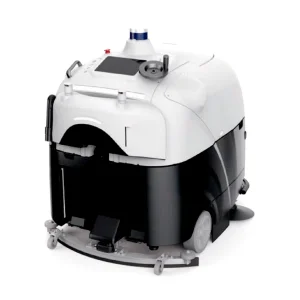
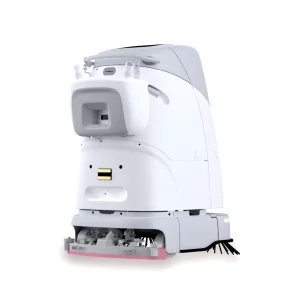
Deployment of solid-state 3D LiDAR sensors alongside dual optical SLAM navigation systems. Units like the SC50S and SC80S execute driverless path planning, dynamic obstacle avoidance, and adaptive perimeter tracking across active warehouse floors.
Integration of standard 4G/5G telematics modules tracking runtime, brush-wear metrics, battery depth-of-discharge, and water usage in real time. Fleet managers monitor multisite cleaning operations through a single cloud dashboard.
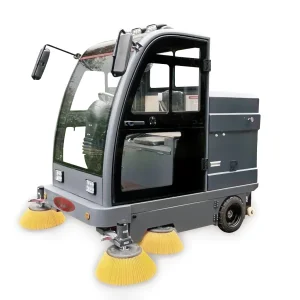
Orchestrated multi-tier cleaning deployments where autonomous sweepers tackle dry loose dirt and driverless floor scrubbers execute wet-cleaning routines on schedule, leaving human teams free for spot cleaning and perimeter detail work.
Practical technical considerations addressed directly by our senior applications and export engineering team.
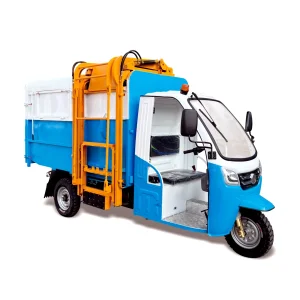
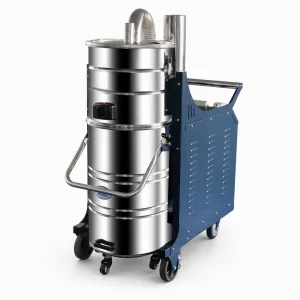
Explore our full line of specialized sanitation machinery, including heavy stainless-steel vacuums, municipal waste transfer trikes, and mid-to-large ride-on scrubbers.