Precision-machined scrub decks, parabolic high-vacuum squeegee systems, and long-cycle lithium traction architecture engineered directly at our Wenzhou manufacturing complex.
Why Tier-1 logistics operators, heavy fabrication hubs, and multinational facility management firms are eliminating manual push machinery in favor of high-yield ride-on platforms.
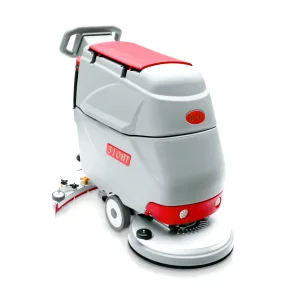
Across North America, Western Europe, and the Asia-Pacific region, industrial commercial floor sanitation has crossed a critical operational threshold. Historical reliance on walk-behind scrubbers and manual janitorial operations has become unsustainable due to chronic labor shortages, escalating minimum wage mandates, and stringent occupational health requirements regarding slip, trip, and fall prevention (OSHA 1910.22 compliance). Facilities scaling past 50,000 square feet (approx. 4,600 m²) experience an exponential decline in cleaning efficiency when operating walk-behind scrubbers, which typically average a true field productivity of only 1,200 to 1,800 m²/hour.
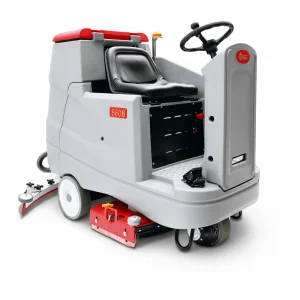
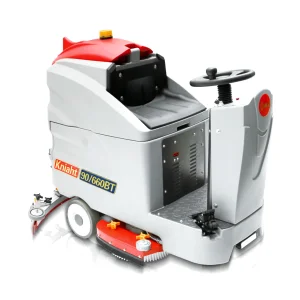
Field Productivity Benchmark: Transitioning from a manual walk-behind unit to a mid-size ride-along scrubber (such as the KNIAHT 860B) scales effective surface sanitization to 4,500–6,500 m²/hour, reducing active labor overhead per square meter by up to 68% while delivering uniform down-pressure impossible to sustain through physical push force.
Furthermore, contemporary smart manufacturing facilities—including lithium-ion battery gigafactories, automated warehousing centers, pharmaceutical clean-envelope production facilities, and cold-chain logistics hubs—require dynamic contamination control. Particulate matter, oil residues, and rubber abrasion tracks must be collected immediately without redistributing airborne dust. This necessity has propelled the global ride-along floor scrubber market toward high-downforce, dual-vacuum recovery systems powered by intelligent electrical transaxles and continuous lithium-iron-phosphate (LiFePO4) chemistries.
How Wenzhou Dike Intelligent Environmental Protection Technology Co., Ltd. integrates mechanical rotomolding, custom brushless traction motors, and precision electronics under one roof.
Unlike competitors relying on modular sheet metal or injection plastic parts that crack under chemical attack, DIKE scrubbers utilize continuous rotational molding (rotomolding) of virgin linear low-density polyethylene (LLDPE). This provides absolute corrosion immunity against acidic degreasers, mechanical impact resistance, and seamless dual-tank configurations that never leak.
Situated in the industrial heart of Wenzhou, Zhejiang, DIKE leverages a proprietary supply-chain cluster. We source directly coupled copper-wound brushless DC brush motors, Italian-engineered differential gear axles, and waterproof IP65 microswitches within a 50km radius. This localized agility guarantees ultra-competitive unit pricing with zero compromise on heavy-duty performance.
We empower international brands, distributors, and governmental tender contractors to modify brush deck diameters (510mm up to 1020mm twin-head systems), tank volumes (90L to 200L+), battery trays (flooded lead-acid, maintenance-free AGM, or BMS-linked LiFePO4), and digital dashboard languages for regional homologation.
How mechanical down-force, fluid dynamics, and electronic transaxles harmonize to provide flawless dry-floor recovery in a single pass.
A high-performance ride-along scrubber is fundamentally an integrated hydraulic-vacuum-mechanical platform designed to balance three opposing forces: mechanical agitation against bonded grime, calibrated chemical dissolution, and high-velocity suction recovery. Here is how DIKE's R&D engineering optimizes each critical subsystem:
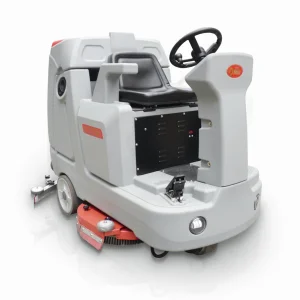
Industrial surfaces vary radically—from mirror-finish polyurethane and micro-porous concrete to rough non-slip textured ceramic tiles in food processing centers. Our ride-on platforms (such as the KNIAHT 1020BT and 860B) incorporate dual-disc or cylindrical scrubbing assemblies suspended on articulated steel linkages. Operators can digitally adjust active downforce from 35 kg to over 85 kg via the steering control interface. Heavy-duty helical gearboxes provide torque multiplication without overheating the brushless electric motors, dislodging tire skid marks, cutting fluid binders, and hardened calcifications.
Cross-contamination during cleaning runs is a major failure point in inferior equipment. DIKE scrubbers utilize completely isolated clean-water and dirty-recovery chambers with distinct access points. An electronic solenoid valve synchronized with the drive throttle regulates clean water flow: when the operator stops, water flow immediately cuts to prevent floor ponding. An internal anti-foam float baffle and electronic level sensors safeguard the vacuum motor against liquid ingestion, extending motor bearing lifespan beyond 3,500 working hours.
The efficiency of a floor scrubber is judged at the squeegee assembly. If dirty solution lingers, slip risks surge. DIKE utilizes aerodynamic parabolic squeegee assemblies manufactured from cast aluminum or high-grade stainless steel, fitted with tear-resistant, oil-tolerant polyurethane or Linatex blades. By contouring the vacuum airflow channel, suction velocities exceed 32 m/s at the blade apex, recovering up to 99.4% of water even through tight 90-degree cornering.
Front-wheel drive transaxles with integrated electromagnetic braking ensure that machines safely navigate parking garage ramps and facility loading docks up to 18% slope inclination. Integrated regenerative braking decelerates the ride-on unit smoothly while returning energy to the primary battery bank.
| Performance Parameter | Entry-Level Push Scrubber | DIKE KNIAHT 860B Mid-Ride | DIKE KNIAHT 1020BT Flagship Ride | Autonomous SC80S Platform |
|---|---|---|---|---|
| Scrubbing Path Width | 510 mm (20 in) | 860 mm (34 in) | 1020 mm (40 in) | 800 mm (31.5 in) |
| Theoretical Cleaning Rate | 1,800 m²/hr | 5,500 m²/hr | 7,200 m²/hr | 4,800 m²/hr (Continuous) |
| Solution / Recovery Tanks | 45L / 50L | 110L / 120L | 160L / 170L | 90L / 100L + Auto Station |
| Brush Downforce Pressure | 25–30 kg (Manual) | 45–60 kg (Variable) | 65–90 kg (Heavy Duty) | 35–50 kg (Autonomous) |
| Power Source Option | 24V Lead-Acid / Lithium | 24V 200Ah LiFePO4 | 36V 300Ah LiFePO4 | 24V Fast-Charge Lithium |
| Operator Ergonomics | Walking / Fatigue Limit 4h | Automotive Seat / 8h Shift | Full Suspended Luxury Seat | Unattended / Cloud Fleet GUI |
Floor scrubbing isn't one-size-fits-all. Different floor substrates, chemical exposures, and hygienic thresholds mandate specific machine configurations.
Substrate: Hardened Polished Concrete & Epoxy Resins.
Operational Challenge: Relentless dust, pallet slivers, and high-frequency forklift tire marks in 24/7 operating centers.
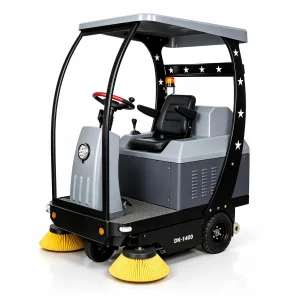
Recommended Solution: Combined dry sweeping via DK-1400 followed by the KNIAHT 1020BT. Eliminates abrasive dust prior to wet scrubbing, safeguarding squeegees and delivering high traction for AGVs and manual lift trucks.
Substrate: Steel-Troweled Concrete with Heavy Cutting Emulsions.
Operational Challenge: Viscous petroleum oils, metal swarf, and coolant track-out that compromise worker safety.
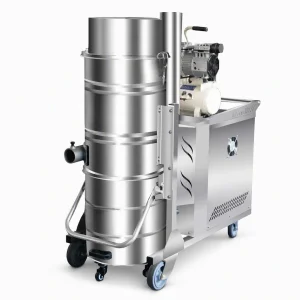
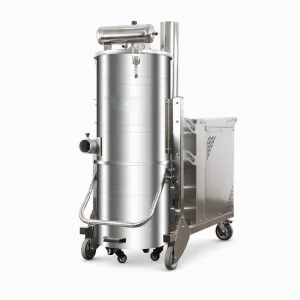
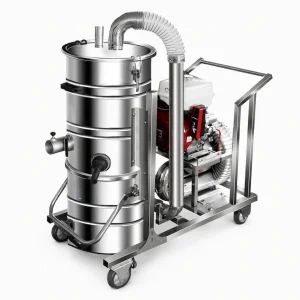
Recommended Solution: High-downforce ride-on scrubbers equipped with oil-resistant Linatex squeegees paired with DIKE-221FC 380V Three-Phase Vacuums to pull heavy slurry and metal shavings before brush contact.
Substrate: Seamless Coved Polyurethane & Anti-Bacterial Terrazzo.
Operational Challenge: Extreme hygiene compliance, prevention of mold spores, non-marking tires, and zero exhaust emissions.
Recommended Solution: KNIAHT 860B configured with food-grade non-marking white tires, lithium power banks, anti-microbial tank coatings, and backed up by DK-1535Y Pharmaceutical Vacuums.
How intelligent IoT telematics, advanced solid-state lithium packs, and driverless autonomous robotics are redefining factory cleanliness standards.
Modern DIKE ride-along units integrate 4G/5G GPS and CAN-bus telemetry modems. Facility managers track exact square footage scrubbed, runtime per operator, battery state-of-health, brush wear indices, and water usage through centralized cloud dashboards, turning sanitation into an auditable SLA metric.
The industry is rapidly phasing out flooded lead-acid batteries that require acid top-offs and emit hydrogen during recharge. DIKE’s integrated LiFePO4 battery platforms permit high-rate opportunity charging during 15-minute worker breaks without cell memory degradation, facilitating 24/7 continuous operation.
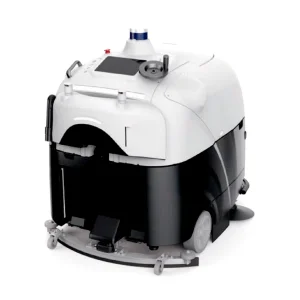
The future belongs to hybrid workflows where autonomous robotic scrubbers (like our SC80S) execute predictable, repetitive long-hallway trajectories via LiDAR and SLAM navigation, freeing human operators to command ride-on scrubbers for complex, high-dirt manufacturing zones.
A clear financial framework for equipment purchasers, distributors, and logistics directors balancing CAPEX against multi-year operational expenditures.
When purchasing commercial cleaning equipment, focusing solely on the initial machine CAPEX (Capital Expenditure) is a common procurement pitfall. Over a 5-year operational lifecycle, the initial purchase price accounts for merely 12% to 18% of total expenditure. Labor overhead represents over 70%, with the remaining balance split between wear parts (brushes, squeegees, suction hoses) and preventative maintenance.
TCO Mathematical Formula:
Total Cost of Ownership = Initial Unit Cost + [Hourly Operator Wage × (Total Area ÷ Hourly Cleaning Rate)] + [Wear Components Replacements] + [Routine Maintenance Down-time] - Residual Resale Value.
By shifting from a 510mm push machine to an 860mm ride-on platform, a 15,000 m² distribution hub reduces active scrubbing shifts from 8.3 hours to under 2.4 hours daily. Over a 300-day operating year, this eliminates approximately 1,770 labor hours. Even at conservative international labor rates ($18–$28/hour), the complete capital investment in a DIKE ride-on machine breaks even within 3.5 to 5 months of continuous deployment.
Architectural insights covering electrical compatibility, maintenance cycles, export shipping, and fleet integration.
Comprehensive commercial equipment rounding out our heavy-duty environmental cleaning catalog for international B2B purchasers.
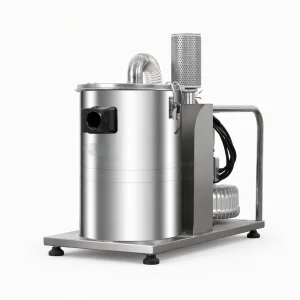
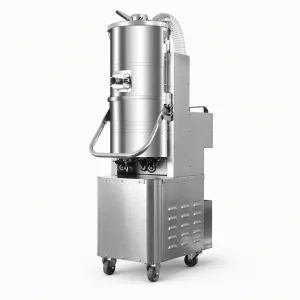
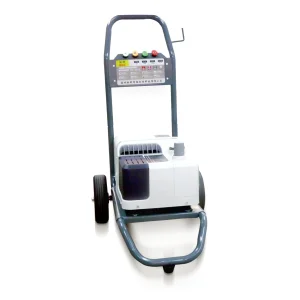
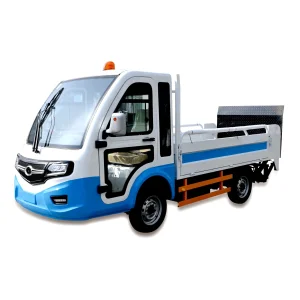
Direct-from-factory engineering pedigree, scalable fabrication infrastructure, and customer-first international technical assistance.
Founded in 2017 in Wenzhou, Zhejiang, China, Wenzhou Dike Intelligent Environmental Protection Technology Co., Ltd. (DIKE) operates as a vertically integrated manufacturer combining R&D mechatronics, rotational molding tooling, chassis fabrication, electrical harness assembly, and comprehensive end-of-line testing under a unified management architecture.
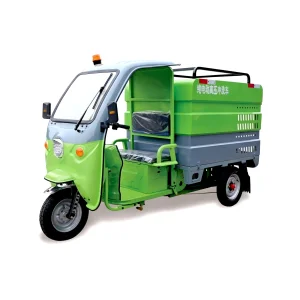
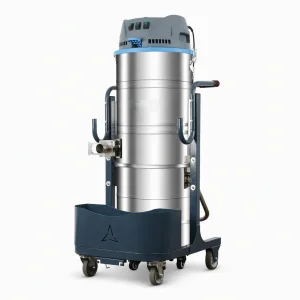
Our heavy-duty cleaning equipment portfolio covers nine core industrial categories: fully automatic driverless floor scrubbers, hand-push walk-behind scrubbers, industrial ride-along scrubber dryers, outdoor municipal sweeping machines, electric cleaning three-wheel vehicles, single-phase heavy vacuums, three-phase continuous-duty vacuums, and commercial high-pressure washers.
Exporting to distributors, facility management contractors, and industrial project buyers across Europe, the Americas, the Middle East, Southeast Asia, and India, DIKE guarantees rapid-response technical engineering support within 24 hours. Our global operations include specialized regional sales coordination for the Indian market led by Mr. Harvansh Shandilya, ensuring smooth customs processing, tender compliance, and direct factory-to-jobsite logistics.