Explore our foundational series of autonomous robotic sweepers, heavy-duty municipal cleanup platforms, and precision single-pass walk-behind scrubbers engineered under rigorous ISO9001 and CE directives.
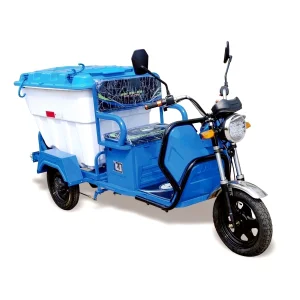
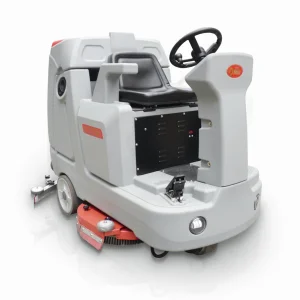
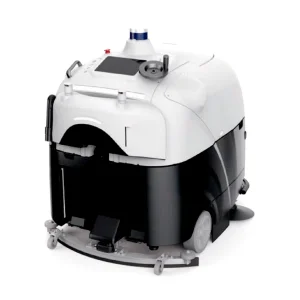
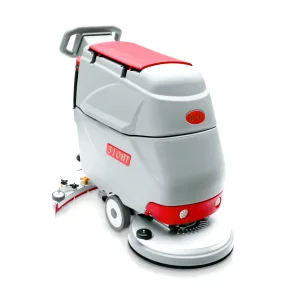
Across North America, the European Union, the Middle East, and Asia-Pacific, commercial operations face compounding custodial labor shortages, escalating minimum wage mandates, and stringent ESG particulate containment standards.
Manual broom sweeping is notoriously labor-intensive, achieving a modest 400 to 600 square meters per operator-hour. Modern push sweeper machines elevate throughput to 2,800 to 4,200 square meters per hour, mitigating labor constraints while standardizing hygiene baselines in warehousing and commercial facilities.
Regulatory bodies such as OSHA (Respirable Crystalline Silica standard) and EU-OSHA penalize dry sweeping that aerosolizes micro-particulates. Advanced push sweepers incorporate dual counter-rotating disc brushes and enclosed filtration hoppers that mechanically contain hazardous debris directly at the surface interface.
Enterprise logistics hubs and commercial premises increasingly prioritize net-zero targets. Non-motorized manual push sweepers consume zero fossil fuel or grid power, operating purely on mechanical gearing. Concurrently, battery-assisted models utilize highly recyclable LiFePO4 chemistry for non-disruptive, emission-free daytime indoor sanitization.
A deep engineering breakdown into the drive-train transmission, particulate throw kinematics, and structural materials defining top-tier Chinese manufacturing.
Manual push sweepers rely entirely on the operator's forward momentum converted into rotational brush velocity. Chinese precision factories deploy dual-stage planetary bevel gearboxes embedded within reinforced wheel hubs. By calculating a 1:4.8 step-up ratio, normal walking speed (approx. 4 km/h) yields high-velocity counter-rotation of peripheral disc brushes, efficiently sweeping border edges into the central intake channel.
The sweeper mechanism leverages either a *Direct Throw* (forward sweeping directly into an anterior bin) or an *Overthrow* principle (where a chevron-bristle cylindrical main brush sweeps debris rearward and upward over a parabolic deflection lip into a posterior bin). The overthrow architecture maximizes bin fill factors up to 88% while accommodating diverse debris profiles, from metal shavings to beverage cans.
Industrial survivability depends on chassis resilience. Premium Chinese manufacturers utilize rotational molding (Rotomold) using High-Density Polyethylene (HDPE) resins. Unlike injection-molded plastics prone to micro-cracking upon impact with steel racking, rotomolded unibody housings absorb mechanical shocks, resist industrial solvents, and provide lifetime stress crack resistance.
A technical comparative matrix designed for procurement directors, procurement managers, and facilities engineers evaluating machine typology against physical facility parameters.
| Sweeper Typology | Propulsion & Drive | Practical Productivity | Hopper Capacity | Ideal Surface Environment | Primary CAPEX / TCO Vector |
|---|---|---|---|---|---|
| Manual Push Sweeper (Twin-Disc) | Operator Forward Push (Hub Gearing) | 2,400 – 3,600 m²/h | 35 – 55 Liters | Small warehouses, parking decks, pedestrian sidewalks, courtyards | Lowest CAPEX ($180–$450); Zero electrical maintenance; Minimal TCO. Zero Down-Time |
| Battery-Assisted Push Sweeper | Walk-behind with DC/BLDC Motor Assist | 3,500 – 4,800 m²/h | 50 – 70 Liters | Medium manufacturing halls, packaging lines, logistic ramps | Moderate CAPEX ($900–$2,200); Annual battery check; 4x productivity over manual. High Ergonomics |
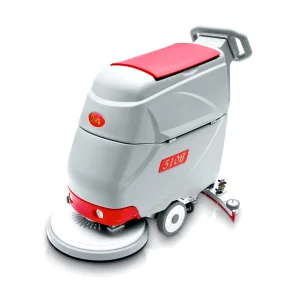
| Walk-Behind Scrubber Dryer (e.g. Warrior 510B) | Brush Assist or Traction Motor | 1,800 – 2,500 m²/h (Wet/Dry) | 45 – 65 L Solution | Smooth epoxy, sealed concrete, commercial tiles, cleanrooms | Moderate-High CAPEX; Requires squeegee blade replacement & chemical dosing. Deep Decontamination |
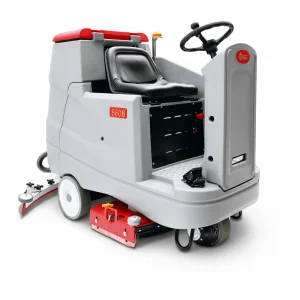
| Compact Ride-On Sweeper / Scrubber | Motorized Axle Drive (24V/36V Battery) | 5,000 – 7,500 m²/h | 70 – 120 Liters | Distribution centers (>5,000 m²), exhibition centers, transit hubs | Higher CAPEX ($3,500–$8,000); Lowest labor cost per m²; Scheduled preventative maintenance. Max Volume Throughput |
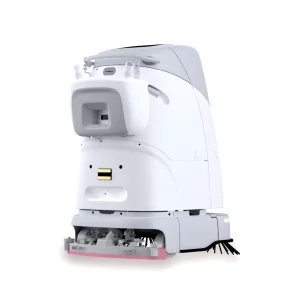
| Autonomous Driverless Unit (e.g. SC50S / SC80S) | LiDAR + SLAM Autonomous Navigation | 2,000 – 4,000 m²/h (Continuous) | 50 – 80 Liters | Modern 24/7 automated warehouses, international airport terminals | High CAPEX; Eliminates ongoing operational labor overhead; Cloud reporting. Industry 4.0 Standard |
Why Chinese manufacturing hubs such as Wenzhou, Zhejiang, and Jiangsu dominate global floor care equipment exports through vertical integration, rapid tooling, and rigorous testing protocols.
By housing rotational molding furnaces, sheet metal laser cutting, and CNC machining centers in close geographical proximity, Chinese suppliers reduce prototype-to-production cycles from months to days, drastically lowering OEM tooling costs for private-label brands.
The concentration of precision electric motors, brushless controllers, high-density polyethylene resins, and bristle extrusion specialists within the Yangtze River Delta guarantees uninterrupted component availability and shielding against global supply disruptions.
Leading manufacturers employ automated testing benches: dynamic brush torque calibration, hopper sealing under continuous negative air pressure, squeegee angle laser positioning, and high-frequency chassis vibration stress tests replicating 1,000+ operational hours.
From custom brush hardness (nylon, polypropylene, steel wire blended) to customized lithium-ion BMS voltages, personalized chassis branding, and multi-language HMI interfaces, Chinese OEMs deliver high engineering agility with low Minimum Order Quantities (MOQs).
A technical assessment of how push sweepers and integrated floor scrubbers perform across specific, challenging operational environments.
E-commerce fulfillment centers accumulate massive quantities of pallet splinters, shrink wrap fragments, and corrugated cardboard dust. Push sweepers navigate narrow racking aisles (sub-1.2m widths) where ride-on machines cannot fit, recovering debris before it damages forklift drive wheels or foul conveyor sensors.
Aluminum swarf, cast iron turnings, and residual cutting fluids create high slip hazards and surface abrasion. Industrial push sweepers fitted with oil-resistant polyurethane blades and wear-resistant chevron bristles effortlessly direct metallic shavings into heavy-duty bins without clogging suction impellers.
Sub-zero environments (-25°C) rapidly degrade standard lead-acid batteries and cause brittle polymer failure. Non-motorized manual push sweepers eliminate electrical failure points altogether, operating flawlessly on frozen concrete surfaces without thermal throttling or condensation freeze-up.
Automobile tracks bring sand, crushed gravel, and road salt onto parking decks. Push sweepers clear expansion joints and ramp curbs rapidly, functioning at noise levels below 60 dBA to avoid disturbing adjacent residential or retail tenants while stopping particulate migration into HVAC intakes.
Exterior perimeter courtyards, sports courts, and walkways require daily debris collection without intrusive engine noise or fuel fumes. Compact mechanical push sweepers collect foliage, dry leaves, litter, and aggregate cleanly, promoting an immaculate, hazard-free environment.
Grain dust, flour, and organic packaging lint represent both combustible dust hazards (ATEX) and contamination risks. Specialized push sweepers featuring conductive anti-static brushes and high-efficiency filtration systems protect production perimeters from particulate buildup.
In-depth responses compiled by our senior applications engineering team addressing common queries regarding selection, operation, maintenance, and international OEM sourcing.
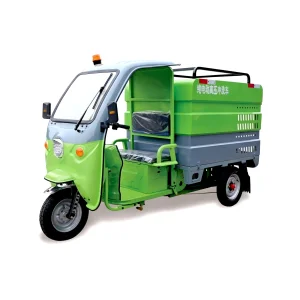
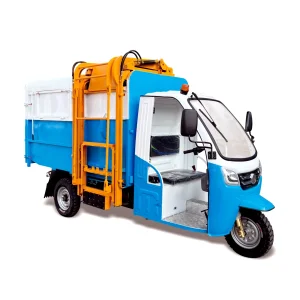
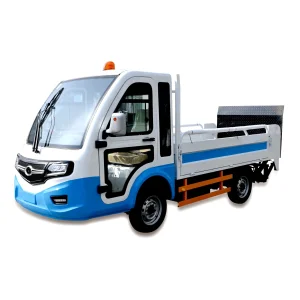
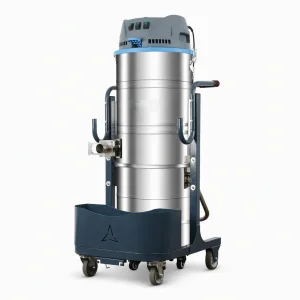
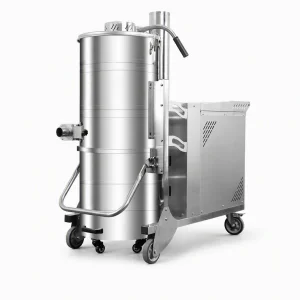
Complementing our push sweepers, explore heavy industrial extraction machines, multi-barrel waste transfer units, and ride-on floor scrubbers engineered for rigorous enterprise facilities.