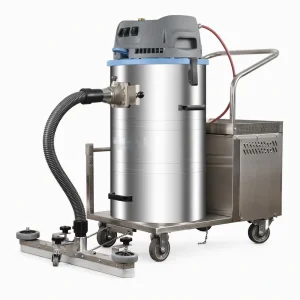
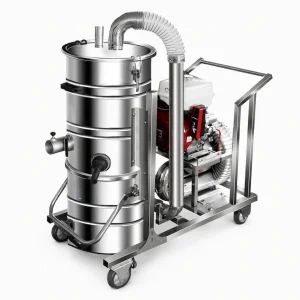
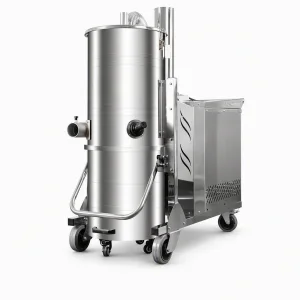
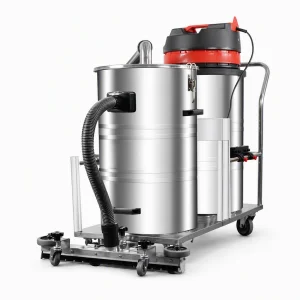
Direct-from-factory industrial cleaning machines featuring twin-tank continuous suction, explosion-proof components, self-propelled scrubbing drives, and robust outdoor washing vehicles.
As commercial complexes, transit hubs, logistics yards, and multi-tier subterranean parking decks expand across global metropolitan centers, surface maintenance has transitioned from basic sweeping into a stringent engineering science governed by air quality, environmental safety, and asset preservation.
Global facilities management enterprises in North America, Western Europe, and the Asia-Pacific face historic labor shortages. Conventional push-broom and dustpan crews cost between $18.00 and $34.00 per operator hour, yielding suboptimal square-meter coverage while agitating fine particulate respirable dust into breathing zones.
Uncollected automotive tire rubber dust, motor oil drippings, brake lining heavy metals, and crystalline silica from abrasive concrete wear contribute to accelerated surface degradation. Modern environmental statutes require industrial parking facilities to actively collect PM10 and PM2.5 contaminants before stormwater runoffs become contaminated.
Internal combustion engine sweepers emit carbon monoxide (CO) and nitrogen oxides (NOx), making them hazardous and legally restricted inside enclosed, underground, or multi-level basements. The market has decisively pivoted toward lithium-ion battery powered, brushless DC industrial vacuum systems with regenerative energy recovery.
| Sanitation Methodology | Surface Productivity (m²/hr) | Respirable Particulate Recovery | Underground Deck Suitability | Relative 3-Year Operational Cost |
|---|---|---|---|---|
| Manual Labor (Broom & Shovel) | 250 – 400 m²/hr | < 28% (Causes Secondary Plumes) | Low (Fails indoor air quality audits) | Baseline (100% High Ongoing OpEx) |
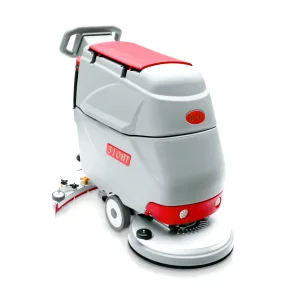
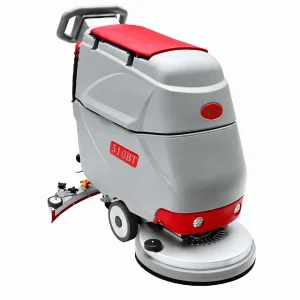
| Walk-Behind Auto Scrubber (DIKE-510BT) | 1,800 – 2,500 m²/hr | > 94% (Combined Scrub + Wet Vac) | High (Zero emissions, quiet motor) | 28% of Baseline OpEx |
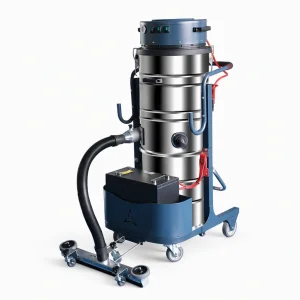
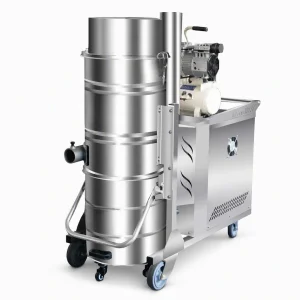
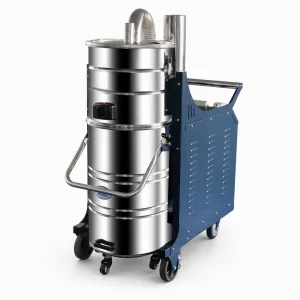
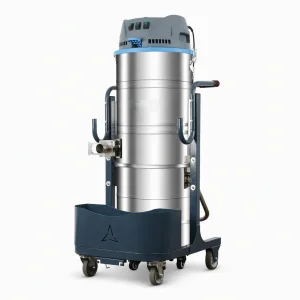
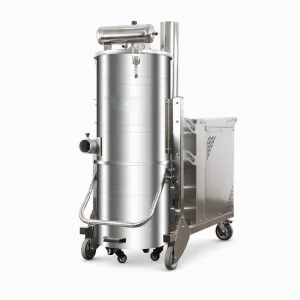
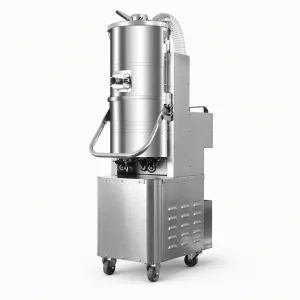
| Continuous Twin-Tank Vacuum (DK-2290SE) | 1,200 – 1,800 m²/hr (Dry Heavy Debris) | 99.9% (Multi-Stage Micro Filtration) | Superior (Handles gravel, metal debris) | 22% of Baseline OpEx |
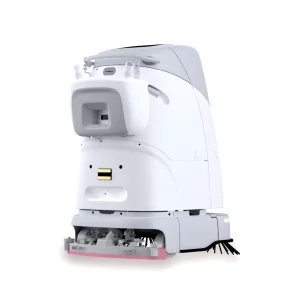
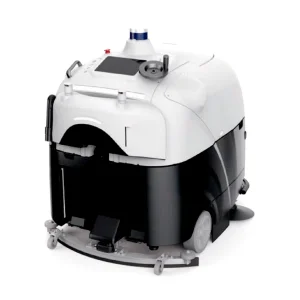
| Driverless Robotic Unit (SC50S / SC80S) | 2,800 – 4,500 m²/hr (Autonomous) | > 98% (High-Precision Coverage) | Optimal (24/7 Unattended Night Cycles) | 14% of Baseline OpEx |
China's Yangtze River Delta industrial manufacturing ecosystem combines localized component supply, cutting-edge precision tooling, rapid prototyping, and vertical integration to provide unmatched value for B2B distributors and contractors.
From in-house rotational mold shaping for corrosion-proof polyethylene (LLDPE) recovery tanks to precision CNC fabrication of stainless steel vacuum chassis, our manufacturing lines maintain 100% control over mechanical tolerances.
Every industrial parking vacuum, scrubber, and sanitation vehicle complies with the European Machinery Directive 2006/42/EC, EMC regulations, RoHS standards, and ISO9001 quality management benchmarks for hassle-free worldwide importation.
We supply flexible OEM/ODM modifications, including bespoke squeegee squeegee hardness, multi-voltage chargers (110V/220V/380V), anti-static ground chains, and proprietary brand labeling with fast 14-day sample turnarounds.
With direct regional access to Tier-1 brushless vacuum motors, high-discharge lithium battery cells, and premium polyurethane squeegees, our Wenzhou production hub maintains uninterrupted volume delivery and stable spare-parts availability.
Parking environments present radically distinct physical challenges. Selecting the correct machine architecture ensures long-term operational reliability, complete surface hygiene, and zero structural disruption.
Subterranean garages exhibit restrictive low-clearance ceilings (often ≤ 2.2 meters), severe acoustic resonance, poor ventilation, and intricate drainage layouts. Machines like the DIKE-510BT and DK-361ECO provide whisper-quiet single-phase operation, ultra-compact turning radii, and zero exhaust emission.
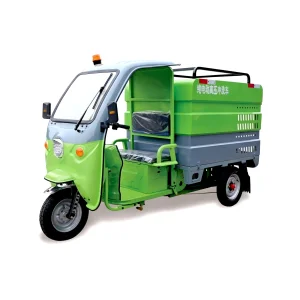
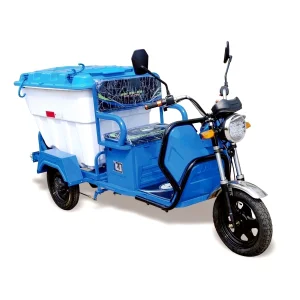
Exposed asphalt surfaces collect windblown foliage, gravel, crushed beverage cans, fine silt, and mud deposits during rainy seasons. Units like the LB3CX600 high-pressure washer vehicle and DK-951B gasoline vacuum cleaner deliver the brute force necessary to dislodge embedded roadside dirt.
Distribution centers handle continuous truck movements resulting in abrasive metallic filings, pallet splinter debris, and oil spills. The DIKE-221FC 380V Three-Phase and DK-EX Explosion-Proof vacuum cleaners feature continuous-duty side-channel blowers that operate 24/7 without overheating.
The convergence of artificial intelligence, high-density battery chemistry, and aerodynamic filtration is revolutionizing industrial cleaning equipment capabilities, delivering unprecedented operational autonomy.
Driverless robotic scrubbers such as the SC50S and SC80S incorporate multi-line 3D LiDAR, ultrasonic safety sensors, and computer-vision SLAM algorithms to dynamically map complex multi-story parking layouts, detect moving vehicles in real-time, and execute precision cleaning paths unattended.
Traditional industrial vacuums suffer from rapid airflow degradation when capturing ultrafine concrete slurry dust. Advanced systems like the DK-221MFC utilize automatic reverse pulse air blasts to continuously purge PTFE star filters, maintaining a high 280 m³/h suction rate throughout entire work shifts.
Heavy-duty maintenance equipment has transitioned to Lithium Iron Phosphate (LiFePO4) battery chemistries. Providing over 3,000 deep discharge cycles, 2-hour rapid opportunity charging, and superior thermal stability, modern units run for 4 to 6 hours continuously without performance drop-off.
Purchasing directors and municipal sanitation tender committees must evaluate industrial floor cleaning equipment far beyond initial acquisition price. A comprehensive TCO framework accounts for consumables, downtime, component durability, and labor productivity.
For fine dust capture, high airflow (CFM) is paramount; however, for heavy gravel, sand, and liquid slurry suction in parking facilities, static water-lift pressure (measured in mm H2O or mbar) determines whether the machine can extract debris from deep expansion joints and porous asphalt cracks.
Parking structures concentrate salt brine, motor coolants, and brake fluids. Ensure your supplier utilizes AISI 304 stainless steel or thick-wall rotational molded LLDPE. Painted sheet metal quickly corrodes, requiring premature frame replacements within 18 months.
Verify that vacuum motors, squeegee blades, drive belts, and HEPA filter cartridges use standard industrial form factors. Sourcing directly from DIKE guarantees that replacement squeegees, suction hoses, and carbon brushes remain available at factory-direct pricing for 10+ years.
Expert insights addressing practical mechanical parameters, customs certifications, subterranean safety compliance, and OEM procurement workflows.
Twin-tank industrial vacuum cleaners (such as the DK-2290SE or DK-361ECO) feature separate chambers for pre-cyclonic particle separation and fine filter containment. This mechanical isolation prevents large gravel, broken glass, and tire shred debris from directly impacting or lacerating the secondary HEPA filter, ensuring sustained high suction velocity and extending filter life by 300%.
Yes. Our self-propelled machines, including the Warrior 510BT and DIKE-510BT, are engineered with high-torque transaxle motors and electronic dynamic braking. They reliably climb and descend standard commercial parking gradients up to 12% to 15% with full water tanks without slipping or operational strain.
Underground parking facilities, automotive refueling zones, battery storage garages, and industrial vehicle depots frequently accumulate combustible solvent vapors, fuel leakages, and explosive dust concentrations. The DK-EX explosion-proof vacuum features ATEX-rated anti-static turbine motors, conductive groundings, and non-sparking aluminum-cast housings to completely mitigate electrical ignition risks.
Autonomous models are equipped with real-time 3D LiDAR, stereoscopic cameras, and AI path planning. When encountering an oncoming car, delivery cart, or pedestrian, the robot decelerates smoothly, yields right of way, or recalculates an obstacle-avoidance route. Telematics software alerts building management via cloud dashboard upon route completion or water refill alerts.
Every commercial cleaning machine and industrial vacuum ships complete with genuine CE Declaration of Conformity documents, ISO9001 quality certificates, MSDS battery safety reports (for air or ocean transport), and designated HS code classifications (typically 8479.89 or 8508.11/19) for smooth customs processing across Europe, North America, the Middle East, and Latin America.
Standard model configurations ship within 7 to 15 working days. For custom OEM branding (custom color palettes, client graphic silkscreening, customized voltage sockets, and customer user manuals), production cycles typically require 20 to 25 business days from final CAD sign-off.
Equip your commercial and municipal parking infrastructure with next-generation autonomous floor scrubbers, explosion-proof units, and lithium-powered heavy industrial extractors.