Empowering worldwide manufacturing facilities, logistics mega-hubs, and institutional procurement teams with high-efficiency mechanical sweeping technology, unmatched Chinese supply chain agility, and certified industrial durability.
Explore our export-certified heavy-duty walk-behind sweepers, battery-assisted scrubbers, and specialized industrial cleaning vehicles direct from our Wenzhou manufacturing baseline.
A rigorous review of shifting environmental compliances, volatile labor overhead, and the technological pivot from rudimentary maintenance to systematic mechanical cleanliness.
Across North America, Western Europe, and Australasia, warehouse and factory facility managers confront acute labor shortages. Routine manual sweeping using standard commercial brooms yields marginal results, demands extensive hourly billing, and leads to chronic repetitive strain injuries (RSI). Mechanical push sweepers mechanize physical torque, allowing a solitary operative to cleanse 2,800 to 4,500 square meters per hour, condensing shift requirements significantly.
Traditional dry-sweeping is increasingly recognized as an occupational hazard due to secondary dust suspension—elevating respirable crystalline silica (RCS), toxic swarf micro-particles, and combustive dust indices. Contemporary industrial push sweepers employ enclosed double-barrel suction or forward-thrown aerodynamic capture channels that systematically isolate breathable airborne particulate from operator respiratory perimeters.
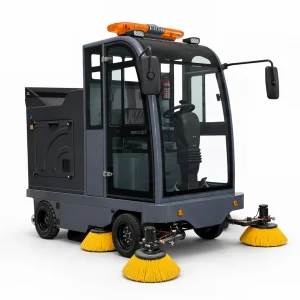
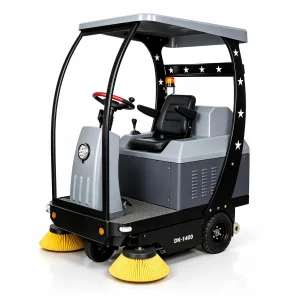
While massive ride-on sweeping units serve multi-acre runways, vast swaths of industrial footprint—including mezzanine racks, narrow picking aisles, and localized processing zones—preclude heavy machines. Pure mechanical and dual-battery assist walk-behind push sweepers present minimal initial capital expenditure (CapEx), completely avoid fossil fuel emissions, and operate without intrusive motor noise during core operations.
How concentrated supply ecosystems, advanced injection rotomolding, and specialized mechanical engineering grant international distributors a decisive competitive margin.
Centering in industrial clusters like Zhejiang and Jiangsu, our facilities utilize an ultra-dense supply ecosystem. Gearboxes, nylon brush filaments, UV-stabilized rotational polyethylene (LLDPE) chassis, and sealed planetary gearing are sourced, refined, and tested within a 50-kilometer radius. This structural proximity reduces raw material transit overhead and slashes prototype turnaround intervals.
Cheaper commercial sweepers fail under the mechanical rigors of metal chips, pallet splinters, and chemical residues. China’s advanced export manufacturers implement impact-modified polypropylene compounds, high-tensile carbon steel handle scaffolding, and wear-resistant polyurethane edge seals. Sweeper components undergo 500-hour continuous salt-spray tests and mechanical drop-impact validation.
Exporting to world regions demands bespoke configurations: customized bristle diameters for textured slip-resistant floors, specialized multi-voltage fast chargers for lithium variants, and private-label rotomolding colors. Our in-house CAD tooling and automated rotational molding lines fulfill complex custom containerized orders without inflated setup schedules.
Matching sweeper drive architectures, brush configurations, and filtration systems against complex facility terrains and debris compositions.
| Industrial Setting | Predominant Debris Profile | Recommended Architecture | Operational Value Delivered |
|---|---|---|---|
| E-Commerce & 3PL Fulfillment | Cardboard dust, packing straps, pallet chips, fine transit soils | Dual-Side Brush Walk-Behind Sweeper | Navigates narrow VNA racks; clears perimeter dust lines without disrupting forklift traffic. |
| Metal Stamping & Foundries | Cast swarf, metal shavings, cutting abrasives, heavy gravel | Steel-Reinforced Mechanical Throw-Over | Heavy-gauge polymer prevents shell punctures; dual counter-rotating brushes ingest high-density scrap. |
| Food & Beverage Processing | Spilled dry powders, seed grains, grain dust, broken packaging | Battery Assist with Integrated Micro-Filter | Prevents explosive dust migration into motors; sanitizable LLDPE waste containers ease washdowns. |
| Textile & Nonwoven Mills | Airborne lint, fine synthetic fluffs, discarded thread cores | Anti-Wrap Axle Sweeper / Twin-Tank System | Patented spindle guards prevent filament binding around brush bearings, maintaining mechanical longevity. |
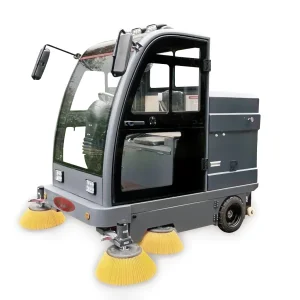
| Heavy Logistics Loading Yards | External gravel, road sand, wet leaves, coarse yard grit | Ride-On / Enclosed Cabin Heavy Sweeper | Complete perimeter debris collection; provides operator climate isolation across broad external tarmacs. |
Critical engineering considerations shaping global B2B procurement over the coming decade.
Purely manual sweepers are increasingly augmented by swappable, standardized lithium battery cells. Modular platforms permit operators to convert mechanical push sweepers into traction-driven power-assist units on incline ramps and high-friction anti-slip resin flooring, reducing physiological fatigue during prolonged operations.
Global procurement teams prioritize fleets with shared wear components. Our push sweepers utilize universally cross-compatible side brush mounts, chevron-grooved cylindrical brushes, and sealed roller bearings. This standardization streamlines stockholding requirements for wholesale distributors and facility maintenance contracts.
Modern ESG (Environmental, Social, and Governance) targets require zero-harm designs. Modern push sweepers rely on friction-driven planetary gears without messy lubricating oil baths, feature fully recyclable virgin LLDPE collection hoppers, and provide step-less adjustable handles accommodating operators of any height.
Clear, direct insights to guide equipment selection, logistics scheduling, and fleet integration.
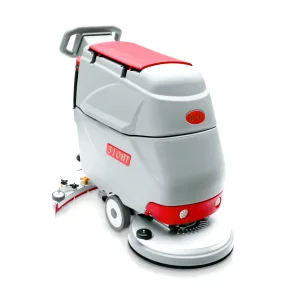
Push sweepers are dry debris collection devices engineered to gather sand, swarf, metal filings, and packaging materials into an onboard hopper via high-speed counter-rotating brushes. Floor scrubbers use clean water, chemicals, and mechanical down-pressure to scrub and vacuum away wet residues, oils, and grease. The optimal facility cleaning process uses a push sweeper first to capture abrasive grit, protecting the squeegee rubbers and vacuum channels of floor scrubbers during subsequent wet passes.
Our heavy-duty industrial push sweepers feature internal planetary gears made from fiberglass-reinforced nylon paired with zinc-alloy drive pinions. Under standard operating conditions (clearing clean, dry concrete or epoxy floors across an 8-hour daily schedule), our drive gear assemblies deliver an average lifespan exceeding 3,500 continuous runtime hours before requiring tooth profile servicing.
Yes. Our industrial-grade models feature rotational-molded high-density LLDPE tanks that resist dilute acids, hydraulic oils, and manufacturing degreasers. The main cylindrical brushes can be customized with high-resilience polyamide filaments (Nylon 6.6) or embedded brass wires, preventing bristle deformation when sweeping hot or razor-sharp CNC machining swarf.
Standard branded container orders are supported with an entry MOQ of 20 to 50 units depending on the sweeper class. For custom body paint matched to client Pantone codes, custom silkscreen logo badges, and tailored exterior carton graphics, the standard production lead time is 15 to 25 business days from CAD asset approval to port delivery at Ningbo or Shanghai.
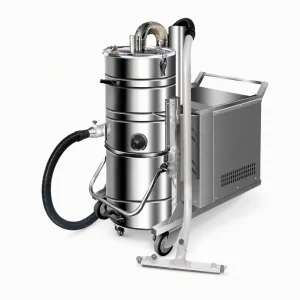
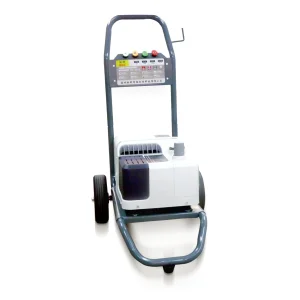
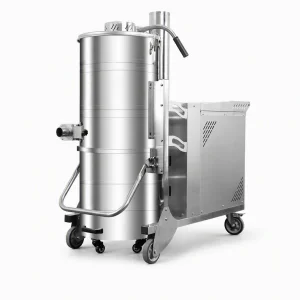
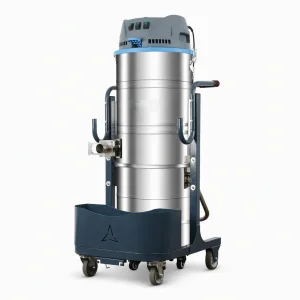
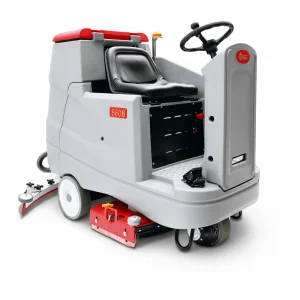
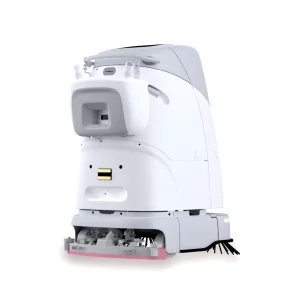
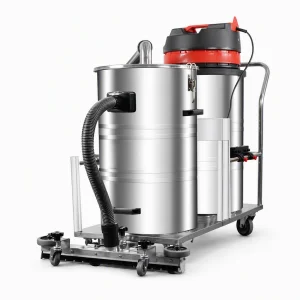
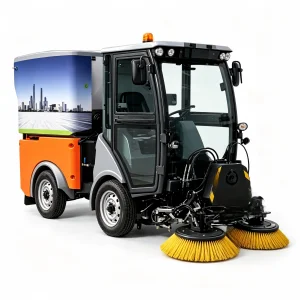
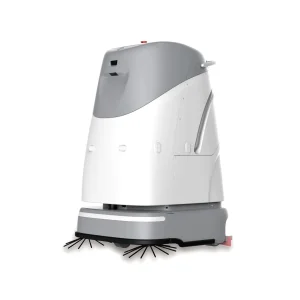
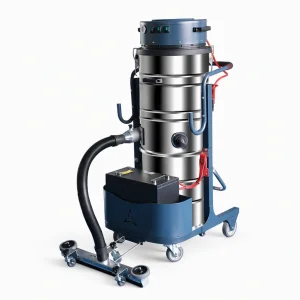
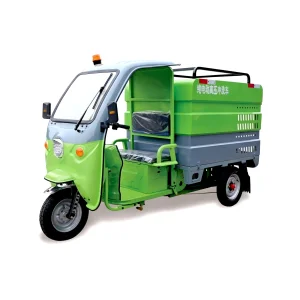
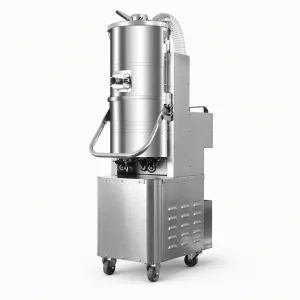
Complementary commercial scrubbers, ride-on sanitation sweepers, and dual-barrel vacuum systems designed for comprehensive industrial facility coverage.