Engineered for continuous-duty commercial operation, severe particulate capture, and automated floor maintenance across mission-critical facilities.
Analyzing the macro-economic forces, labor market pressures, and environmental compliance demands driving the rapid mechanization of commercial floor maintenance.
The global cleaning industry is confronting a structural demographic transition. Facility operators across North America, the European Union, the Middle East, and Asia-Pacific report persistent janitorial vacancy rates exceeding 30%. Concurrently, hourly minimum wages in logistics and sanitation have risen steadily by 4.8% to 7.2% year-on-year.
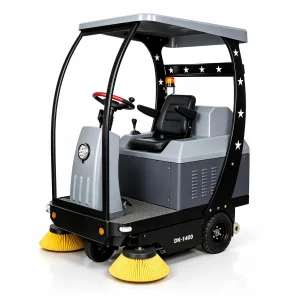
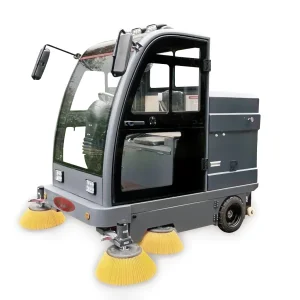
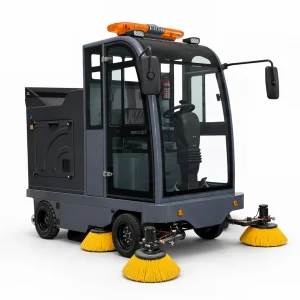
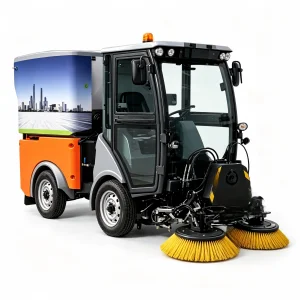
Relying on manual broom-and-dustpan labor is no longer operationally viable or economically defensible for expansive facilities exceeding 5,000 square meters. A single modern ride-on floor sweeper, such as the DK-1400 or DK-2000, delivers productivity equivalent to 10 to 18 full-time personnel, transforming facility cleaning into a predictable, capital-efficient process.
Global regulatory bodies—including OSHA (United States 29 CFR 1926.1153), the European Agency for Safety and Health at Work (EU-OSHA), and national environmental agencies—have implemented stringent limits on respirable crystalline silica (RCS) and PM2.5 particulates within indoor facilities.
Dry, unassisted sweeping aerates microscopic hazards, directly elevating worker respiratory exposure. Modern industrial floor sweepers integrate dual-stage negative pressure cyclonic filtration and ultrasonic water-mist atomization nozzles. This captures airborne dust directly at the side-broom interface, mitigating slip risks, protecting inventory, and avoiding statutory penalties.
Corporate procurement strategies have transitioned from evaluating initial capital expenditure (CAPEX) to modeling 5-year Total Cost of Ownership (TCO). In traditional cleaning, labor accounts for roughly 75% to 85% of total budget allocations, with equipment comprising less than 8%.
By investing in robust, automated, or lithium-powered mechanical sweepers from direct Chinese manufacturing hubs, enterprise buyers achieve return on investment (ROI) payback windows within 4 to 9 months. Substantial reductions in consumable waste, battery replacements, and unplanned maintenance downtime solidify bottom-line savings.
How Wenzhou and the Eastern Zhejiang industrial ecosystem deliver unprecedented cost-to-performance benchmarks and technical responsiveness for international B2B buyers.
Unlike Western equipment assemblers who rely on fragmented, outsourced global tiers, specialized Chinese factories integrate every core discipline in-house. Within our production footprint in Wenzhou, we maintain proprietary heavy-gauge rotational molding (rotomolding) cells for high-density linear polyethylene (LLDPE) recovery and solution tanks.
We execute robotic laser sheet-metal chassis fabrication, electrostatic powder coating, wiring harness assembly, and computerized dynamo testing internally. This eliminates intermediary markups, compresses production cycles down to 10–15 days for containerized orders, and guarantees strict dimensional accuracy across replacement parts.
Our production facilities benefit directly from the world’s most concentrated mechatronics and electromechanical cluster. Within a 50-kilometer radius, we source precision planetary gearboxes, brushless DC (BLDC) high-torque traction transaxles, IP65-sealed touchscreens, and automotive-grade wiring.
This localized supply density empowers DIKE to innovate rapidly. While European or American legacy manufacturers often spend 24 to 36 months releasing iterative chassis updates, our engineering group prototypes, refines tooling, and delivers field-ready floor sweepers in under 180 days.
Global markets require precise electrical and mechanical adaptations. A sweeper deployed in Hamburg needs different voltage and CE electromagnetic compatibility profiles than one operating in Dallas, Riyadh, or Mumbai. As an export-oriented Chinese factory, we natively build for multi-standard global compliance.
We routinely configure dual 110V/220V on-board smart chargers, integrate NEMA/Schuko/UK mains interfaces, provide multilingual control software, and customize Private-Label liveries and decals for global distributor networks seeking a competitive market edge.
Industrial sweepers operate in tight spaces, loading bays, and busy workshops where accidental collisions with steel racks, concrete bollards, and pallets are common. DIKE utilizes rotational molding with virgin high-density linear polyethylene (LLDPE) wall thicknesses of 8mm to 12mm. Unlike pressed sheet-metal, which dents and rusts, or brittle injection-molded plastics that crack under impact, rotomolded bodies absorb kinetic shocks and return to shape—drastically lowering lifetime body repair costs.
A rigorous examination of kinetic sweep designs, airflow dynamics, filtration media, and power transmission mechanics built into modern industrial floor cleaning equipment.
Industrial sweepers rely on two fundamental mechanical broom geometries. Direct-Throw (Forward Throw) sweepers position the debris hopper in front of the main cylindrical roller brush. This mechanism requires minimal brush angular velocity to capture dense, heavy debris such as metal turnings, gravel, and construction rubble, making it ideal for the DIKE heavy-duty sweeper lineup.
In contrast, Over-the-Top (Sweep-Up) designs place the collection hopper behind the main broom. Rotating backwards at higher RPM, the brush hurls finer sand, dust, and light litter up and over into the containment bin. This architecture maximizes hopper fill ratios up to 90% volumetric capacity, optimizing continuous sweeping cycles across large transit centers and retail distribution yards.
Airflow handling distinguishes consumer-grade machines from heavy-duty industrial sweepers. During operation, side brooms channel surface particulate into the path of the main cylindrical brush. As debris enters the collection hopper, a high-vacuum impeller draws thousands of cubic meters of air per hour through filtration media to capture airborne fines.
DIKE integrates high-precision polyester spunbond cartridge filters treated with a PTFE non-stick membrane, achieving 99.5% efficiency at 0.3 microns. To prevent fine silica from blinding filter pores, our machines (such as the DK-221SMC and DIKE-221FC) feature automatic or manual reverse pulse-jet blowback systems. A counter-current pressure wave dislodges the dust cake into the hopper without requiring mechanical filter removal.
The industrial sweeping sector has rapidly moved past noisy, toxic combustion engines toward zero-emission DC electric powertrains. While lead-acid AGM batteries remain an economical starting point, DIKE has pioneered the deployment of deep-cycle Lithium Iron Phosphate (LiFePO4) battery packs managed by smart CAN-bus BMS systems.
LiFePO4 architecture provides over 3,000 charge cycles at 80% Depth of Discharge (DoD), compared to only 500–700 cycles for traditional AGM cells. Fast-charging capabilities enable continuous multi-shift operation via opportunistic top-ups during scheduled worker breaks, eliminating secondary battery swapping stations and hazardous acid venting.
| Sweeper Architecture Parameter | Walk-Behind Industrial (e.g., Warrior Series) | Mid-Size Ride-On (e.g., DK-1400) | Heavy Municipal / Heavy-Duty (e.g., DK-2000) | Autonomous Robotic (e.g., SC80S Series) |
|---|---|---|---|---|
| Theoretical Cleaning Rate | 2,800 – 4,500 m²/h | 7,500 – 10,500 m²/h | 12,000 – 16,000 m²/h | 3,500 – 6,000 m²/h (Continuous 24/7) |
| Sweeping Path Width | 700 mm – 900 mm | 1,200 mm – 1,450 mm | 1,800 mm – 2,100 mm | 800 mm – 1,100 mm |
| Hopper Volume Capacity | 40 – 60 Liters | 120 – 160 Liters | 180 – 240 Liters | 70 – 90 Liters |
| Filtration Area & Class | 2.5 m² (Polyester F9) | 5.5 m² (PTFE Pleated H11) | 8.0 m² (HEPA / Dual Cylindrical H13) | 4.5 m² (Micro-porous PTFE H12) |
| Drive Motor / Powertrain | 400W – 600W Brushless Transaxle | 1.2 kW High-Torque BLDC Drive | 2.2 kW Sealed AC Traction Motor | 800W Stepper Servo Drive Units |
| Primary Target Applications | Workshops, Narrow Aisles, Clinics | Warehouses, Logistics Bays, Malls | Foundries, Ports, Municipal Streets | Airports, Mega-DCs, Data Centers |
Examining field-tested performance requirements across diverse operational environments, from rough municipal infrastructure to sensitive manufacturing clean zones.
In modern e-commerce distribution centers operating 24/7, high forklift traffic constantly grinds wooden pallet splinters, stretch wrap offcuts, cardboard debris, and abrasive rubber tire dust into polished concrete floors. Airborne dust settles on high-bay pick racks, compromising automated barcode scanners and camera vision sorters.
Semi-enclosed ride-on sweepers like the DK-1400 and DK-1800 navigate intermediate aisles with zero tail-swing collision risks. Their high-capacity dust misting systems suppress fine packaging particulate, while high-clearance brush chambers collect bulky fragments without chute clogging, maintaining rapid turnarounds in loading docks.
Heavy engineering facilities present punishing floor cleaning conditions. Sharp metal lathe turnings, cooling fluids, foundry casting sand, and slag rapidly destroy standard nylon sweeper brushes and puncture thin-walled hoppers. Uncollected metal chips present severe puncture hazards for pneumatic vehicle tires and slip risks for plant technicians.
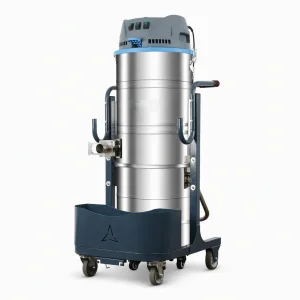
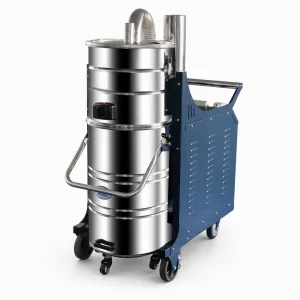
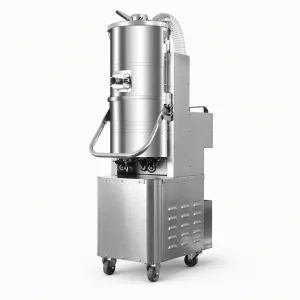
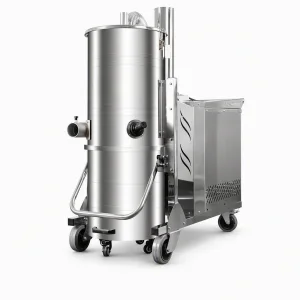
DIKE answers this with heavy-duty platforms including the DK-2000 fully enclosed sweeper and the DIKE-221FC 380V Three-Phase Vacuum Cleaner. Built with steel-reinforced main broom cores, abrasive-resistant polypropylene/steel-wire mix brooms, and carbon-steel debris hoppers, these machines easily capture dense metal swarf and abrasive slag.
Processing plants handling dry chemical powders, flour, pigments, or active pharmaceutical ingredients (APIs) face severe combustibility hazards (combustible dust risks under ATEX / NFPA guidelines). Conventional vacuum systems with brushed DC motors generate internal electrical arcs that can ignite airborne organic dust clouds.
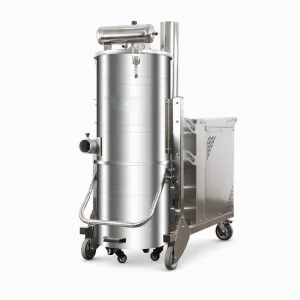
For these sensitive environments, DIKE supplies the DK-EX Explosion-Proof Three-Phase Vacuum and DK-1535Y Pharmaceutical-Grade units. Featuring full 304 or 316L stainless-steel construction, conductive antistatic grounded filter cartridges, and brushless explosion-proof turbine motors, they guarantee safe handling of volatile substances.
Public-sector sweeping requires versatile machines capable of traversing curbs, navigating pedestrian plazas, sweeping around street furniture, and handling varied seasonal debris, such as wet autumn leaves, cigarette ends, and food cartons, without excessive noise.
The E-800 Pure Electric Multi-Functional Sweeper and our specialized electric three-wheeler series deliver clean urban maintenance. Zero emissions and whisper-quiet operation below 68 dB(A) permit early-morning municipal sanitation without disturbing local communities.
How the integration of multi-sensor fusion, cloud telematics, and circular resource engineering is reshaping commercial floor maintenance equipment.
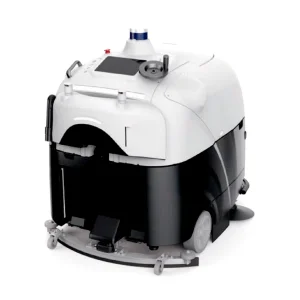
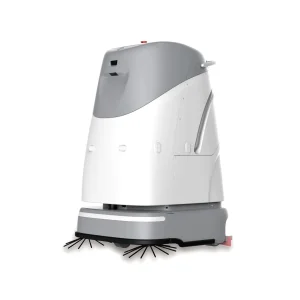
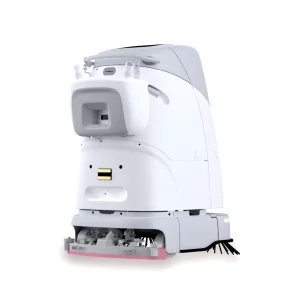
The cleaning industry is transitioning from manual machinery to autonomous robotic floor systems. Advanced driverless models like the SC50, SC50S, and SC80S operate autonomously in complex, dynamic commercial environments without requiring external physical reflectors or buried magnetic guide tracks.
By fusing 3D LiDAR, stereoscopic depth cameras, and ultrasonic proximity sensors running real-time SLAM (Simultaneous Localization and Mapping) algorithms, these robotic cleaners map intricate warehouse floors, avoid unexpected obstacles, navigate past personnel, and execute edge-to-edge coverage plans with millimeter accuracy.
Fleet operators managing distributed machinery across regional distribution networks require real-time visibility into machine status. DIKE industrial sweepers feature integrated IoT CAN-bus transceivers that stream critical telematics data directly to centralized operations dashboards.
Operations teams track live machine hours, remaining battery life cycles, geofenced location boundaries, square meters cleaned per shift, brush-motor load telemetry, and vacuum filter backpressure warnings. Predictive maintenance alerts identify worn carbon brushes, squeegee wear, or overdue hydraulic filter cleanings before costly component failures occur.
Environmental, Social, and Governance (ESG) mandates have made water conservation and chemical detergent reduction key procurement priorities. Sweeper-scrubbers are increasingly judged on their ecological footprint during operation.
DIKE has introduced proprietary low-volume misting nozzles and closed-loop multi-stage water recycling systems. By filtering, settling, and recycling captured water, modern industrial combination sweeper-scrubbers can run up to 45% longer on a single clean water fill, minimizing wastewater discharge into municipal sewers.
A comprehensive procurement guide detailing the operational criteria, certification compliance, and lifecycle metrics required when ordering floor sweeper fleets directly from Chinese manufacturing lines.
Do not evaluate industrial sweepers based solely on theoretical maximum area calculations (which assume top travel speeds with zero turning or dumping). Professional buyers calculate realistic practical capacity by applying a 0.65 to 0.72 derating coefficient.
Account for ramp gradients, container unloading docks, turning radii at aisle ends, and hopper emptying cycles. A machine claiming 10,000 m²/h theoretical speed will reliably maintain 6,500 to 7,200 m²/h of continuous high-quality cleaning in busy operating facilities.
Global importing requires strict alignment with destination safety mandates. Commercial sweepers must carry verifiable CE declarations covering the Machinery Directive (2006/42/EC), Low Voltage Directive (2014/35/EU), and Electromagnetic Compatibility Directive (2014/30/EU).
For US and Canadian markets, look for compliance with UL 583 safety standards for electric industrial trucks. Batteries must be accompanied by UN 38.3 transport certification, cell MSDS documentation, and robust battery management protections to pass customs clearance smoothly.
The total lifespan value of an industrial sweeper depends on reliable access to common wear items. When establishing OEM supply agreements with Chinese factories, negotiate tiered spare parts packages directly inside initial shipping containers.
Every commercial machine fleet order should include a 12-to-24-month supply of consumable side brushes, main chevron roller brushes, high-wear natural gum/polyurethane squeegee blades, and replacement PTFE filter cartridges, shielding your facility from international freight delays.
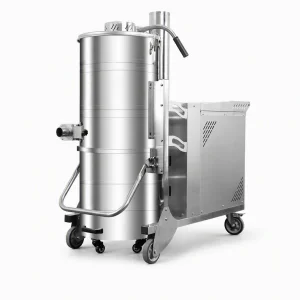
Heavy particulate collection, explosion-proof units, and extended-run industrial cleaning systems built to perform under challenging conditions.
Clear, practical guidance on machine mechanics, battery chemistry, export logistics, and OEM configurations direct from our manufacturing team.
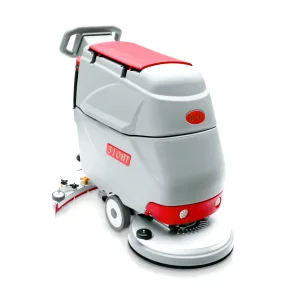
A floor sweeper operates on dry debris collection principles: high-speed rotating side and cylindrical roller brushes flick dust, rocks, wooden pallet splinters, and packaging waste into a containment hopper via negative pressure suction and pleated air filtration. A floor scrubber dryer, conversely, injects water mixed with detergents onto the surface, uses disc brushes or pads to scrub away grease, dirt, and stains, and immediately suctions the dirty slurry away using a rear parabolic squeegee. In heavy manufacturing and logistics warehouses, sweepers are deployed first to clear dry abrasives and prevent squeegee blockages on scrubber dryers.
Autonomous robotic sweepers (like the SC50, SC50S, and SC80S) deliver their highest economic return on investment (ROI) in facilities characterized by repetitive, highly predictable floor layouts spanning at least 4,000 square meters—such as 24/7 logistics sorting centers, commercial shopping malls, airport terminals, and semiconductor production halls. Autonomous units eliminate variable labor scheduling and perform consistent shift-by-shift cleanings. Conversely, crowded workshops with constantly changing machinery layouts or variable heavy pallet blockages are often better served by manual ride-on sweepers (e.g., DK-1400) driven by flexible operators.
Lithium Iron Phosphate (LiFePO4) offers four decisive operational advantages: (1) Cycle Longevity: LiFePO4 cells routinely exceed 3,000 to 4,000 cycles at 80% Depth of Discharge, whereas AGM or gel lead-acid units degrade within 500 to 700 cycles; (2) Opportunity Charging: Lithium batteries accept high-amperage rapid top-ups during 30-minute worker lunch breaks with no memory effect; (3) Zero Maintenance: They require no distilled water refilling and emit zero explosive hydrogen gas during charging; (4) Stable Voltage Delivery: Unlike lead-acid, where brush motor torque drops as voltage falls, lithium maintains steady power output throughout the discharge cycle.
Fine particulate under 5 microns quickly clogs standard cellulose paper filters, cutting suction airflow and sending dust out into the room. DIKE handles this through two engineering features: First, we fit our cartridge filters with spunbond polyester membranes coated in hydrophobic, anti-adhesive PTFE, which prevents fine particles from working deep into the filter fabric. Second, we integrate automatic or manual reverse pulse-jet blowback mechanisms (as featured on the DIKE-221FC and DK-221SMC series). A focused reverse pressure wave knocks the surface dust cake loose into the hopper, restoring optimal CFM suction airflow instantly without needing tool teardowns.
Every commercial machine leaving our Wenzhou factory ships with a comprehensive customs and compliance documentation package. This includes our official CE Declaration of Conformity (covering Machinery Directive 2006/42/EC and EMC Directive 2014/30/EU), test certificates for ISO 9001 and ISO 14001, commercial invoices with exact HS Codes (typically 8479.89 for mechanical sweepers and 8508.11 for industrial vacuums), calibrated packing lists with cubic volumes (CBM) and tare weights, Certificate of Origin (CO/Form E/EUR.1), and full UN 38.3 test summaries alongside MSDS reports for safe ocean transport of onboard lithium battery packs.
Yes. OEM and ODM partnerships make up a major portion of our export operations. Because we control toolmaking, sheet-metal stamping, and rotomolding in-house, we can customize equipment to match your brand requirements. Options include custom-tinted LLDPE body plastics matched to your corporate RAL colors, silk-screened metal chassis badging, private-labeled packaging cartons, custom start-up screen firmware graphics on LCD dashboards, and modified motor voltages or power connections to suit regional standards in North America, Europe, Australia, and the Middle East.