Direct from manufacturing lines: High-torque walk-behind units, driverless autonomous robotics, multi-stage industrial dust collectors, and municipal sanitation platforms.
How mechanical scrubbers, strict occupational safety mandates, and escalating janitorial labor rates are forcing a shift from manual sanitation to autonomous and high-efficiency scrubber dryers.
Across commercial logistics real estate, pharmaceutical manufacturing hubs, automotive stamping lines, and international aviation terminals, mechanized floor scrubbers have ceased to be discretionary maintenance assets—they are core infrastructure requirements. The global market for floor scrubbing machines and autonomous scrubber dryers is experiencing accelerated structural expansion, catalyzed by two converging commercial realities: severe, chronic blue-collar janitorial labor shortages and stringent occupational regulatory frameworks (including OSHA Title 29 CFR in North America and EU Directive 89/391/EEC).
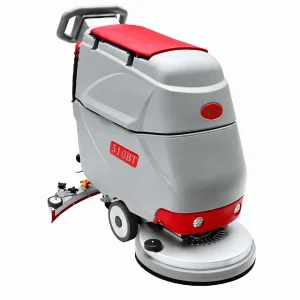
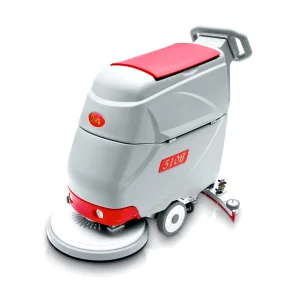
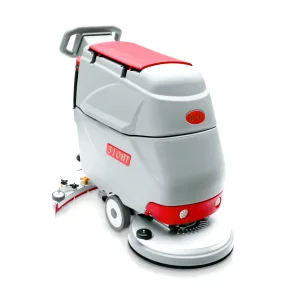
Traditional mop-and-bucket sanitation protocols fail to meet modern floor hygiene and slip-resistance metrics. A standard manual operator clears approximately 150 to 250 square meters per hour, leaving residues that require prolonged evaporation periods during which facility slip-and-fall hazards peak. In contrast, modern battery-operated industrial scrubber dryers—such as walk-behind machines (e.g., Warrior 510BT) and high-capacity sit-on platforms—integrate counter-rotating disc brushes, continuous chemical-solution dosing, and parabolic suction squeegees that dry floors in a single continuous pass at speeds exceeding 3,000 to 6,500 square meters per hour. The dirty water recovery efficiency eliminates bacterial transfer, meeting HACCP, cGMP, and ISO 14644 cleanroom hygiene baselines.
Instantaneous moisture suction via high-grade tear-resistant polyurethane squeegees reduces ASTM F1677 dynamic coefficient of friction (DCOF) risk, allowing continuous pedestrian and forklift transit without floor barricades.
With fully-loaded facility labor exceeding $22–$35/hour in Western Europe and North America, mechanized scrubbers offer capital payback cycles of less than 4.2 months by replacing 6 to 12 manual cleaning workers per unit shift.
Pulse-width-modulated water injectors and micro-metered detergent dispersal decrease chemical and clean water usage by up to 64% per 1,000 m² cleaned, directly enhancing Corporate Sustainability Reporting Directive (CSRD) audit scoring.
How localized manufacturing ecosystems in coastal industrial zones achieve uncompromised mechanical reliability, high-density rotomolding integration, and optimal cost-to-performance metrics.
Over the past decade, the global center of gravity for industrial sanitation equipment engineering has consolidated in China, specifically within advanced manufacturing corridors such as Wenzhou and Zhejiang Province. Original Equipment Manufacturers (OEMs) and factories here have transformed from legacy assembly shops into vertically integrated industrial powerhouses. The integration of domestic rotational polyethylene molding (rotomolding), high-torque brushless DC (BLDC) motor winding, solid-state electronic controllers, and tier-one lithium-iron phosphate (LiFePO4) battery manufacturing within an 80-kilometer radius delivers an unmatched competitive advantage in product lead time, customization flexibility, and procurement economics.
When global distributors and facilities managers source from leading Chinese manufacturers like DIKE (Wenzhou Dike Intelligent Environmental Protection Technology Co., Ltd.), they eliminate multi-tier supply markups while capturing the engineering discipline developed through massive domestic infrastructure deployment. Chinese manufacturers routinely deliver equipment that matches or exceeds legacy European and American brands in brush deck down-pressure, chassis tensile strength, and suction vacuum lift (water lift >180–250 mbar), but at an acquisition capital expenditure reduced by 35% to 55%.
High-density linear polyethylene (LLDPE) recovery and solution tanks are molded in-house using computerized multi-axis ovens, ensuring uniform 8–10mm wall thickness, superior crack resistance against corrosive chemicals, and zero seam failure.
Factories leverage deep domestic motor clusters to source IP54/IP65 ingress-protected brushless traction and vacuum motors capable of >1200 hours mean time between failures (MTBF), running at whisper-quiet decibel levels (<65 dBA).
Standardized chassis geometries enable agile OEM/ODM branding, quick-turn voltage customization (110V/220V/380V single/three-phase), dynamic battery rack configurations (AGM vs. LiFePO4), and bespoke distributor colorways with low MOQs.
From heavy machine shops laden with cutting oil to sterile pharmaceutical cleanrooms: Analyzing mechanical stress, debris loads, and exact equipment pairing.
Primary Challenges: Extensive expanses of polished concrete or epoxy floors, high-density forklift tire skid marks, fine airborne pallet dust, and narrow high-rack aisle constraints.
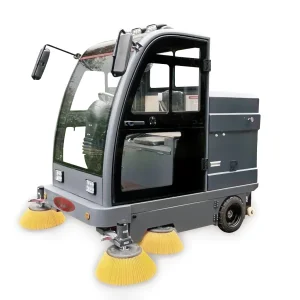
Recommended Solution: Sit-on scrubbers with dual disc decks (e.g., KNIAHT 1020BT) coupled with dry sweepers (DK-1800) to clear loose strapping and splinters prior to aqueous scrubbing, protecting squeegee blades from premature tearing.
Primary Challenges: Viscous cutting fluids, hydrocarbon lubricants, metal shavings, and dense sludge buildup on hardened floor surfaces.
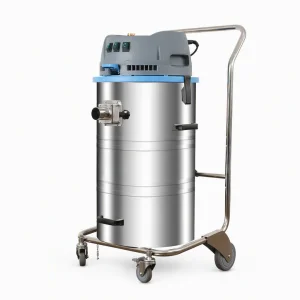
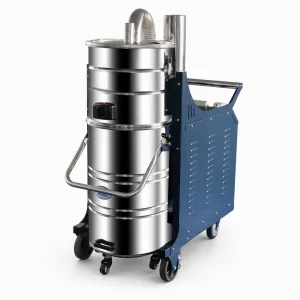
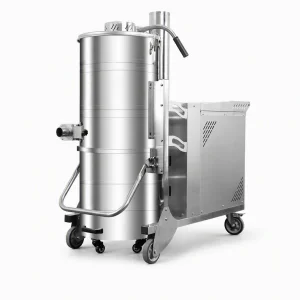
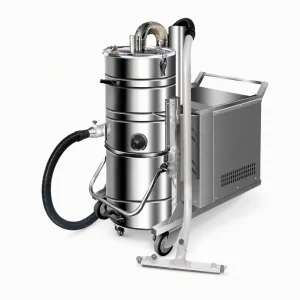
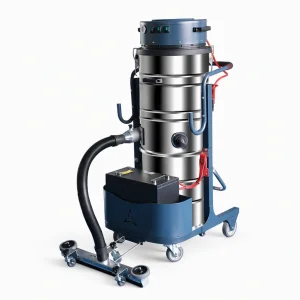
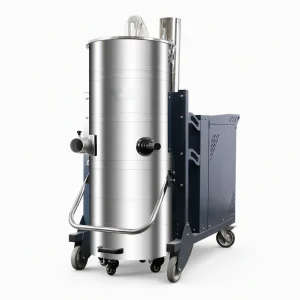
Recommended Solution: Three-phase industrial vacuum collectors (DK-221VAC) with stainless steel separation bins paired with heavy-down-pressure scrubbers utilizing oil-resistant polyurethane squeegee blades and nylon abrasive grit brushes.
Primary Challenges: Stringent biological control, organic grease, washdown chemical exposure, wet floors operating near 0°C to 4°C, and zero toleration of standing liquid.
Recommended Solution: Walk-behind scrubber dryers engineered with anti-microbial rotomolded recovery tanks, completely detachable drain hoses for chemical disinfection, and high-suction bypass vacuum motors.
Primary Challenges: Continuous public pedestrian flow, luggage caster abrasion, aesthetic terrazzo/granite gloss preservation, low-noise requirements, and repetitive layout paths.
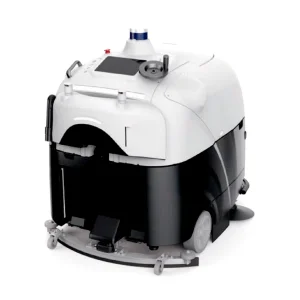
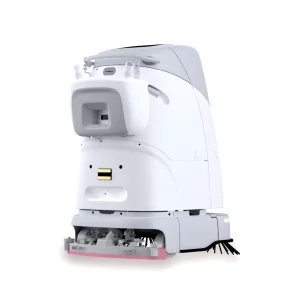
Recommended Solution: Fully autonomous driverless floor scrubbers (e.g., SC80S and SC50S) equipped with LiDAR and 3D visual SLAM navigation, programmed for automated nocturnal sanitization runs without operator intervention.
Primary Challenges: Curbside trash, leaf blockages, cobblestone grooves, grease stains around commercial dining zones, and tight vehicle access paths.
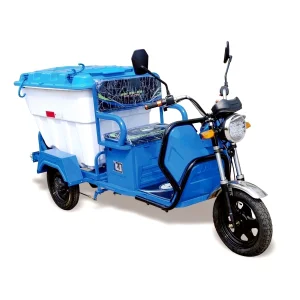
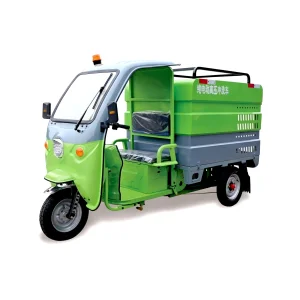
Recommended Solution: Specialized three-wheeled electric sanitation vehicles (LB3BJ500) and mobile high-pressure hot/cold water washdown units (LB3CX600) capable of cleaning street curbs, bins, and sidewalks.
Primary Challenges: High volume of floating lint, microscopic fiber clogging of suction filters, and volatile particulate buildup necessitating specialized containment.
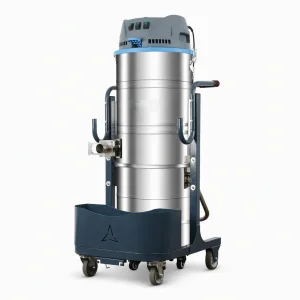
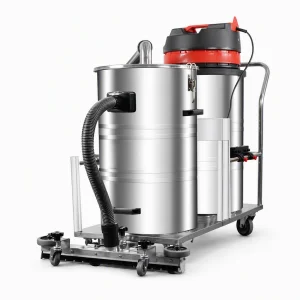
Recommended Solution: Dedicated twin-tank textile battery vacuum cleaners (DK-FZ8018) paired with manual blowback multi-cyclone filtration units (DK-221SMC) to prevent suction drop during heavy lint intake.
From lead-acid displacement to SLAM robotics and cloud-tethered IoT telemetry: How Chinese factory R&D is pioneering the next decade of surface maintenance engineering.
| Technological Vector | Legacy Paradigm (Historical Baseline) | Next-Gen Chinese Factory Standard (2024+) | Operational ROI Impact |
|---|---|---|---|
| Battery Chemistry | Flooded Lead-Acid / AGM Gel (350–500 cycles, 8h charge time, toxic venting risk) | Modular LiFePO4 Lithium Battery Packs (2500+ cycles, opportunity charging, zero gas) | Triples operational asset lifespan; eliminates dedicated charging room ventilation needs. |
| Navigation Architecture | Manual human steering (walk-behind / sit-on only; subject to operator absenteeism) | Multi-Sensor Autonomous Fusion (LiDAR, 3D ToF Cameras, Ultrasonic Obstacle SLAM) | Provides 99.4% route repeatability; full real-time telemetry cleaning heatmaps via cloud. |
| Aqueous Flow Management | Gravity feed or raw continuous flow (constant floor flooding, high water refill downtime) | Closed-loop solenoid metering tied to machine speed + optional micro-filtration recycling | Cuts water refills by 40%; preserves solution tanks for up to 3.5 hours of continuous duty. |
| Diagnostic Telemetry | Analog hour meters and basic flashing LED trouble codes on dash panel | CAN-Bus integration with 4G/IoT cloud gateways (remote error decoding, over-the-air tuning) | Reduces service diagnosis cycle from days to minutes; prevents catastrophic motor burnouts. |
| Component Durability | Sheet metal painted chassis vulnerable to acidic detergents and rust corrosion | Electro-coated (e-coat) steel sub-chassis with rotomolded thick-gauge polymer housings | Withstands corrosive cleaning agents; ensures 7- to 10-year chassis structural integrity. |
The industrial sanitation sector is moving rapidly toward autonomous operations. Flagship autonomous scrubbers—such as the SC80S and SC50S—incorporate complex sensor packages consisting of solid-state LiDAR, dual stereoscopic depth cameras, edge-computing neural processors, and perimeter ultrasonic proximity sensors. By building dynamic 3D occupancy grid maps in real time, these machines maneuver around dynamic obstacles, navigate pallet shifts in warehouses, and dock automatically with service bays for fresh water replenishment and inductive battery recharges. For global facility service contractors (FSCs), this enables "lights-out" overnight cleaning schedules, redirecting human capital toward high-detail vertical sanitation.
Strategic frameworks for B2B buyers, regional equipment importers, and project engineers to qualify manufacturers, audit production lines, and calculate true Total Cost of Ownership (TCO).
Always verify whether the manufacturing facility maintains comprehensive CE declarations for the Machinery Directive (2006/42/EC), Low Voltage Directive (LVD 2014/35/EU), and Electromagnetic Compatibility (EMC 2014/30/EU). For North American imports, confirm UL/CSA testing status on electrical systems and chargers, backed by ISO 9001:2015 quality management audits.
A machine's long-term utility depends on consumable availability. Evaluate whether the manufacturer employs standardized brush-drive splines, universal pad driver grips, and non-proprietary squeegee blade retention mechanisms. This allows end users to source aftermarket pads, natural rubber, or Linatex/polyurethane squeegees locally without vendor lock-in.
Prioritize manufacturers that retain core engineering processes—rotational molding of water tanks, metal chassis laser-cutting, electrostatic coating, and final assembly burn-in testing—under one roof. Contract aggregators lacking factory floor ownership cannot control dimensional tolerances or guarantee multi-year replacement parts availability.
When assessing initial quotes from Chinese manufacturers versus Western distribution brands, procurement officers must balance acquisition capital expenditures against long-term maintenance costs. The table below illustrates a standard 5-year TCO comparison for a 10-unit fleet of 50-liter walk-behind scrubber dryers:
| Financial / Operational Metric | Legacy Western Brand Fleet (10 Units) | Direct Chinese Manufacturer (DIKE Fleet, 10 Units) | Net Financial Savings |
|---|---|---|---|
| Initial Fleet Capital Expenditure (CAPEX) | $58,000 ($5,800 / unit) | $24,000 ($2,400 / unit) | -$34,000 (-58.6%) |
| Battery Replacements (5-Yr Span) | $12,000 (Standard AGM Lead-Acid) | $4,500 (High-Cycle LiFePO4 Factory Options) | -$7,500 (-62.5%) |
| Squeegees, Brushes, Filters & Valves | $14,500 (Proprietary locked consumables) | $5,200 (Standardized non-proprietary spec) | -$9,300 (-64.1%) |
| Labor Allocation to Operation & Refills | $160,000 (Based on standard flow speeds) | $148,000 (High-capacity dual tank efficiency) | -$12,000 (-7.5%) |
| 5-Year Combined TCO Baseline | $244,500 Total Financial Footprint | $181,700 Total Financial Footprint | Net 5-Year Savings: $62,800 |
In-depth engineering answers addressing motors, battery chemistries, warranty terms, OEM tooling, lead times, and after-sales support.
Disc brush scrubbers (e.g., Warrior 510BT) utilize flat circular pads revolving at 150 to 220 RPM, exerting concentrated vertical down-pressure (25–45 kg). This configuration delivers the highest scrub performance on smooth, sealed concrete, epoxy, and vinyl floors. Cylindrical roller brushes rotate at much higher speeds (600–1000 RPM) and incorporate an integrated debris collection hopper. They are preferred in applications where small solid particles, wood splinters, or gravel are present, functioning as a combined sweeper-scrubber and eliminating the need for pre-sweeping.
Lithium Iron Phosphate (LiFePO4) offers substantial operational advantages over absorbed glass mat (AGM) lead-acid cells: (1) Cycle Life: LiFePO4 delivers 2,000 to 3,500 discharge cycles at 80% DoD versus 400 to 600 cycles for AGM; (2) Opportunity Charging: Lithium batteries accept rapid midday booster charges during operator lunch breaks without memory degradation, facilitating multi-shift operation with a single machine; (3) Weight & Maintenance: LiFePO4 is approximately 60% lighter, preventing battery compartment corrosion and eliminating the need for periodic electrolyte replenishment.
Leading Chinese factories maintain comprehensive B2B spare parts frameworks. Core wearing components (such as squeegee blades, vacuum suction motors, solenoid water valves, relays, and caster wheels) are typically bundled into an initial "10% Spares Package" with full-container-load (FCL) orders. For ongoing replacement parts, manufacturers provide express courier air-shipment within 24 to 48 hours for critical breakdowns, accompanied by digital parts catalogs, CAD exploded diagrams, and video assembly documentation for local distributor service teams.
The choice of squeegee blade material directly impacts floor drying performance and consumable longevity: (1) Natural/Gum Rubber is the most pliable and cost-effective choice for smooth, non-oily floors such as retail vinyl or polished stone; (2) Neoprene provides moderate oil and heat resistance at a balanced price point; (3) Polyurethane (often red or clear-cast) is essential in industrial machine shops, automotive facilities, and warehouses where oils, cutting fluids, and sharp aggregate are present, delivering up to 3 to 5 times the abrasion resistance of natural rubber.
Yes. OEM and ODM partnerships represent a significant portion of Chinese cleaning machinery production. Tier-1 manufacturers support custom rotomolding pigmentation (matching buyer RAL/Pantone color schemes), custom silk-screened or cast aluminum branding, localized control panel languages, personalized owner manuals, and custom firmware calibrations for battery discharge curves and motor acceleration parameters.
A rigorous factory QA protocol must include: (1) Water Tank Integrity Test: 24-hour hydrostatic fill test to detect micro-cracks or seam leaks; (2) Motor Run-in & High-Voltage Dielectric Test: 30-minute full-load bench test measuring motor amp-draw, temperature rise, and electrical insulation integrity; (3) Water Recovery Test: Dynamic floor test on inclined epoxy track evaluating edge-to-edge squeegee suction and absence of water streaks; (4) Tilt and Incline Stability Test: 12-to-15 degree ramp ascent under full tank load to verify traction motor torque and braking system safety.
Complete your facility fleet with compact hand-push scrubbers, driverless autonomous robotics, high-filtration stainless vacuums, and municipal cleaning vehicles.