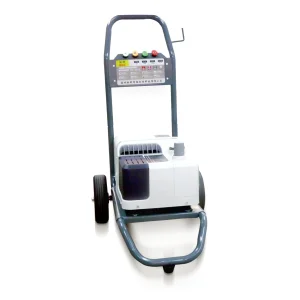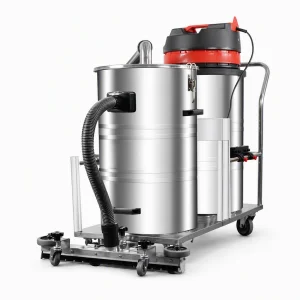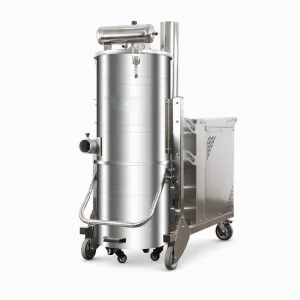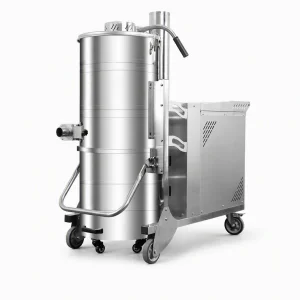
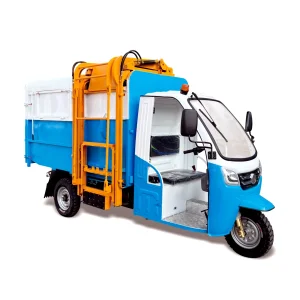
Commercial-grade electric sweeping units, autonomous navigation scrubbers, and high-vacuum equipment direct from our Wenzhou manufacturing complex.
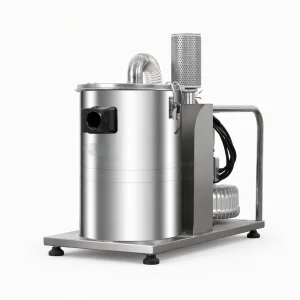
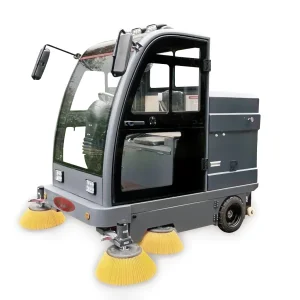
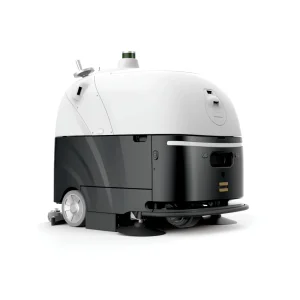
A technical overview of production density, lithium battery integrations, drive-train efficiency, and supply chain scalability in Zhejiang industrial clusters.
China's Yangtze River Delta ecosystem provides localized access to high-efficiency brushless DC (BLDC) motors, automotive-grade controller chips, precision rotational molding dies, and premium polyurethane squeegees within a 50km radius. This geographic concentration minimizes logistical deadhead, compresses lead times for custom tooling, and reduces procurement overhead by 28% to 35% compared to European or North American manufacturing facilities.
By transitioning from legacy lead-acid batteries to lithium iron phosphate (LiFePO4) battery management architectures, Chinese electric sweeper factories deliver powerpacks with over 3,500 cycle life thresholds at 80% Depth of Discharge (DoD). Modern sweepers operate continuously across multi-shift logistics schedules with 2-hour opportunistic fast-charging capability, built-in dynamic thermal balancing, and automotive CAN-bus telematics for real-time pack diagnostics.
Chinese factories excel in modular, high-impact polyethylene roto-molding chassis that isolate structural stress while resisting corrosive industrial solvents, acids, and salt spray. Turnaround times for customized brush configurations, extended side-skirt attachments, high-dump hydraulic hop-bins, and bespoke OEM body cowlings run roughly one-third the industry average, empowering distributors to satisfy domestic public tenders rapidly.
Evaluating the market transition from manual cleaning teams to autonomous fleet networks, sensor fusion, and zero-emission operations.
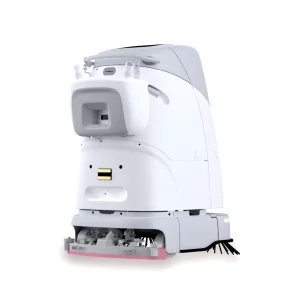
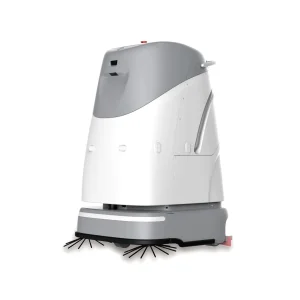
The boundary between traditional electric ride-on units and autonomous robotic machines is converging. Modern Chinese manufacturing plants are deploying multi-sensor arrays incorporating Solid-State 3D LiDAR, stereoscopic depth cameras, and ultrasonic bump sensors to achieve real-time Simultaneous Localization and Mapping (SLAM). Ride-on units now feature co-pilot modes and unassisted geofence boundary sweeps for continuous night-cycle cleaning.
Stricter particulate matter regulations (PM2.5 and PM10) within enclosed manufacturing and pharmaceutical hubs have rendered legacy air-displacement sweeping obsolete. Next-generation ride-on sweepers incorporate multi-stage cyclone misting sprayers, negative-pressure vacuum chambers, and automated pneumatic reverse-pulse air jet filter cleaners that dislodge sub-micron particles from PTFE membrane cartridges without operator intervention.
Enterprise facility managers require auditable proof of sanitation. Modern Chinese electric ride-on sweeping platforms integrate onboard 4G/5G telematics boards that track geolocated square footage covered, run hours, brush down-pressure strain, recovery water tank fill states, and fault code alerts via cloud API integrations into centralized enterprise facility management suites.
Cross-sectional comparison of operational throughput, payload volumes, and deployment environments across common electric industrial floor equipment.
| Equipment Classification | Typical Sweeping/Cleaning Width | Theoretical Productivity | Power Plant & Capacity | Ideal Industrial Setting |
|---|---|---|---|---|
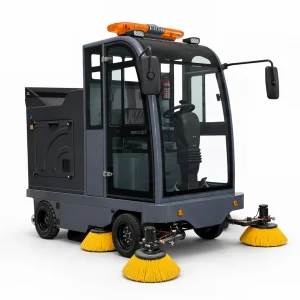
| Heavy Enclosed Sweeper (DK-2000) | 1,900 mm – 2,150 mm | 12,000 – 15,000 m²/h | 48V / 150Ah–200Ah LiFePO4 | Steel mills, cement works, port terminals, municipal logistics yards |
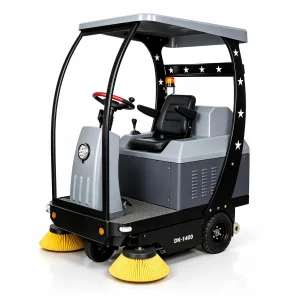
| Mid-Size Semi-Enclosed (DK-1400) | 1,350 mm – 1,450 mm | 7,500 – 9,500 m²/h | 48V / 100Ah Maintenance-Free | Underground parking garages, automotive plants, retail distribution centres |
| Driverless Robotic Scrubber (SC80/SC50) | 500 mm – 800 mm | 2,500 – 4,500 m²/h | 24V / 120Ah Fast-Charge Lithium | International airport concourses, commercial supermalls, high-tech cleanrooms |
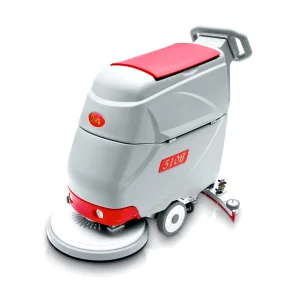
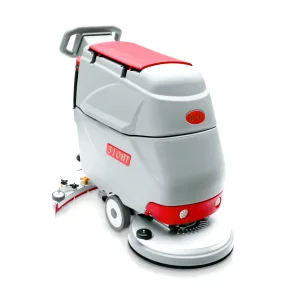
| Self-Propelled Walk-Behind (Warrior 510BT) | 510 mm scrub path | 1,800 – 2,200 m²/h | 24V / 100Ah Deep-Cycle AGM | Narrow warehouse racking corridors, supermarket aisles, hospital wings |
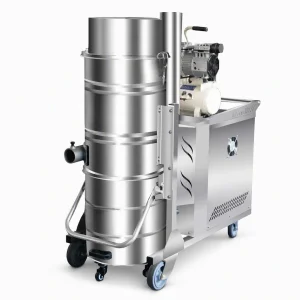
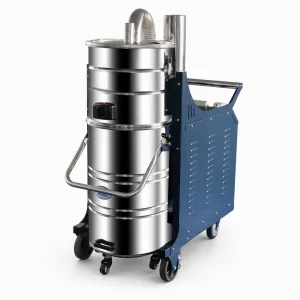
| Industrial Pulse-Blow Vacuum (DK-221MFC) | Continuous Hose / Flange Port | 280 m³/h Airflow Volume | 380V Three-Phase / 220V Single | Heavy manufacturing debris extraction, sandblasting zones, CNC metal swarf |
Matching mechanical sweeping dynamics to complex site constraints, aggregate debris sizes, and environmental exposure levels.
E-commerce fulfillment centers and temperature-controlled cold stores demand zero-emission, condensation-resistant sweeping and scrubbing. Our electric ride-on units are engineered with non-marking vulcanized rubber drive wheels, IP54 sealed wiring harnesses, and instant dry-vacuum squeegee systems that eliminate tire slip hazards and eradicate standing water slicks in narrow high-bay forklift lanes.
Machining workshops and steel casting yards generate dense, abrasive particulates including iron filings, hot slag crumbs, and metal shavings that destroy typical domestic-style sweeper belts. DIKE sweepers deploy direct-gear drive planetary side brushes, reinforced manganese steel hopper pans, and heavy-gauge puncture-proof pneumatic tires capable of handling sharp metallic waste without frame deformities.
Public roadways, academic zones, and urban parks demand compact agility, low operating noise under 65 dB(A), and zero exhaust fumes. Fully-enclosed electric sweepers equipped with automotive air conditioning, reverse camera radar arrays, and hydraulic high-dump refuse arms allow a single sanitation operator to sweep curbs, collect fallen foliage, and dump directly into standard municipal collection bins.
Essential checklist for multinational facility management corporations, municipal authorities, and regional industrial distributors.
International imports necessitate comprehensive safety validation. Ensure your electric sweeper manufacturer holds accredited CE Machinery Directive (2006/42/EC) compliance, Low Voltage Directive (LVD) documentation, and EMC electromagnetic compatibility testing reports. Lithium battery packs must feature full UN38.3 vibration/shock testing dossiers and maritime MSDS safety filings for break-bulk and sea container shipment without port clearance delays.
Total Cost of Ownership (TCO) over a 5-year lifecycle is heavily dictated by consumable part pricing. Partnering with a vertically-integrated China factory ensures long-term availability of standardized wear components including nylon/polypropylene/steel mix main roller brushes, natural rubber squeegee blades, high-efficiency vacuum suction motors, and replacement filtration cartridges at pure factory cost.
Factory-direct procurement provides the engineering leeway required to match localized national electrical grids. Chinese factories customize industrial battery charger inputs across 110V/60Hz, 220V/50Hz, or 380V/440V three-phase systems, with regional plug types (NEMA, BS 1363, Schuko, or industrial CEE) factory-fitted prior to crate assembly, guaranteeing seamless end-user integration upon arrival.
Direct responses from DIKE application engineers regarding equipment selection, maintenance cycles, and supply agreements.
An electric sweeper utilizes dry sweeping mechanics—rotating side brushes gather solid debris, sand, stones, and dust towards a cylindrical central brush that throws debris into a high-capacity dry hopper aided by negative-pressure vacuum dust filters. A ride-on scrubber operates via wet mechanics: dispensing clean water and detergent, scrubbing the floor with abrasive disc brushes, and immediately extracting the dirty slurry using a rear curved squeegee and vacuum motor, leaving the floor dry and walkable in a single pass.
Standard dry sweeping sweepers should not be run on soaking wet outdoor pavement with their vacuum fans engaged, as wet sludge will rapidly saturate and clog the dry pleat filters, compromising dust recovery. However, semi-enclosed and fully-enclosed models (such as the DK-1800 or DK-2000) feature dedicated vacuum bypass valves that allow operators to sweep damp leaves and heavier waste without routing moisture through the dry filter chambers.
Lead-acid batteries require 8 to 10 hours of uninterrupted charging, regular electrolyte watering, and emit slight acid fumes during high-temperature cycles. LiFePO4 batteries are completely zero-maintenance, allow opportunity charging during break times (e.g. 30% battery boost during a 45-minute lunch break), deliver 3x the cycle life, and maintain full operating brush torque even when the discharge level reaches 15%.
Factory contracts typically include a 12 to 24-month warranty on core mechanical drives, structural chassis, and motor units. Professional manufacturers maintain comprehensive modular parts stocks (brushes, electronic controllers, filters, and valves) and provide distributor fast-pack kits with critical replacement assemblies packed directly inside the primary shipping containers.
Broaden your facility maintenance fleet with factory-grade autonomous scrubbers, industrial vacuums, and heavy pressure washing systems.