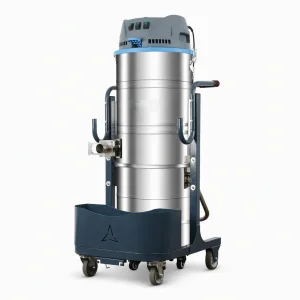
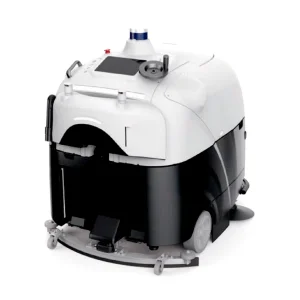
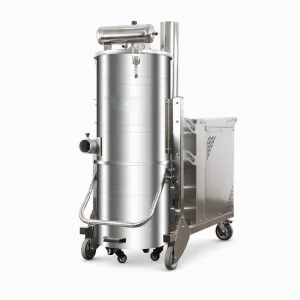
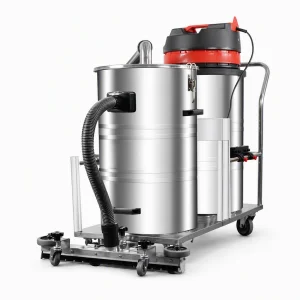
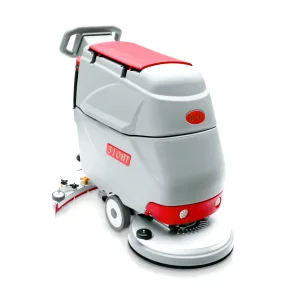
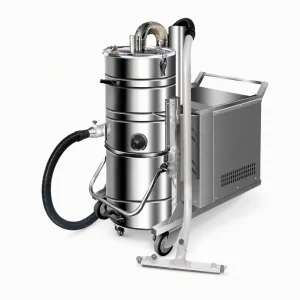
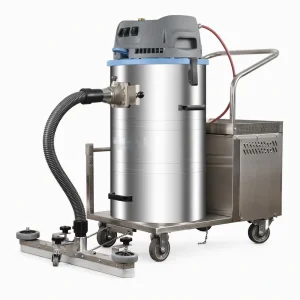
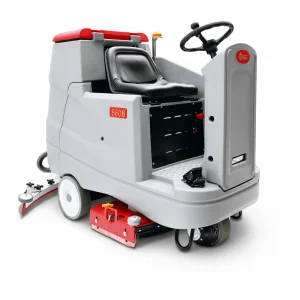
Precision-engineered suction systems, autonomous floor maintenance robotics, and continuous-duty collectors built directly to international quality standards.
How regulatory shifts, brushless motor innovations, and environmental health demands are redefining modern commercial suction engineering.
Modern commercial facilities require continuous-duty cycles without thermal degradation. Transitioning to sensorless brushless DC turbine motors yields over 20,000 operational hours, reduces thermal losses by 34%, and eliminates carbon brush particulate emissions in sterile manufacturing environments.
Stricter workplace health directives (OSHA, EN 60335-2-69 Type H) demand absolute containment of respirable crystalline silica (RCS). Modern vacuum architectures deploy tangential cyclonic pre-separators alongside automatic reverse-pulse jet systems, sustaining suction across continuous processing.
The migration from lead-acid to high-density Lithium Iron Phosphate (LiFePO4) battery packs delivers 3,500+ deep discharge cycles, rapid opportunity charging, and zero outgassing, ensuring uninterrupted multi-shift operation across sprawling distribution centers.
Beyond baseline airflow specs, institutional buyers evaluate cleaning hardware on rigorous engineering standards and life-cycle economics.
Procurement teams prioritize mean time between failures (MTBF), modular drive components, standardized wear parts (squeegees, gaskets), and universal motor brushes that curtail long-term fleet maintenance overhead.
Verification across CE, UL, RoHS, and explosion-proof ATEX (Zone 22) ratings for volatile combustible dust handling, ensuring turnkey compliance for regional health and labor inspectors.
Wholesale partners require agile contract manufacturing: custom injection molding, bespoke tank capacities, private labeling, localized voltages (110V/220V/380V), and tailored plug topologies.
Guaranteed 10-year spares availability, standardized quick-release couplings, and localized warehouse logistics that prevent operational downtime across international facility fleets.
How automated precision manufacturing in Wenzhou delivers unmatched cost efficiencies, structural consistency, and rapid time-to-market.
Situated within Zhejiang's advanced industrial core, our manufacturing base leverages hyper-localized supply ecosystems: roto-molding facilities, precision die-casting, copper-winding lines, and PCB fabrication all within a 50km radius. This cuts lead times from weeks to mere days.
Every vacuum cleaner and industrial scrubber undergoes automated robotic endurance testing: 100% pneumatic seal leak testing, dynamometer suction-pressure profiling, high-voltage insulation tests, and continuous vibrational analysis to guarantee field reliability.
Balancing automated robotic welding for heavy stainless steel chassis with flexible assembly stations, our facilities seamlessly shift from small bespoke OEM distributor runs of 50 units to multi-container tier-1 enterprise contracts without retooling delays.
Compare mechanical requirements, motor architecture, and filtration stages across primary operational environments.
| Operational Sector | Predominant Contaminant | Filtration Topology | Motor & Chassis Specification | Recommended Architecture |
|---|---|---|---|---|
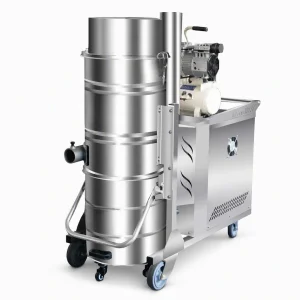
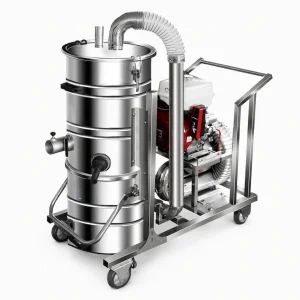
| Heavy Manufacturing & Machining | Metal swarf, cutting oils, coolant sludge | Oil-resistant polyurethane pre-filter + liquid baffle | Three-Phase 380V continuous induction turbine; AISI 304 Stainless Tank | Three-Phase Continuous-Duty Vacuum |
| Textile Mills & Fiber Processing | Airborne lint, volatile fiber fluff, static charge | Anti-static Teflon-coated needle felt basket | Spark-free anti-static ground path; high CFM bypass turbine | Twin-Tank Anti-Static Textile Vacuum |
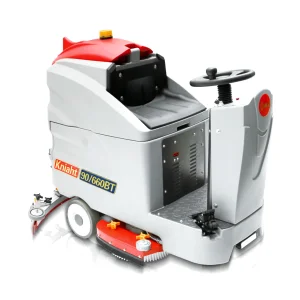
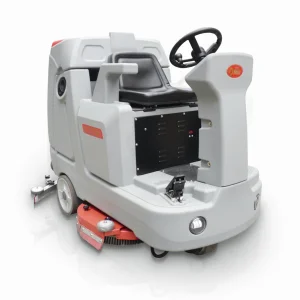
| Commercial Warehousing & 3PL Hubs | Concrete dust, pallet fragments, tire rubber | Pulse-jet automatic reverse-blow cartridge | High-capacity LiFePO4 battery drive; roto-molded polyethylene body | Ride-On Combined Sweeper-Scrubber |
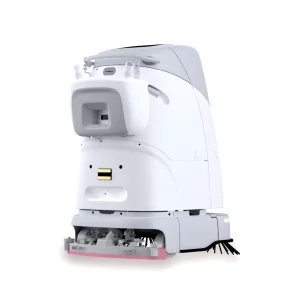
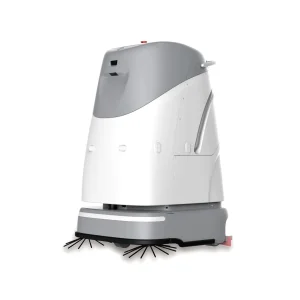
| Autonomous Cleanroom / Electronics | Sub-micron particles, micro-debris | Dual ULPA/H14 HEPA stages (99.999% efficiency) | Brushless BLDC motor; LiDAR SLAM sensor cluster | Driverless Autonomous Robot System |
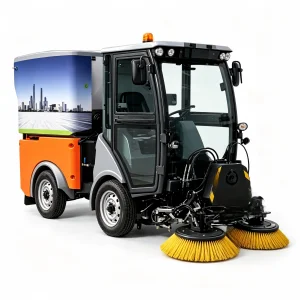
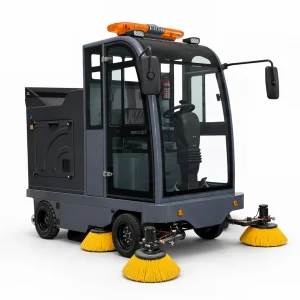
| Municipal Infrastructure & Garages | Coarse gravel, wet organic waste, surface stains | Washable polyester cartridge + dual-tank separator | Four-stroke gasoline or high-torque dual-battery traction | Pure Electric Multi-Functional Sweeper |
Everything you need to know about engineering capabilities, minimum order volumes, custom tooling, and after-sales support.
Single-phase vacuums run on standard commercial power grids (110V/220V) utilizing series-wound or compact brushless bypass motors, making them ideal for intermittent cleanup, workshops, and commercial maintenance contractors. Three-phase units utilize heavy continuous-duty side-channel turbine blowers driven by 380V/480V industrial supplies, engineered for uninterrupted 24/7 integration directly into automated machining lines, foundries, and bulk material silos.
Our advanced vacuum units (such as the DK-221MFC) feature pneumatic or electromagnetic pulse reverse-blow mechanisms. A differential pressure sensor detects suction degradation across the HEPA filter cartridge, automatically triggering a microsecond reverse shockwave of pressurized air through the filter core. This dislodges cake dust directly into the collection chamber without requiring manual filter washing or stopping the machine.
Yes. We specialize in custom contract manufacturing for regional brands and industrial distributors. We provide complete mold engineering, custom tank configurations (AISI 304 stainless steel or rotomolded UV-resistant polyethylene), customized wiring looms compliant with UL/CE standards, private label branding, and localized packaging architectures.
Every machine undergoes a standardized 4-stage quality gate before packaging: (1) Pressure decay testing for total tank vacuum airtightness, (2) Electrical insulation and dielectric breakdown verification, (3) Continuous 2-hour burn-in under maximum static lift load, and (4) Acoustic decibel mapping to ensure noise emissions remain well within regulatory guidelines.
Autonomous models like our SC80S and SC50S employ integrated multi-sensor fusion: 3D LiDAR, ultrasonic safety bumper arrays, and depth-vision SLAM algorithms. This enables real-time dynamic obstacle avoidance around pedestrians, forklifts, and unexpected pallet shifts while optimizing path coverage to conserve battery power and water.
Discover our broader lineup of heavy-duty push sweepers, enclosed municipal sweepers, and ride-on floor scrubbers.