Direct OEM/ODM industrial apparatus and automated heavy-duty equipment manufactured to rigid ISO9001 and CE compliance criteria.
Empirical analysis of high-performance floor care, residential suction dynamics, and cross-sector commercial sanitation demands.
The global vacuum and motorized cleaning equipment landscape relies heavily on China's integrated industrial hubs. Concentrated clusters in Zhejiang and Jiangsu synthesize brushless motor manufacturing, lithium-ion battery management systems (BMS), injection-molding tooling, and rapid prototyping under unified logistics corridors. This structural advantage reduces prototyping iteration schedules by 65% compared to dispersed Western fabrication chains.
Residential house cleaning demands have crossed paths with commercial reliability metrics. Discerning property owners, multi-family estate administrators, and professional facility teams require consumer floor systems equipped with high water-lift static pressure (≥24 kPa), cyclonic separation efficiency, and sustained continuous-duty brushless motors capable of handling fine micro-particulates, drywall residues, pet dander, and wet spills without thermal degradation.
Exporting to European, North American, and East Asian markets demands thorough adherence to regulatory protocols. Modern manufacturing lines must fulfill CE Low Voltage Directive (LVD), Electromagnetic Compatibility (EMC), RoHS compliance, WEEE e-waste recovery guidelines, and UL/IEC 60335-2-69 vacuum filtration containment mandates. Advanced production facilities run real-time automated end-of-line dielectric withstand testing to safeguard global distributor operations.
Key vectors transforming residential maintenance, commercial floor scrubbing, and smart automated surface management.
Transitioning from traditional NMC 18650 packs to high-energy 21700 and pouch-type lithium iron phosphate (LiFePO4) architectures. Increases operating longevity beyond 120 minutes while maintaining stable discharge rates without thermal throttling or pack degradation.
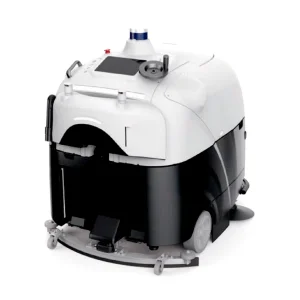
Driverless automation is expanding beyond high-end industrial scrubbers into estate cleaning robots. Dual-band SLAM, dToF laser radar, and 3D structured light systems dynamically prevent obstacle collision while optimizing coverage vectors by up to 40%.
Cloud-synchronized embedded telemetry tracks squeegee wear, brush torque fluctuations, battery state-of-health (SoH), and filter clogging indices in real time. Enables proactive maintenance models for global facility management vendors.
Adapted from heavy industrial collection technology, pneumatic reverse-pulse jets self-clean internal cylindrical HEPA cartridges automatically during operation. Completely halts filter pore blinding when capturing fine chalk, plaster, or concrete particulates.
Engineered hardware allocations calibrated specifically to varied flooring configurations and contamination indices.
Primary Challenges: Expansive floor plans containing mixed substrates including solid oak, high-gloss travertine marble, dense pile carpets, and floor-to-ceiling drapery.
Hardware Specification: Cordless dual-motor sticks and compact walk-behind scrubbers equipped with ultrasonic substrate detection. Automatically throttles roller rotation velocity and air-watt suction output dynamically to prevent finish marring while maximizing soil lifting.
Primary Challenges: High foot traffic, tight corridors around point-of-sale kiosks, strict sanitation protocols, and daytime operation acoustic thresholds (must remain under 65 dB).
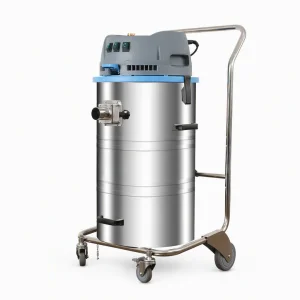
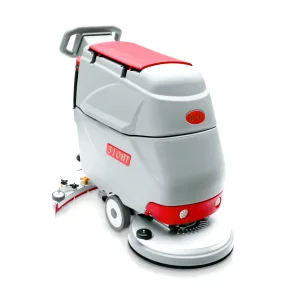
Hardware Specification: Hand-push walk-behind auto scrubbers and quiet HEPA industrial extractors. Features parabolic squeegees that achieve 100% immediate moisture extraction, guaranteeing dry-to-walk safety within three seconds of transit.
Primary Challenges: Multi-hectare polished concrete floors contaminated by rubber forklift tire scuffs, particulate pallet splintering, hydraulic fluid drops, and bulk dust.
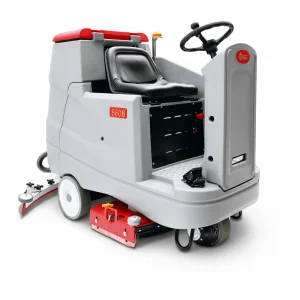
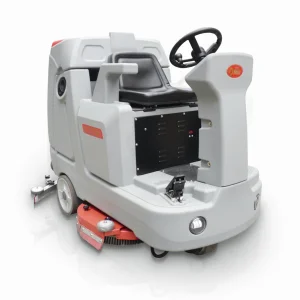
Hardware Specification: Twin-tank ride-on floor scrubbers accompanied by heavy three-phase pulse-reverse vacuum units. High down-pressure brush heads strip deep industrial soils while high-flow bypass vacuum fans secure clean surfaces in one pass.
A multi-year technical framework charting continuous-duty motor design, zero-emission sustainability, and edge computing.
Incorporation of CNC aerospace-grade titanium alloy impellers operating past 150,000 RPM. Enhances static air suction to 32 kPa while cutting parasitic motor heat generation by 22% via optimized fluid dynamics modelling.
Integration of onboard multi-stage centrifugal filtration and micro-ozonation systems inside ride-on and commercial walk-behind scrubbers. Reclaims 70% of wash water during continuous operation, significantly extending single-fill duty cycles.
Deployment of low-power NPU hardware running dedicated computer vision models. Enables the vacuum system to identify debris types (pet hairs, wet liquids, fine powder) instantly and modulate vacuum speed and chemical dosing on the fly.
100% recyclable structural polymer chassis paired with unified standard modular snap-fit drive motors. Allows 10-minute field replacements and slashes end-of-life environmental impact across worldwide supply pipelines.
End-to-end operational capabilities for international OEM brand owners, private-label retailers, and commercial equipment distributors.
From initial industrial sketches and CAD surface modeling to CNC rapid mock-ups and multi-cavity injection molds, our engineering departments shorten product launch windows to within 90 days. We provide end-to-end tooling design, FEA structural stress simulation, and mold flow analysis in-house.
Every assembly line features automated inline testing rigs. Motors undergo 100% rotational balance analysis, acoustic sound-chamber decibel logging, suction CFM verification, thermal overload monitoring, and 500-hour continuous life-cycle stress testing under harsh load constraints.
We provide full documentation suites including CB scheme reports, CE certificates, UL motor listings, and battery UN38.3 transport safety dossiers. Our logistics specialists assist clients with flexible CKD (Completely Knocked Down) and SKD shipping models to streamline customs tariffs across North America and the EU.
Authoritative insights addressing procurement, filtration compliance, battery configurations, and maintenance routines.
Key technical benchmarks include sealed suction water lift (rated in kPa, preferably >22 kPa), airflow volume (CFM), motor efficiency rating (brushless vs brushed), multi-stage cyclonic separation efficiency, and True HEPA H13 filtration that retains 99.97% of 0.3-micron particulate matter to prevent secondary household air pollution.
Tier-1 manufacturing facilities utilize automated dynamic balancing lines, precision CNC copper wire winding machinery, laser weld verification on commutators, and automated endurance testing. Every motor undergoes computer-monitored running tests to track RPM, power consumption, and vibration frequency.
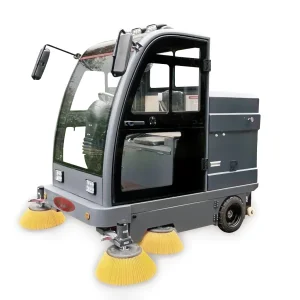
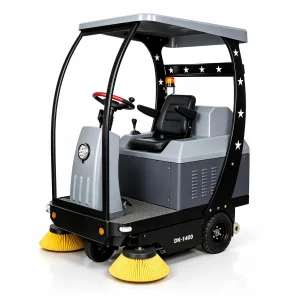
Walk-behind scrubbers are recommended for congested spaces under 2,000 m² featuring tight corridors, doorways, and vertical elevator transits. Ride-on floor scrubbers are engineered for open expanses exceeding 3,000 m² (such as estate garages, distribution facilities, and shopping centers) where high cleaning speed and operator comfort lower labor overhead.
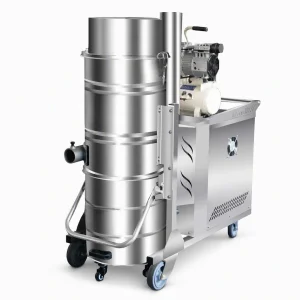
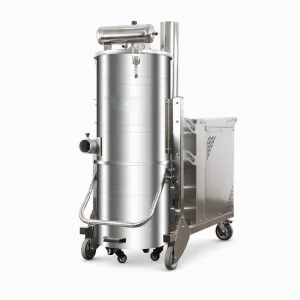
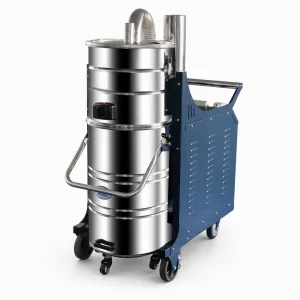
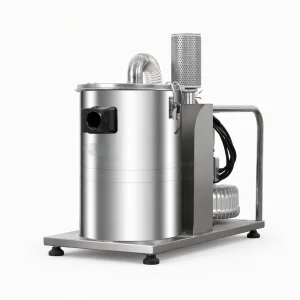
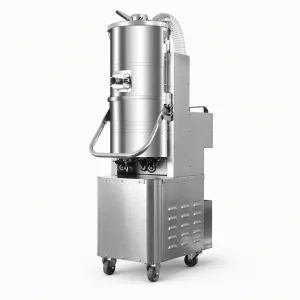
Single-phase units operate on universal 110V-240V utility circuits, delivering high air velocity for intermittent workshop cleaning and light manufacturing spills. Three-phase units (380V-480V) utilize direct-drive side-channel induction blowers without carbon brushes, allowing weeks of continuous 24/7 heavy extraction without thermal shutdowns.
Driverless systems (like the SC80S) generate positive ROI in facilities running regular multi-shift cleaning routines across mapped layouts (e.g., airports, transit terminals, and modern warehouses). Freeing custodial teams from repetitive long-haul transit lets them concentrate on detailed corner sanitation, lowering labor expenses within 9 to 14 months.
Buyers should specify target voltage and frequency standards, desired motor power (Watts) or suction performance (Air Watts/kPa), total floor area requirements, preferred battery cell chemistries and capacities, dust collection volume, filtration efficiency grade (e.g., HEPA H13/H14), and anticipated annual procurement volume.
Heavy-duty extraction systems, municipal washing apparatus, and walk-behind floor scrubbers designed for international delivery.