Engineered for high duty-cycle commercial facilities, logistics centers, pharmaceutical cleanrooms, and municipal environments with stringent dust containment standards.
In the global procurement landscape for commercial and industrial floor cleaning equipment, international purchasing consortia and facility management conglomerates face continuous pressure to balance total cost of ownership (TCO), thermal endurance, modular serviceability, and strict occupational safety compliance. China’s advanced environmental machinery manufacturing base—centered in dynamic precision-manufacturing clusters like Wenzhou, Zhejiang—delivers unmatched competitive advantages through full vertical integration, rapid electromechanical prototyping, and robust raw-material supply networks.
Unlike regional assemblers reliant on third-party supply chains, primary Chinese manufacturing enterprises maintain unified in-house operations encompassing CNC chassis milling, rotational polyethylene tank molding, custom brushless vacuum turbine winding, automated PCB surface-mounting, and ISO-standard acoustic/vibration testing. This depth of integration allows Chinese commercial vacuum cleaner manufacturers to drastically compress product development cycles from the Western standard of 18 months down to less than 14 weeks, enabling global clients to rapidly adapt to stringent local regulatory evolutions such as EU Ecodesign, RoHS-3, CE-Machinery Directive 2006/42/EC, and UL-1017 certifications.
Direct supply agreements with specialized producers of heavy-duty bypass motors, copper core induction turbines, and Ametek/Domel-standard suction engines ensure high volumetric airflow (CFM) without premature thermal degradation during 24/7 continuous industrial operation.
From private labeling, chassis color matching, and custom CAD-designed tooling molds to dedicated electrical frequency matching (50Hz/60Hz, 110V/220V/380V/440V), Chinese factories provide fully customized engineering directly from prototype to container-load production.
Strategically positioned near major international deep-water seaports (Ningbo-Zhoushan, Shanghai, Shenzhen), manufacturers provide comprehensive multimodal logistics, optimized SKD/CKD container packing schemas, and complete customs clearance documentation.
A rigorous specification matrix designed for corporate procurement officers, facility engineers, and tender evaluators to prevent equipment misallocation and under-sizing.
| Evaluation Parameter | Commercial Grade (Hotels, Offices, Retail) | Heavy Commercial / Light Industrial | Continuous-Duty Industrial (3-Phase / Fixed) |
|---|---|---|---|
| Target Airflow & Static Depression | 160 – 210 m³/h | 180 – 220 mbar Single Motor Bypass |
275 – 360 m³/h | 230 – 280 mbar Dual/Triple Bypass Motors |
320 – 750+ m³/h | 280 – 450 mbar Side Channel Turbine |
| Permissible Run-Time per Shift | 2 to 4 hours intermittent duty cycle | 6 to 8 hours daily operational cycle | 24/7 continuous continuous operation |
| Filtration Rating & Mechanics | Standard multi-layer polyester (5 – 10 μm) + secondary exhaust foam | Class M PTFE-coated cartridge (1 – 3 μm) + Manual reverse jet blowback | Class H / HEPA H14 (99.995% @ 0.3 μm) + Automatic pneumatic pulse-jet |
| Primary Material Construction | Impact-resistant ABS / High-density Polyethylene (HDPE) | Heavy-gauge AISI 304 Stainless Steel or epoxy powder-coated steel | Cast iron turbine housing, explosion-proof welded chassis (ATEX options) |
| Typical Collected Media | Dry room dust, light carpet litter, paper fragments, office debris | Construction silica dust, metal swarf, concrete slurries, liquid spills | Combustible graphite/aluminum powders, toxic chemical dusts, foundry sands |
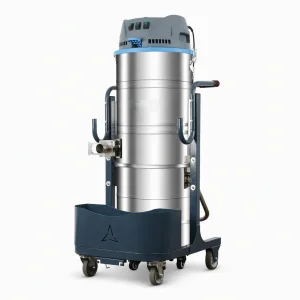
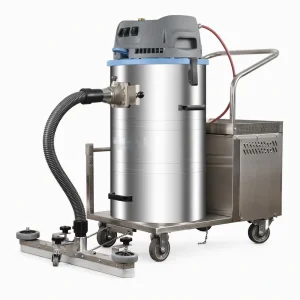
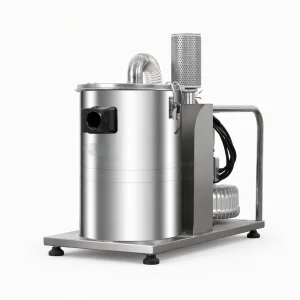
| Representative DIKE Model Architecture | DK-DC Battery Push-Type series | DK-361ECO / DK-221FB Dual Barrel / DK-221SMC | DK-2203G Fixed / Three-Phase Extraction series |
Engineering Directive on Fluid Dynamics: Vacuum efficiency is determined by the dynamic intersection of Airflow (measured in CFM or m³/h) and Vacuum Pressure (Water Lift or mbar). For fine silica or pharmaceutical particulate, high static depression (mbar) is required to overcome resistance within multi-stage HEPA filter media. Conversely, collecting high volumes of paper, leaves, or carpet lint in retail distribution centers prioritizes volumetric airflow rate over peak suction pressure.
Navigating cross-border regulatory frameworks, electrical certifications, and environmental directives required for turnkey international fleet deployment.
Exported machinery strictly fulfills European CE Machinery Directive (2006/42/EC), Low Voltage Directive (LVD 2014/35/EU), and Electromagnetic Compatibility (EMC 2014/30/EU). In North American jurisdictions, equipment configurations adhere to UL-1017 and CSA C22.2 standards, featuring insulated groundings, thermal cutoff relays, and flame-retardant electrical housings.
All polymer seals, flexible polyurethane vacuum hoses, rubber squeegee blades, and structural coatings are audited under EU RoHS 2.0 (Directive 2011/65/EU) and REACH (EC 1907/2006) regulations, prohibiting hazardous phthalates, lead stabilizers, and short-chain chlorinated paraffins (SCCPs) to protect operator respiratory health.
To eliminate post-procurement downtime, manufacturers establish bonded regional spare parts hubs for high-wear consumables (PTFE filter cartridges, squeegee blades, vacuum suction motors, carbon brushes, and li-ion BMS boards), ensuring complete inventory interchangeability across multi-year contracts.
Corporate facility managers frequently err by focusing exclusively on initial capital expenditure (CAPEX) when acquiring commercial cleaning machinery. A comprehensive E-E-A-T procurement audit reveals that initial purchase price represents merely 14% to 19% of an industrial cleaner's true lifecycle cost. The predominant operational expenditures (OPEX) stem from routine manual operator labor (62%), electrical power and charging overhead (9%), and filter replacement/maintenance cycles (12%).
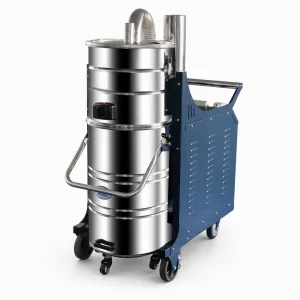
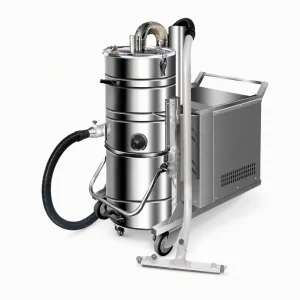
By shifting to advanced high-efficiency dual-barrel cyclone separators like the DK-221FB or manual blowback filter-cleaning mechanisms as embodied in the DK-221SMC, facility operators extend filter lifespan by up to 340%, reducing primary vacuum motor strain, lowering peak kilowatt draw, and yielding a verified net TCO savings of over 28% across a 48-month depreciation schedule.
Examining the convergence of autonomous robotics, LiFePO4 energy storage, and industrial IoT monitoring systems reshaping commercial facility sanitation.
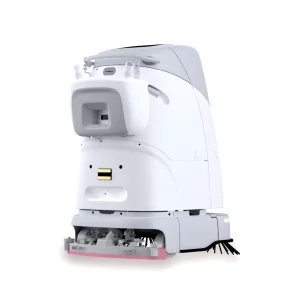
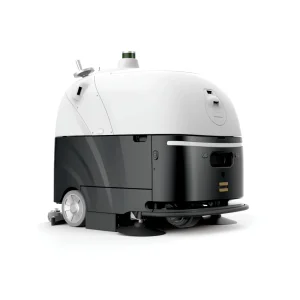
Driverless systems (such as the SC50S and SC80 platforms) employ SLAM 3D LiDAR, ultrasonic safety sensors, and neural vision cameras to execute pre-mapped floor-scrubbing routines without operator intervention, automatically navigating around dynamic obstacles.
Transitioning from traditional lead-acid deep-cycle batteries to high-density Lithium Iron Phosphate (LiFePO4) architecture delivers over 3,000 charge cycles, rapid 2-hour opportunity charging, and zero acid fumes during indoor operation.
Integrated manual and automated reverse blowback systems channel pressurized burst airflow backward across filter cartridges during runtime, dislodging fine micropowders without requiring the operator to open the dust container.
Modern commercial cleaning fleets incorporate cloud telemetry modules that relay runtime telemetry, brush pressure metrics, battery discharge health, and maintenance reminders directly to facility management dashboards.
Tailored machinery allocations based on floor substrates, particulate density, chemical hazards, and ambient operational limitations.
Corporate offices, five-star resorts, shopping centers, and healthcare campuses require acoustic suppression (<68 dB(A)), zero carbon emissions, and rapid fluid recovery to allow pedestrian foot traffic immediately after cleaning pass execution.
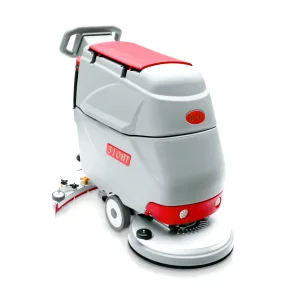
Primary Allocation: Compact walk-behind scrubber dryers, low-noise battery backpack vacuums, and the Warrior 510BT self-propelled scrubber.
Distribution centers covering tens of thousands of square meters demand heavy sweeping capacity for wooden splinters, packing stretch-film fragments, and abrasive road sand dragged in by semi-trailers.
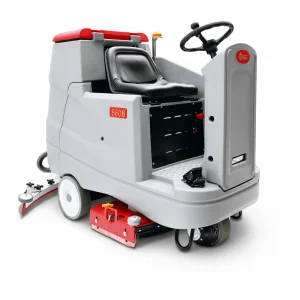
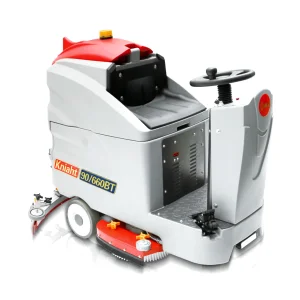
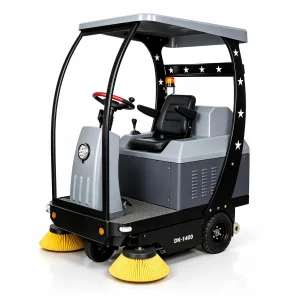
Primary Allocation: KNIAHT 860B & KNIAHT 90/660BT ride-on floor scrubbers, DK-1400 sweepers, and driverless SC80 automated scrubber dryers.
Machining lines, automotive stamping facilities, foundries, and public municipal roads contend with metal shavings, aggressive chemical coolants, concrete mud, and outdoor urban litter.
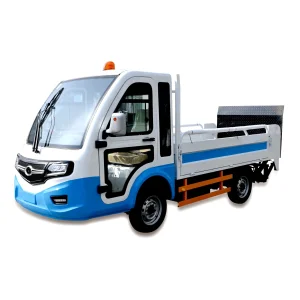
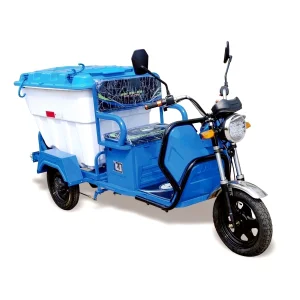
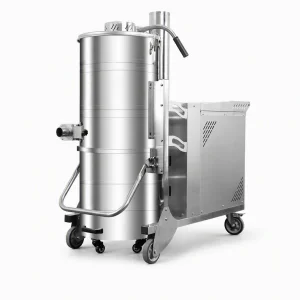
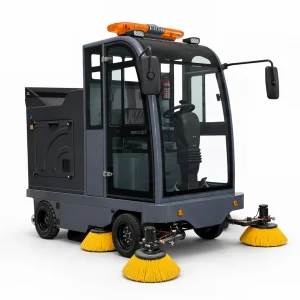
Primary Allocation: DK-221FB Dual Barrel Stainless Steel Vacs, DK-2000 fully-enclosed sweepers, and LB3BJ500 electric three-wheeled municipal vehicles.
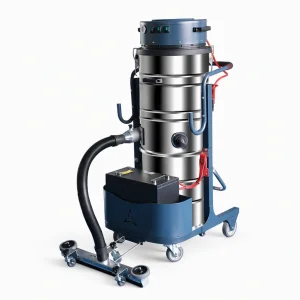
Continuous-duty extraction systems, autonomous robotic scrubber driers, enclosed municipal sweeper units, and lithium battery industrial vacuums.
Detailed technical, compliance, logistics, and configuration answers to guide wholesale distributors and institutional purchasers.