A clean floor is not just a better-looking floor. It can also support safer movement, smoother operations, and a more professional impression. ISSA’s Value of Clean research examines the connection between cleanliness, workplace experience, and productivity. Its findings offer facility managers a useful reason to assess cleaning methods, not merely cleaning costs. A Walk Behind Floor Scrubber can help by applying solution, scrubbing, and recovering dirty water in one controlled pass.
The difference is visible in practical details. A worker can guide the machine down a warehouse aisle, around shelving, or across a school corridor, while its squeegee collects water behind the brush. Less leftover moisture can mean fewer interruptions while floors dry. It is not magic. Brush pressure, pad choice, solution control, and operator training still matter.
Environmental health scientist and cleaning author Dr. Michael A. Berry has emphasized the importance of effective soil removal in cleaning. That principle is a useful test for any machine: does it remove dirt, or simply make the surface look brighter? CDC guidance also distinguishes routine cleaning from disinfection, reinforcing that the right method depends on the task and setting. A scrubber is not a substitute for every cleaning process.
For facilities with broad, accessible floor areas, a walk-behind model may offer a practical balance of maneuverability and coverage. The best choice depends on aisle width, floor type, water capacity, and daily workload. Measure the route first. Then compare models against real conditions, not brochure promises.
What Is a Walk-Behind Floor Scrubber?
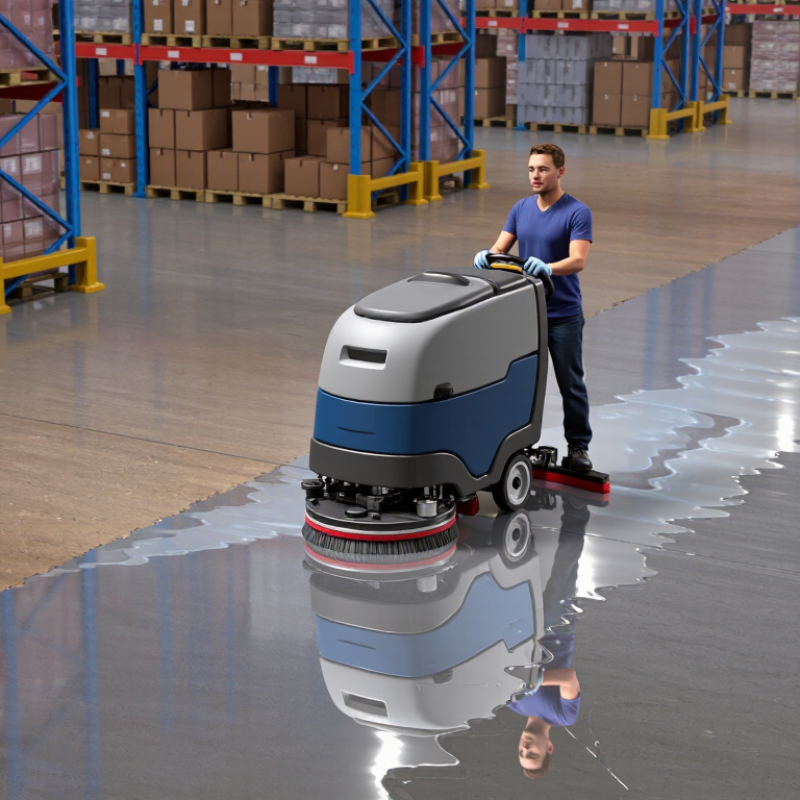
A walk-behind floor scrubber is a powered cleaning machine guided by an operator walking behind it. It applies cleaning solution in a controlled amount. A rotating brush or pad loosens soil, while a rear squeegee channels dirty water into a recovery tank. The operator steers with a handle and adjusts settings such as water flow and brush pressure, depending on the machine. Many models run on rechargeable batteries, without a power cord crossing the floor. Their manageable size can suit aisles, classrooms, and other hard-to-reach areas. Not every floor suits every pad.
Before cleaning, the operator should check the floor type, choose a compatible brush or pad, and follow the equipment’s dilution and maintenance instructions. Too much solution can leave residue; too little may not lift embedded soil. After a pass, the recovery tank needs emptying and rinsing, and the squeegee should be checked for streaks or wear. Small details matter. Uneven flooring and tight corners may require slower passes, or a mop for spots the machine cannot reach. A scrubber can reduce repetitive manual work, but its results still depend on careful operation and upkeep.
How Does a Walk-Behind Floor Scrubber Clean Floors?
A walk-behind floor scrubber cleans by applying a measured amount of water and cleaning solution to the floor. The operator guides the machine at a steady pace. Its rotating brush or pad loosens tracked-in dirt, dried marks, and fine grit. Brush pressure and pad choice matter; a rough pad can damage a delicate finish. Not every floor needs the same setting.
Behind the brush, a rubber squeegee gathers the dirty liquid. A vacuum pulls it through a hose into a recovery tank, leaving the floor damp rather than flooded. You can often see the difference in one pass: a dull gray strip becomes visibly clearer. The result depends on the floor, soil, and machine speed. Slow down over sticky spots.
Before scrubbing, pick up larger debris and check that the floor tolerates moisture. Dry sweeping first helps prevent grit from scratching the surface. Keep an eye on the recovery tank. When it fills, suction may weaken, and dirty water can remain behind. This part is easy to overlook. After use, rinse the tanks, brush, and squeegee; leftover residue can cause odors or streaks. A scrubber saves effort, but it still needs a careful operator.
What Benefits Does It Offer Over Manual Cleaning?
Why Choose a Walk Behind Floor Scrubber?
What Benefits Does It Offer Over Manual Cleaning?
Manual mopping can leave uneven results, especially across long corridors or busy entryways. A walk-behind scrubber applies cleaning solution and scrubs the floor in a controlled pass. Many models also recover dirty water, helping reduce wet residue. Less pooling can mean less time waiting for floors to dry. That matters.
The machine can cover more open floor space with fewer repeated passes than a mop and bucket. For example, an operator can clean a warehouse aisle while keeping the brush path steady. The recovered water also makes it easier to avoid spreading dirty solution from one area to another. Results still depend on correct pad choice, solution, and operating speed. Small details count.
Manual tools remain useful around chair legs, tight corners, and stairs, where a larger machine may not fit. A scrubber also needs routine care: emptying tanks, rinsing parts, and checking brushes. Skip those steps, and performance may slip. It is not magic; edges and stubborn marks can still need hand attention. For larger, mostly open floors, though, powered scrubbing can reduce physical effort and make daily cleaning more consistent.
Why Choose a Walk-Behind Floor Scrubber?
How can it compare with manual cleaning?
In this illustrative calculation, theoretical coverage is cleaning-path width multiplied by walking speed: a 24-inch mop at 1 mph equals 10,560 sq ft per hour, while a 20-inch scrubber at 2 mph equals 17,600 sq ft per hour. These are calculated maximums, not measured job-site productivity; overlap, turns, refilling, and other interruptions reduce actual coverage. A scrubber also applies solution and recovers dirty water in one pass.
Which Facilities and Floor Types Suit This Machine?
Why Choose a Walk Behind Floor Scrubber?
Walk-behind floor scrubbers suit facilities that need regular cleaning without a large ride-on machine. Schools, clinics, grocery stores, offices, and compact warehouses often have aisles, doorways, and corners where maneuverability matters. They can clean busy areas in manageable passes. For very large, open floors, though, a walk-behind model may take too long. Measure the cleaning area and consider how much time staff can realistically spend on each shift.
The machine works best on relatively flat, sealed surfaces such as finished concrete, vinyl, ceramic tile, terrazzo, and compatible epoxy floors. Brush or pad choice matters: a surface-safe option can lift tracked-in soil without dulling a finish. Check the flooring and equipment instructions before using cleaning solution, especially on delicate coatings or older floors. Test a small area. Uneven grout, loose tiles, steep ramps, and unsealed concrete may need another cleaning method. I have found that “sealed” floors are not always sealed evenly, so inspect worn patches rather than assuming.
Tips: Match the brush or pad to the floor, and check that the squeegee leaves no water behind. Make a slow test pass near a wall or doorway. If the floor stays slick or streaky, adjust the setup before cleaning the full area.
What Factors Matter When Choosing a Walk-Behind Scrubber?
Choosing a walk-behind scrubber starts with the floor and the daily cleaning route. Measure the tightest doorway, aisle, and storage space before comparing machine size. A compact unit can turn around near shelving, but its smaller tanks may require more refill stops. That trade-off matters.
Match the scrub deck and brushes to the surface. Smooth sealed concrete, textured tile, and delicate flooring can need different brush pressure and pad types. Check the solution and recovery tank capacities, too. A machine that leaves excess water behind may create extra passes and slow drying. Ask how easily the squeegee lifts, cleans, and replaces; worn blades can leave visible trails.
Runtime should fit the longest uninterrupted cleaning period, not just the advertised maximum. Consider charging time, battery access, and whether operators can comfortably steer the unit for a full shift. Try it in a representative area, if possible. Listen to the noise level near occupied rooms, and test how it handles corners and narrow aisles. Maintenance is easy to overlook. Check access to filters, tanks, and drain hoses, then estimate the time needed for daily rinsing. The cheapest option may not be the least costly to operate; still, a larger machine is not automatically better.
FAQS
It applies cleaning solution and scrubs in a steady pass. Many models also recover dirty water, leaving less residue. That helps floors dry sooner.
No. Manual tools still work better around chair legs, tight corners, and stairs. Edges need attention.
Schools, clinics, offices, grocery stores, and compact warehouses may benefit. Narrow aisles and doorways make maneuverability useful. Very large floors may take too long.
It often suits sealed concrete, vinyl, ceramic tile, terrazzo, and compatible epoxy. Check the floor and machine instructions. Test a worn patch first.
Match it to the floor surface and finish. A suitable option can lift tracked-in soil without dulling the floor. Small details count.
Measure doorways, aisles, and storage space. Compare tank capacity, runtime, charging time, and steering comfort. A small unit may need more refill stops.
Make a slow test pass near a wall or doorway. Check for streaks, slick spots, and water left behind. Adjust before cleaning the whole area.
Empty and rinse the tanks, clean the squeegee, and check the brushes. Worn blades can leave visible trails. It is easy to forget.
Conclusion
A Walk Behind Floor Scrubber is a compact cleaning machine operated by a person walking behind it. It typically applies cleaning solution to the floor, scrubs away dirt with rotating brushes or pads, and collects the used water with a recovery system. By combining these steps in one pass, it can make routine floor care faster and more consistent than manual mopping, while reducing physical effort and helping floors dry sooner.
This machine can suit schools, offices, shops, warehouses, and other facilities with open, hard-floor areas. Its effectiveness depends on choosing a model that matches the space and surface. Consider the floor type, cleaning width, maneuverability, tank capacity, battery or power options, operating time, and ease of maintenance. A suitable scrubber can help keep busy floors clean while making daily cleaning more efficient.